
Shoulder Training Guide
Wide shoulders come from the side and rear delts. Pressing alone will not get you there.
The best exercise for each head, a shoulder workout chart, and two ready-to-run routines.
The best shoulder workouts cover all three heads of the deltoid: an overhead press such as the seated dumbbell shoulder press for the front delts, lateral raises for the side delts, and a rear delt fly or face pull for the rear delts. Do 2 to 4 hard sets of each, once or twice a week, with presses in the 6 to 12 rep range and raises in the 12 to 20 range, and add a rep or a little weight whenever you can.
That is the short answer. The rest of this guide explains why the front delts need the least extra work, which exercises suit which head, how to do a dumbbell shoulder press with good form, and how to fit shoulder training into the program you already run. It sits alongside our chest workout and back workout guides, which train the muscles your shoulders work with most.
Shoulder Anatomy in One Paragraph
The deltoid is the cap of muscle over the shoulder joint, and it has three heads. The front (anterior) delt raises your arm forward and helps with every press. The side (lateral or medial) delt lifts your arm out to the side, and it is the head that makes shoulders look wide from the front. The rear (posterior) delt pulls your arm back and out, like the finish of a row, and it is what gives the shoulder a rounded look from the side. Underneath the deltoid sit the four small rotator cuff muscles, which hold the ball of the upper arm in its socket. They get trained by most shoulder exercises, and the rear delt work below helps keep them balanced against all the pressing most people do.
Why Your Front Delts Need the Least Help
Researchers measured how hard each part of the deltoid worked in 13 trained men doing a bench press, a dumbbell fly, a shoulder press and a lateral raise. The front delt was clearly active on the bench press (about 21% of its maximum) and most active on the shoulder press (about 33%). The side delt was a different story: about 30% on the lateral raise and 28% on the shoulder press, but only about 5% on the bench press. The rear delt barely worked on either chest exercise (Campos et al., Journal of Human Kinetics, 2020).
Muscle activity in a single set is not the same as muscle growth over months, so treat this as a guide rather than proof. Still, it matches what most lifters see. If you bench and overhead press every week, your front delts are already busy. Your side and rear delts usually are not, which is why a good shoulder workout spends most of its sets on raises and rear delt work, not on more pressing.
The Best Shoulder Exercises, Head by Head
Sort shoulder exercises by which head they emphasize. A complete program takes at least one from each group, and the side and rear groups deserve the most sets.
Front delts: presses and front raises
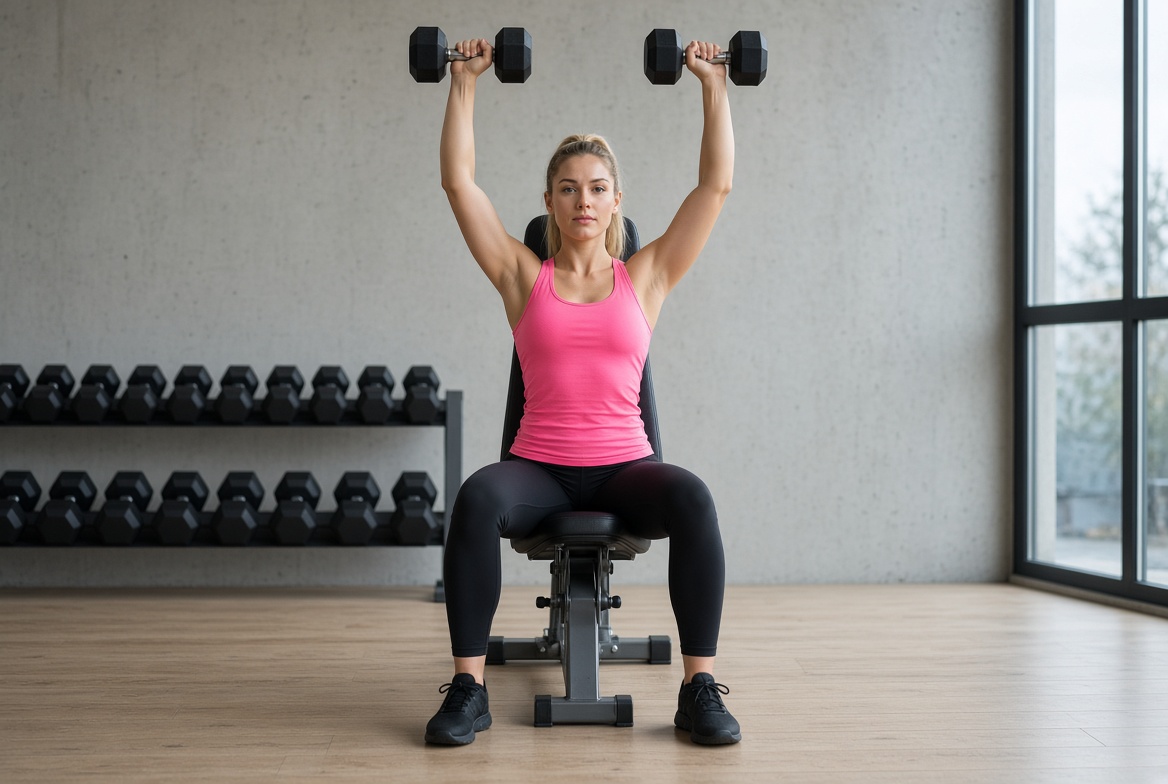
Seated Dumbbell Shoulder Press
The most useful shoulder press for most people. Each arm works on its own, and the back pad lets you focus on pressing. It gets its own section below.
Barbell Overhead Press
Standing, bar from the collarbone to overhead. The best shoulder exercise for building measurable strength, because a barbell loads in small steps. Squeeze your glutes so your lower back does not arch.
Arnold Press
A seated dumbbell press that starts with palms facing you and rotates to palms forward as you press. It covers a longer path than a regular press and is a good second pressing exercise.
Iso-Lateral Shoulder Press Machine
A plate-loaded machine with independent arms. A fixed path makes it easy to push close to failure safely, which suits beginners and late-session sets.
Front Raise
Raise a dumbbell forward to shoulder height. Optional at best if you already press, because the front delt gets plenty of work. The cable front raise keeps tension at the bottom.
Pike Push-Ups
Hips high, head lowering toward the floor between your hands. The no-equipment shoulder press. Raise your feet on a bench to make it harder.
Side delts: lateral raises
Dumbbell Lateral Raise
The single most important exercise for wider shoulders. Raise the dumbbells out to the sides until your arms are about parallel to the floor, leading with your elbows, with a slight bend in the arm. Light weight, strict reps.
Cable Lateral Raise
One arm at a time from a low pulley, with the cable crossing in front of or behind your body. It loads the bottom of the movement, where a dumbbell is nearly weightless.
Upright Rows
Pull the bar or dumbbells up toward your chest with elbows leading. Use a wider grip and stop with your elbows around shoulder height; a narrow grip pulled high bothers many shoulders. The cable version feels smoother for some people.
Rear delts: flies and face pulls
Cable Rear Delt Fly
Cross the cables in front of you and sweep your arms back and out. Constant tension and easy to load in small steps. Our pick for the main rear delt exercise in a gym.
Reverse Pec Deck
Sit facing the pec deck and push the handles back. The chest pad stops you from swinging, so it is the easiest rear delt exercise to do well.
Face Pull
Rope at about face height, pull toward your forehead while separating your hands. It trains the rear delts and the muscles between your shoulder blades, and many lifters use it to balance heavy pressing.
Bent-Over Rear Delt Raise
The dumbbell version, seated and bent forward over your knees, or standing in a hinge. Same movement as the dumbbell rear delt fly. Light weights and a pause at the top.
For a warm-up or home option, the band pull-apart works the rear delts and upper back with nothing but a resistance band. Rows also train the rear delts, especially when you pull with your elbows wide, so your back day counts toward their total.
The Dumbbell Shoulder Press: How to Do It Right
If you only do one shoulder press, make it this one. Dumbbells let each arm find its own comfortable path, they stop a stronger side from carrying a weaker one, and seated pressing removes most of the balance demand so your shoulders and triceps can do the work.
Seated Dumbbell Shoulder Press
- Set the bench. Raise the back pad to upright or one notch back from upright, roughly 75 to 90 degrees. Leaning further back turns the lift into an incline chest press.
- Get the dumbbells up. Sit with the dumbbells standing on your thighs, then kick them up one knee at a time to shoulder height. Press your back and head into the pad and plant your feet flat, a little wider than hip width.
- Find the start position. Dumbbells beside your ears or just above your shoulders, palms facing forward or slightly toward each other. Your elbows should sit a little in front of your body, not flared straight out to the sides. About 30 degrees forward is a comfortable starting point for most people, and your forearms should be close to vertical.
- Press up and slightly in. Push the dumbbells up until your arms are straight, bringing them a little closer together at the top. They do not need to touch. Keep your ribs down and your back on the pad.
- Lower with control. Take about 2 seconds to bring the dumbbells back down to roughly ear or chin level, or until your upper arms are about parallel to the floor. Go as deep as you can while staying pain-free, then press again without bouncing.
Useful cues: "elbows under the wrists", "ribs down", and "press the weights toward the ceiling, not toward each other". If you lose the arch-free position on the last reps, the set is over. Getting the dumbbells safely down matters as much as getting them up: bring them back to your thighs and sit up, or lower them to the floor beside you. Do not drop them from overhead.
Common dumbbell shoulder press mistakes
- Elbows flared straight out. Pressing with your elbows in line with your body, like a behind-the-neck press, is uncomfortable for a lot of shoulders. Bring them slightly forward.
- Arching off the pad. A big lower-back arch turns the shoulder press into a steep incline press and loads your spine. Pick a weight you can press with your back on the pad.
- Half reps. Stopping a few inches below the top and a few inches above the start makes the weight feel lighter but skips a lot of the work. Use a full range you can control.
- Clanking the dumbbells at the top. Banging them together takes tension off the shoulders and can knock you off balance.
- Going too heavy too soon. Dumbbells jump in fixed steps, often 5 pounds each. Add reps first and move up a pair only when you hit the top of your range on every set.
Seated dumbbell shoulder press: sets and reps
- For size and strength: 3 sets of 8 to 12 reps, 90 seconds to 2 minutes rest
- Place it first on a shoulder day, or after your main chest press on push day
- Stop most sets 1 to 2 reps short of failure; your form breaks down before your shoulders give out
Standing Dumbbell Overhead Press vs Seated
The standing dumbbell overhead press is the same movement without the bench. You press from the same shoulder-height start, but now your legs, glutes and core have to keep you upright and stop you leaning back. That changes two things: you can lift less, and your deltoids work harder per pound.
One study tested 15 men on barbell and dumbbell shoulder presses, seated and standing. One-rep max was about 10% lower for the standing dumbbell press than the seated one, yet the standing dumbbell version showed the highest deltoid activity of the four. The side delt was about 15% less active seated than standing with dumbbells, and the rear delt about 24% less active (Saeterbakken and Fimland, Journal of Strength and Conditioning Research, 2013). Again, that is muscle activity in a single heavy set, not a growth study.
In practice, choose the seated dumbbell shoulder press when you want to push close to failure and track the weight cleanly, or if standing presses bother your lower back. Choose the standing dumbbell overhead press when you train at home without a bench, want more core and balance work, or like a full-body feel. Both build shoulders. Pick one as your main press for a training block and progress it, rather than switching every week.
Shoulder Workout Chart
Screenshot this and take it to the gym. Pick one press, one or two side delt exercises and one rear delt exercise per session.
Shoulder Workout Chart
gymgod.app
| Exercise | Head emphasized | Equipment | Sets x reps | Rest |
|---|---|---|---|---|
| Barbell overhead press | Front + side | Barbell | 3-4 x 5-8 | 2-3 min |
| Seated dumbbell shoulder press | Front + side | Dumbbells + bench | 3 x 8-12 | 90 sec-2 min |
| Standing dumbbell overhead press | Front + side | Dumbbells | 3 x 8-12 | 90 sec-2 min |
| Arnold press | Front | Dumbbells + bench | 3 x 8-12 | 90 sec |
| Lateral raise | Side | Dumbbells | 3-4 x 12-20 | 60 sec |
| Cable lateral raise | Side | Cable | 2-3 x 12-20 per arm | 60 sec |
| Wide-grip upright row | Side + traps | Barbell or cable | 2-3 x 10-15 | 90 sec |
| Cable rear delt fly | Rear | Cable | 3 x 15-20 | 60 sec |
| Reverse pec deck | Rear | Machine | 3 x 12-20 | 60 sec |
| Face pull | Rear + upper back | Cable + rope | 3 x 15-20 | 60 sec |
| Bent-over rear delt raise | Rear | Dumbbells | 3 x 15-20 | 60 sec |
| Pike push-up | Front + side | Bodyweight | 3 x to 2 short of failure | 90 sec |
Rule of thumb: 8 to 16 direct side delt sets and 6 to 12 rear delt sets per week, with front delts covered mostly by pressing. Stop most sets 1 to 3 reps short of failure. Add a rep or a little weight when you hit the top of the range on every set.
"Head emphasized" is a guide. Every press works all three heads to some degree, and rows and face pulls also train your upper back. The label tells you which head is likely doing the most work.
A Gym Shoulder Workout
This is the same shoulder day used in the bro split in our workout splits guide, so the two fit together. It takes about 45 minutes in a gym with a barbell, dumbbells and cables.
| Exercise | Sets x reps | Rest |
|---|---|---|
| Barbell overhead press | 4 x 5-8 | 2-3 min |
| Arnold press (or seated dumbbell shoulder press) | 3 x 8-12 | 90 sec |
| Lateral raise | 4 x 12-20 | 60 sec |
| Cable rear delt fly | 3 x 15-20 | 60 sec |
| Optional: cable lateral raise | 2 x 15-20 per arm | 60 sec |
That is 14 to 16 sets, with 6 to 8 of them for the side delts. Heavy pressing goes first while you are fresh; raises come after, when a lighter weight is all you need. If barbell overhead pressing bothers your shoulders, make the seated dumbbell shoulder press your first exercise for 4 sets of 6 to 10 and drop the Arnold press. A reverse pec deck or face pull can replace the cable rear delt fly.
A Dumbbell-Only Shoulder Workout at Home
A pair of dumbbells covers all three heads. A bench helps but is not required.
| Exercise | Sets x reps | Rest |
|---|---|---|
| Seated dumbbell shoulder press (or standing without a bench) | 3 x 8-12 | 90 sec-2 min |
| Lateral raise | 4 x 12-20 | 60 sec |
| Bent-over rear delt raise | 3 x 15-20 | 60 sec |
| Optional: pike push-ups | 2 x 2 reps short of failure | 90 sec |
Home dumbbells are often too heavy for raises and too light for presses. If your lateral raise dumbbells are too heavy for 12 clean reps, do one arm at a time while holding a door frame, which lets you lean slightly and keeps your body still. If your press dumbbells are too light, slow the lowering to 3 seconds and take sets closer to failure. Pairing the lateral raise with the rear delt raise as a superset cuts the session to about 25 minutes.
How Many Sets Do Your Shoulders Need?
A meta-regression of weekly training volume found that more weekly sets per muscle went with more growth, with the clearest benefit up to about 10 or more sets per week (Schoenfeld, Ogborn and Krieger, Journal of Sports Sciences, 2017). The trick with shoulders is that each head gets very different amounts of indirect work.
- Front delts: every bench press, incline press, dip and overhead press trains them. If you do a few pressing exercises a week, you may need little or no direct front delt work.
- Side delts: overhead presses help, but chest pressing barely touches them. A rule of thumb is 8 to 16 direct sets of lateral raises or similar per week.
- Rear delts: rows and pulldowns give some work. A rule of thumb is 6 to 12 direct sets per week, often split between pull day and shoulder day.
These are starting points, not laws. Lateral raises and rear delt flies are light and recover quickly, so they suit higher reps (12 to 20 is a common rule of thumb) and can be spread across two or three sessions a week. As for equipment, an 8-week study that trained one arm with dumbbell lateral raises and the other with cable lateral raises, both for 5 sets to failure twice a week, found the side delts grew about the same either way (Larsen et al., Frontiers in Physiology, 2025). Use whichever you can do consistently.
How to Fit Shoulders Into Your Split
- Push/pull/legs: presses and lateral raises go on push day; rear delts go on pull day. Our push day workout already includes a dumbbell shoulder press and lateral raises, and the pull day workout explains where face pulls and rear delt flies fit. On the 6-day PPL workout, you get two rounds of each, which lands you in the weekly ranges above without a separate shoulder day.
- Upper/lower: one overhead press and 3 sets of lateral raises on each upper day, plus a rear delt exercise on one of them. The upper lower split guide lays this out.
- Full body: alternate the bench press and overhead press across sessions, and add 2 to 3 sets of lateral raises to two of your three weekly workouts. See the full body workout routine.
- Body part split: run the gym shoulder workout above on its own day. Keep at least one day between chest day and shoulder day, because your front delts work hard on both.
Lateral raises are the easiest exercise in the gym to add almost anywhere. Two sets at the end of a leg day or back day take five minutes and barely affect recovery, which is a simple way to get more side delt work if your split is short on it.
How to Progress Your Shoulder Workouts
Use double progression. Pick a rep range, such as 8 to 12 on the seated dumbbell shoulder press. Start with a weight you can do 8 times on every set, add reps each session until every set reaches 12, then move up to the next pair of dumbbells and start again at 8. On the barbell overhead press, small plates (1.25 kg or 2.5 lb per side) keep jumps manageable.
Lateral raises are where people get stuck. Going from 15 to 20 pound dumbbells is a 33% jump, so reps can drop from 20 to 10 overnight. Stay at a weight until you can do the top of the range with clean form on every set, accept a lower rep count after you move up, and build back. When reps stall for a few sessions, try a slower lowering phase or a short pause at the top before you add sets. Our guide to progressive overload covers each option, and a deload week every so often lets busy shoulders recover. To pick a working weight for your press from a recent set, the one rep max calculator converts reps and weight into an estimated max. If you prefer paper, the printable weekly training log keeps a week of sessions on one page.
Common Shoulder Workout Mistakes
- All pressing, no raises. Three pressing exercises and no lateral raises builds front delts that were already getting plenty of work and leaves the side delts, the ones that add width, behind.
- Swinging heavy lateral raises. If you have to lean back and heave, your traps and momentum are doing the lift. Drop the weight, raise to about shoulder height, and lower slowly.
- Skipping rear delts. They are small, they take five minutes, and pressing does almost nothing for them.
- Shrugging every rep. On raises and flies, keep your shoulders down and away from your ears so the delts, not the traps, do the work.
- Training through pain. A dull burn in the muscle is normal. A sharp or pinching feeling in the joint is not; change the exercise or the range.
The Honest Downsides
Shoulders are easy to irritate. The shoulder trades stability for range of motion, and pressing plus chest work plus overhead pulling adds up. A pinching feeling when you lift your arm overhead, sometimes called impingement, is a common complaint among lifters. Common adjustments are bringing the elbows slightly forward on presses, using dumbbells or a neutral grip instead of a barbell, skipping behind-the-neck presses and narrow upright rows, and shortening the range a little. Those are training adjustments, not a diagnosis. Pain that lingers between sessions, gets worse, or comes with weakness or numbness is a reason to see a doctor or physical therapist.
Side delts grow slowly. In the lateral raise study above, side delt thickness rose about 3 to 5% over 8 weeks in trained lifters doing 10 hard sets a week. That is real progress, but it is small, so judge your shoulder training over months, not weeks.
Make Every Lateral Raise Count
Shoulder sessions mix very different rest needs: a few minutes after a heavy press, a minute after a lateral raise. In GymGod, you set your own sets and rest when you build your routine, a customizable rest timer starts automatically between sets, and your last weights, reps and goals appear the moment you start an exercise, so you know whether today's lateral raises need one more rep. If your shoulders are not the only thing stuck, the What's Blocking Your Gains quiz takes a couple of minutes.
Frequently Asked Questions
What is the best shoulder workout?
An overhead press such as the seated dumbbell shoulder press, lateral raises for the side delts, and a rear delt fly or face pull. Do 2 to 4 sets of each, once or twice a week, and add reps or weight over time.
Which exercise makes shoulders wider?
Lateral raises. Width comes mainly from the side delts, which chest pressing barely works. Dumbbell, cable and machine lateral raises all build them.
Is the seated or standing dumbbell shoulder press better?
Both build shoulders. Seated lets you lift more and focus on the press. Standing uses less weight but demands more balance and core work, and one study measured higher deltoid activity standing. Pick the one you can progress consistently.
Where should my elbows be on the dumbbell shoulder press?
Slightly in front of your body, not flared straight out to the sides, with your forearms roughly vertical. Most people find this more comfortable on the shoulder joint.
How often should I train shoulders?
Twice a week works well for most people, for example pressing and lateral raises on push or upper days and rear delt work on pull days. Once a week also works if you do enough sets in that session.
Do I need front raises?
Usually not. If you bench press and overhead press each week, your front delts already get a lot of work. Spend those sets on lateral raises and rear delt exercises instead.