
A superset is two exercises done back to back with no rest between them, followed by your normal rest. Instead of a set of curls, a rest, then another set of curls, you do a set of curls, go straight into a set of triceps pushdowns, and then rest. The most common version pairs two muscles that don't compete with each other, so one rests while the other works.
Done right, supersets give you the same workout in less time. A 2025 meta-analysis of 19 studies found that supersets kept training volume, strength gains and muscle growth about the same as traditional sets, in shorter sessions (Zhang et al., Sports Medicine, 2025). Done wrong, they just make you tired. This guide covers how to pair exercises so you get the first result, not the second.
What Are Supersets? (The Basics)
You rest between sets because a working muscle runs low on quick energy. The phosphagen system, which fuels short, hard efforts like a set of squats, takes a few minutes to recover. But that recovery is local: after a hard set of bench press, your back and legs are still fresh. A superset uses that gap. While your chest recovers, your back works.
Supersets have a reputation as a "bro" thing, pushing hard for the sake of it, and some of that criticism is fair. Supersetting two heavy lifts for the same muscles will cost you performance on both. Pair them well and the research is on your side. Pair them badly and you lose the strength you came for.
The 4 Types of Supersets Explained
Antagonist Supersets (push/pull pairs)
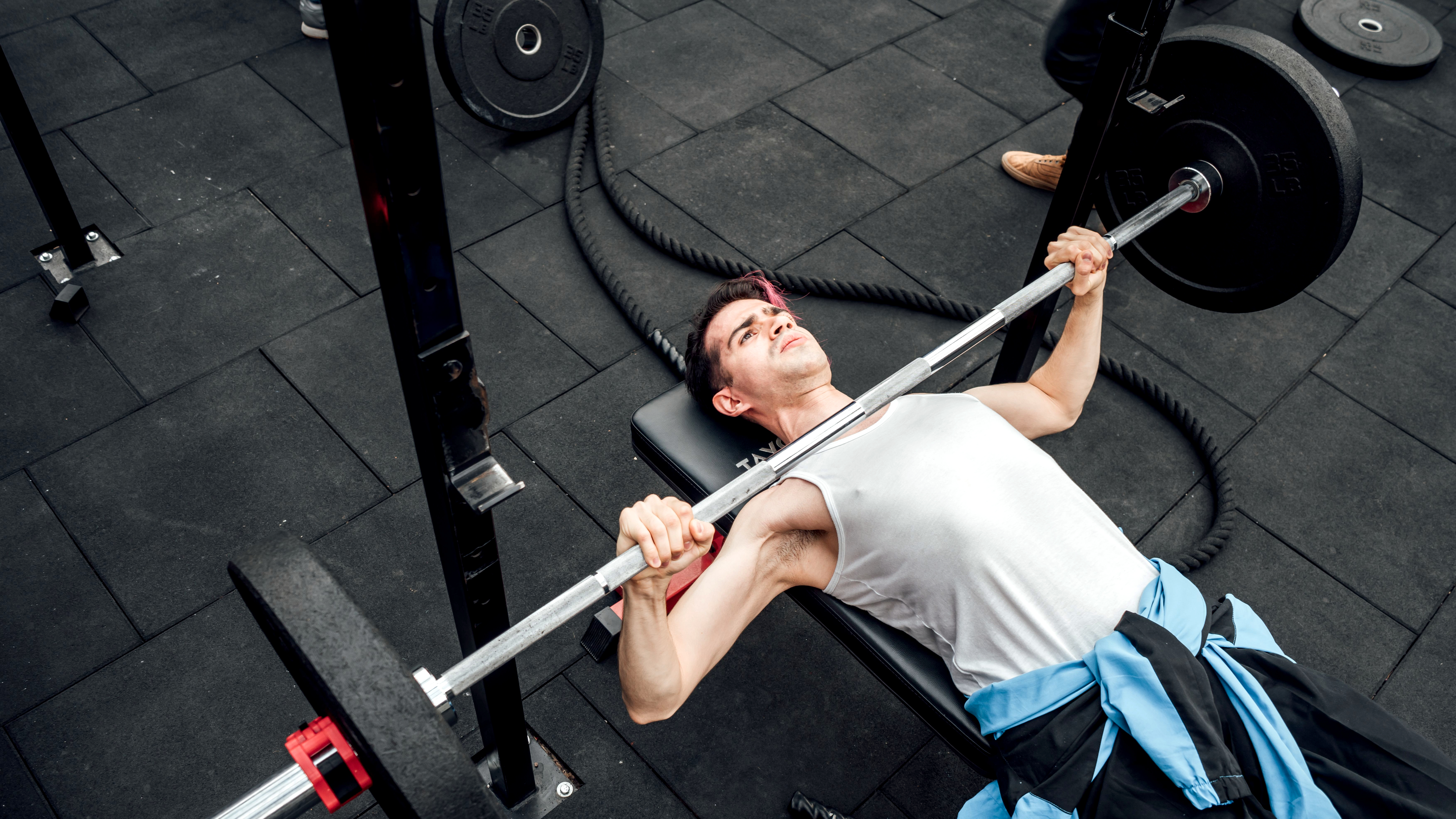
Pair opposing muscles: chest and back, biceps and triceps, quads and hamstrings. A bench press followed by a barbell row is the classic example. This is the best-supported type: in the 2025 meta-analysis, agonist-antagonist supersets let people complete more reps than traditional sets (Zhang et al., 2025), and a review in the Journal of Strength and Conditioning Research called this kind of training an efficient way to build strength and power (Robbins et al., 2010).
Agonist Supersets (same muscle group)
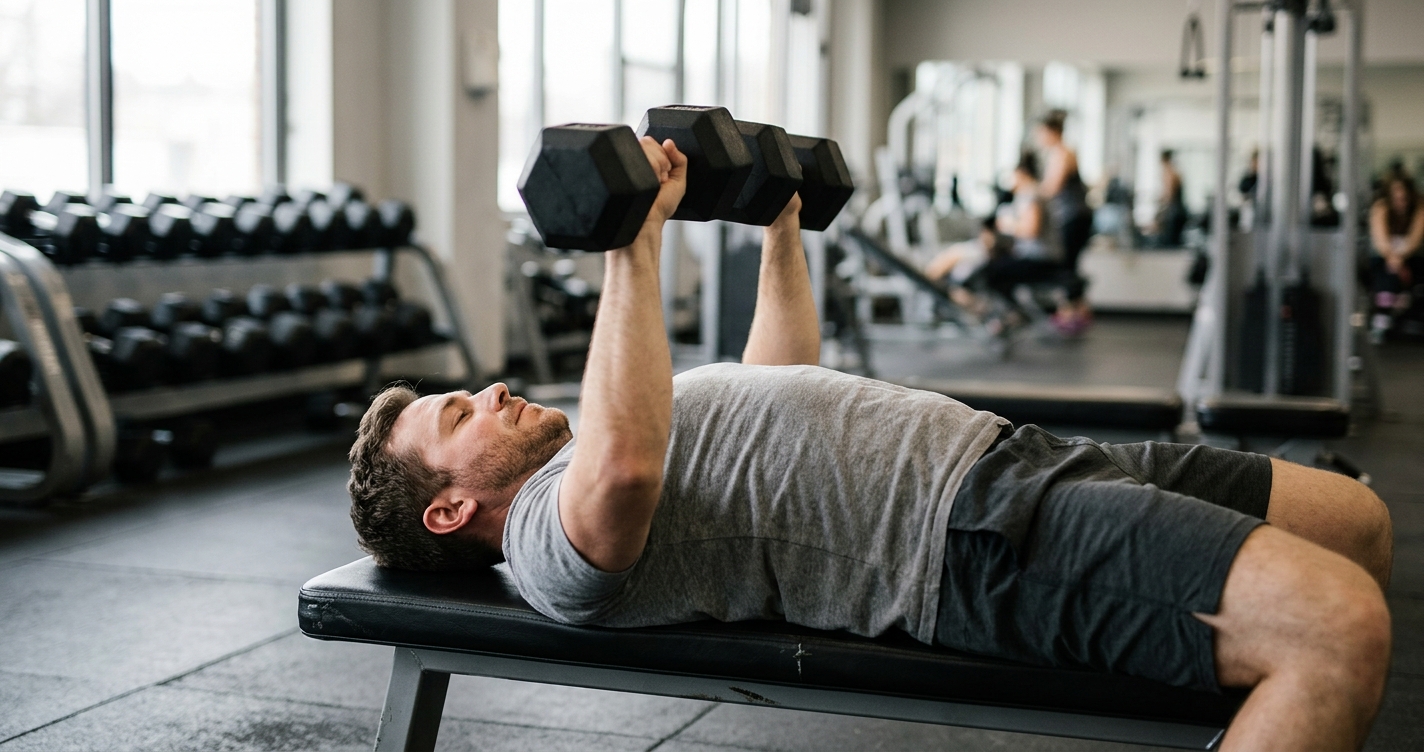
Two exercises for the same muscle, back to back, like a dumbbell bench press straight into a dumbbell fly. These are also called compound sets. They go against the idea of letting one muscle rest, and that's the point: they are about pump, fatigue and finishing a muscle off, not strength. Expect to move less total weight. Supersets of similar exercises produced a lower volume load than traditional sets in the meta-analysis. Pre-exhaustion (isolation first, then a compound lift) and post-exhaustion (compound first, then isolation) are both agonist supersets.
Upper/Lower Supersets
The same principle as antagonist supersets, applied to the whole body: pair an upper-body exercise with a lower-body one, like a lat pulldown with a leg press. Neither exercise tires the muscles the other one needs, so these are the easiest supersets to start with and the best fit for full-body workouts.
Tri-Sets and Giant Sets
Three exercises in a row is a tri-set; four or more is a giant set. They save even more time and drive your heart rate up, but every extra exercise is one more station to hold in a busy gym and one more set done tired. Use them for accessories and conditioning, not your main lifts.
Which Type for Which Goal
- Save time without losing gains: antagonist or upper/lower supersets.
- Muscle growth and pump: antagonist supersets for most of the work, an agonist superset as a finisher.
- Conditioning and fat loss: upper/lower supersets and tri-sets with moderate weights.
- Max strength: keep your heaviest lifts as straight sets. If you superset them, pair them with something light, like a plank.
- Beginners: start with simple upper/lower or antagonist pairs on machines and dumbbells. Leave agonist supersets until you have a few months of training behind you.
Benefits and Downsides of Supersets
Here is what the research supports, and what it costs you.
Shorter Workouts
Supersets cut session time while keeping total reps and volume load about the same (Zhang et al., 2025).
The Same Long-Term Gains
Maximal strength, strength endurance and muscle growth were similar to traditional sets over training programs (Zhang et al., 2025).
More Work Per Minute
Supersets raised energy cost during training and blood lactate (Zhang et al., 2025), and produced a bigger afterburn than traditional sets (Kelleher et al., 2010).
More Reps on Antagonist Pairs
Pairing opposing muscles let lifters complete more reps than straight sets did (Zhang et al., 2025).
Downside: They Feel Harder
Ratings of perceived exertion were higher with supersets, so plan your recovery and don't superset everything.
Downside: Same-Muscle Pairs Lose Volume
Supersets of similar exercises led to a lower volume load, so agonist supersets are a finisher, not a whole program.
Supersets vs. Other Training Methods
Supersets vs. Drop Sets
While both are intensity techniques, they work differently. Supersets pair two different exercises back to back, while drop sets involve performing one exercise to failure, then immediately reducing the weight and continuing. Supersets are better for time efficiency and training multiple muscle groups, whereas drop sets excel at pushing a single muscle to complete exhaustion. Drop sets are harder to recover from when used often, so most lifters save them for the last set of an exercise.
Supersets vs. Circuit Training
Circuit training involves moving through multiple exercises (usually 5-10) with minimal rest, often targeting the entire body. Supersets use only two exercises with immediate transition between them. Circuits prioritize cardiovascular conditioning and total-body endurance, while supersets keep a strength-training focus with heavier loads. Because you're only managing two exercises at a time, it's easier to keep good form and push the weight.
Supersets vs. Straight Sets
Straight sets (traditional training) involve completing all sets of one exercise before moving to the next, with full rest periods between sets. This approach allows maximum strength expression on every set and is the better choice for pure strength goals. Supersets trade some of that for time efficiency. Straight sets are better when working with very heavy loads (85%+ of your one rep max), while supersets shine in the moderate intensity range (60-80% of 1RM). For more on picking a goal, see hypertrophy vs strength training.
When to Use Each
Use straight sets when:
- Your primary goal is maximal strength
- You're performing heavy compound lifts (squats, deadlifts, bench press)
- You're peaking for a competition
- You're a beginner learning movement patterns
Use supersets when:
- Time is limited but you want a quality workout
- You're focused on hypertrophy or muscular endurance
- You want to fit the same training volume into less time
- You're working with moderate weights (60-80% 1RM)
Use drop sets when:
- You want to push a specific muscle to complete failure
- You're in a hypertrophy-focused training block
- You have the recovery capacity for high-intensity techniques
Use circuit training when:
- Cardiovascular fitness is a primary goal
- You're training for general fitness or fat loss
- You need a highly time-efficient full-body workout
- You're working with lighter loads
Are Supersets Good for Fat Loss?
The Calorie Burn Truth
Supersets burn more energy per minute than traditional sets. In a crossover study of young, recreationally active adults doing the same amount of work, reciprocal supersets produced a higher energy cost per minute, higher blood lactate and a bigger afterburn than traditional training (Kelleher et al., 2010). The 2025 meta-analysis also found a higher energy cost during superset training.
That helps, but it isn't a magic solution. The main benefit is fitting the same work into less time, not burning a dramatically bigger number. Fat loss still comes from your diet. Supersets help you keep your muscle and your training habit while you eat less.
EPOC Effect Explained
Excess Post-Exercise Oxygen Consumption (EPOC), often called the "afterburn effect," refers to elevated calorie burning after your workout ends. Shorter rest and a higher heart rate during the session raise it, which is why supersets produced a bigger EPOC than traditional sets in the Kelleher study. The extra afterburn is a small fraction of the calories burned in the workout itself, so treat it as a bonus, not a reason to train this way.
Best Superset Protocols for Fat Loss
For maximum fat loss benefits, focus on these superset strategies:
Antagonist supersets with compound movements: Pair large muscle group exercises like bench press with rows, or squats with pull-ups. These burn the most energy while preserving strength.
Higher rep ranges: Use 10-15 reps per set to increase time under tension and metabolic stress without sacrificing form.
Shorter rest periods: Keep rest between supersets to 60-90 seconds. This maintains an elevated heart rate while allowing sufficient recovery for quality work.
Full-body split: Distribute supersets across the entire body rather than focusing on single muscle groups. This burns more total calories and prevents excessive fatigue in one area.
Sample Fat-Loss Superset Workout
Full-Body Fat Loss Superset Routine (3x per week):
Superset 1: 4 sets
- Goblet Squats x 12-15 reps
- Push-ups x 10-15 reps
- Rest 75 seconds
Superset 2: 4 sets
- Romanian Deadlifts x 10-12 reps
- Dumbbell Rows x 12-15 reps
- Rest 75 seconds
Superset 3: 3 sets
- Walking Lunges x 10 reps per leg
- Dumbbell Shoulder Press x 12-15 reps
- Rest 60 seconds
Superset 4: 3 sets
- Kettlebell Swings x 15-20 reps
- Plank x 45-60 seconds
- Rest 60 seconds
This workout takes approximately 35-40 minutes and combines strength training with conditioning while preserving muscle mass.
Are Supersets Good for Building Muscle?
Hypertrophy Considerations
Supersets can build muscle when programmed correctly. The key hypertrophy factors are training volume (sets x reps x load), mechanical tension, and effort. Supersets let you fit that volume into less time. However, they can cost mechanical tension if fatigue stops you from using heavy enough weights or keeping good form. Across the studies in the 2025 meta-analysis, muscle growth with supersets was similar to traditional training (Zhang et al., 2025), which makes them a solid option for hypertrophy.
Time Under Tension
Time under tension (TUT) refers to how long your muscles are working during a set. Supersets don't change the tension in any single set; they just remove the wait between exercises. Quality matters more than quantity. Performing 12 controlled reps with a 3-1-2 tempo (3 seconds down, 1 second pause, 2 seconds up) beats rushing through 20 sloppy reps. Focus on keeping tension throughout each rep rather than simply making the set longer.
When Supersets Help (and Hurt) Muscle Growth
Supersets help muscle growth when:
You're using antagonist pairings (push/pull, upper/lower), which let each muscle recover while the other works. In the research, antagonist supersets let lifters complete more reps than traditional sets.
You're in a hypertrophy-focused phase using moderate weights (65-80% 1RM) and moderate to high reps (8-15). This intensity range tolerates reduced rest periods well.
You're targeting lagging muscle groups by adding volume. Supersets make it feasible to add extra work without extending gym time.
You're using pre-exhaustion to intensify work on specific muscles, like doing dumbbell flyes before bench press to maximize chest stimulation.
Supersets hurt muscle growth when:
You're trying to build maximal strength on heavy compounds. Reduced rest compromises performance on later sets.
Fatigue causes form breakdown, which shifts tension away from target muscles and increases injury risk.
You're pairing exercises that interfere with each other, like squats with leg curls, where the second exercise significantly suffers.
You're not eating enough to support the training. More work without adequate food and sleep leads to stalled progress, not gains.
Best Superset Protocols for Hypertrophy
Antagonist supersets: Pair opposing muscle groups with 8-12 reps per exercise. This is the most evidence-supported approach for muscle growth. Example: incline dumbbell press + seated cable rows.
Pre-exhaustion supersets: Start with an isolation movement, then immediately perform a compound exercise for the same muscle group. Use 10-15 reps on the isolation, then 6-10 on the compound. Example: leg extensions + squats.
Post-exhaustion supersets: Reverse the order above, performing the compound lift first when you're fresh, then finishing with isolation. Use 6-10 reps on the compound, then 12-15 on the isolation. Example: Romanian deadlifts + leg curls.
Rest periods: Take 90-120 seconds between supersets for hypertrophy. This balances effort with enough recovery for quality volume. If you're not sure your rest is right, read are your rest times too long?
Progressive overload: Increase weight, reps, or sets over time, just like traditional training. Don't let the superset format distract from the principle that actually builds muscle: progressive overload.
How to Structure a Superset Workout
Exercise Selection Rules
Match exercises by equipment location: Choose exercises that use equipment close together in the gym. Pairing bench press with pull-ups works poorly if they're at opposite ends of the facility. Instead, pair bench press with dumbbell rows if the dumbbells are nearby.
Balance complexity: Avoid pairing two highly technical exercises that require intense concentration. Deadlifts + Olympic lifts is a recipe for poor form. Instead, pair one compound movement with something simpler, like deadlifts + planks.
Consider muscle overlap: For antagonist supersets, make sure the exercises truly target opposing muscles. Bench press + overhead press both heavily involve the shoulders and triceps, creating unnecessary fatigue overlap.
Match the effort: Pair exercises you can both push hard. If the second exercise is so light it barely counts, it's filler, not a superset.
Unilateral considerations: Supersets with unilateral exercises (single-leg, single-arm) take longer because you must perform both sides. Plan accordingly or alternate limbs between exercises (left leg lunge, right arm row, right leg lunge, left arm row).
Rest Periods by Goal
Strength focus (80%+ 1RM):
- Between exercises in superset: 30-60 seconds
- Between supersets: 3-4 minutes
- Use antagonist pairings only
Hypertrophy focus (65-80% 1RM):
- Between exercises in superset: 0-30 seconds
- Between supersets: 90-120 seconds
- Most superset types work well
Muscular endurance (50-65% 1RM):
- Between exercises in superset: 0-15 seconds
- Between supersets: 60-75 seconds
- Agonist pairings and tri-sets shine here
Fat loss/conditioning:
- Between exercises in superset: 0-10 seconds
- Between supersets: 45-60 seconds
- Focus on keeping your heart rate up
Not sure how hard a set was? The RPE calculator turns "that felt like 2 reps left" into a working weight.
Sets and Reps Recommendations
Beginner programs (first 6-12 months of training):
- 2-3 supersets per workout
- 3 sets per superset
- 10-12 reps per exercise
- Focus on antagonist and upper/lower pairings with simple movements
Intermediate programs (1-3 years of training):
- 3-5 supersets per workout
- 3-4 sets per superset
- 8-12 reps for hypertrophy, 12-15 for endurance
- Can incorporate all superset types except the most advanced
Advanced programs (3+ years of training):
- 4-6 supersets per workout
- 3-5 sets per superset
- Vary rep ranges (6-8 for strength days, 10-15 for volume days)
- Can use any superset variation, including pre/post-exhaustion and tri-sets
Volume guidelines: Total weekly sets per muscle group should stay similar to traditional training. If you normally do 15 sets of chest per week, keep that with supersets. Don't add volume just because supersets feel easier time-wise.
Equipment Considerations
Home gym supersets: Focus on pairings that use the same or minimal equipment. Dumbbell exercises pair perfectly, as do resistance band combinations. Adjustable dumbbells make quick weight changes easy.
Commercial gym supersets: Have a backup plan if equipment is taken. Scout your equipment before starting, and consider off-peak training times when using supersets that require multiple stations.
Free weights vs. machines: Machines work exceptionally well for supersets because weight changes are faster and you don't need to worry about setup. Consider machine-based antagonist supersets like leg press + leg curls or chest press + seated rows.
Minimal equipment supersets: Bodyweight exercises are ideal for supersets anywhere. Push-ups + inverted rows, squats + Bulgarian split squats, or planks + superman holds require zero equipment.
Gym Etiquette Tips
Don't hog multiple stations during peak hours: If the gym is crowded, stick to supersets that use one or two pieces of equipment, or choose exercises where the equipment is side by side.
Allow work-ins when possible: If someone asks to use equipment during your rest period, let them work in. This builds goodwill.
Be prepared: Have your weights, settings, and equipment ready before starting. Fumbling through setup defeats the purpose of supersets and frustrates others.
Communicate clearly: If you're using two pieces of equipment, tell anyone who asks that you're alternating between them, and offer to share.
Keep transitions quick: The faster you move between exercises, the less time equipment sits idle.
15 Best Superset Exercises (With Pairings, Sets and Reps)
For Beginners
When starting out with supersets, focus on simple movements that are easy to transition between while you build strength and confidence with the method.
1. Dumbbell Goblet Squat + Push-ups
- 3 sets x 10-12 reps each
- Rest 90 seconds between supersets
- Why it works: Combines lower body and upper body pushing with minimal equipment. Both exercises are self-limiting (you can't use dangerous amounts of weight) and teach fundamental movement patterns.
2. Dumbbell Romanian Deadlift + Dumbbell Shoulder Press
- 3 sets x 10-12 reps each
- Rest 90 seconds between supersets
- Why it works: Trains the posterior chain and overhead pressing with the same pair of dumbbells. The hinge pattern and vertical press don't interfere with each other, allowing quality reps on both.
3. Lat Pulldown + Leg Press
- 3 sets x 10-12 reps each
- Rest 90 seconds between supersets
- Why it works: Both machines make weight adjustments simple, and pairing an upper body pull with a lower body push means neither muscle group is pre-fatigued. Perfect for learning superset pacing.
For Intermediate Lifters
4. Barbell Bench Press + Barbell Bent-Over Row
- 4 sets x 8-10 reps each
- Rest 120 seconds between supersets
- Why it works: The classic antagonist pairing for the upper body. Chest and back each recover while the other works, so you keep your reps up on both. Requires a barbell and bench with room to row nearby.
5. Dumbbell Incline Press + Cable Face Pulls
- 3 sets x 10-12 reps (incline), 15-20 reps (face pulls)
- Rest 90 seconds between supersets
- Why it works: Builds upper chest while also training the rear delts and upper back, which are often neglected. The light, high-rep face pulls give your chest a break between pressing sets.
6. Bulgarian Split Squats + Nordic Hamstring Curls
- 3 sets x 8-10 reps per leg (split squats), 6-8 reps (Nordics)
- Rest 120 seconds between supersets
- Why it works: Combines quad-dominant single-leg work with one of the hardest hamstring exercises. The split squat builds balance and evens out left-right differences, while the Nordics train the hamstrings through the lowering phase.
7. Dumbbell Floor Press + Dumbbell Pullover
- 4 sets x 10-12 reps each
- Rest 75 seconds between supersets
- Why it works: One pair of dumbbells, one bench or floor spot. The floor press limits range of motion, making it shoulder-friendly while still building pressing strength, and the pullover stretches the lats and chest through a long range.
8. Trap Bar Deadlift + Hanging Leg Raises
- 4 sets x 8-10 reps (deadlift), 10-15 reps (leg raises)
- Rest 120 seconds between supersets
- Why it works: Pairs a total-body pulling movement with core work. The leg raises keep you moving while your legs and back recover, and a stronger core carries back to the deadlift.
9. Cable Triceps Pushdowns + Cable Biceps Curls
- 3 sets x 12-15 reps each
- Rest 60 seconds between supersets
- Why it works: The go-to arm superset using an antagonist pairing. The cable keeps constant tension on both muscles, and it's easy to adjust the weight by moving the pin.
For Advanced Lifters
10. Front Squat + Box Jump
- 4 sets x 6-8 reps (squat), 5 reps (jump)
- Rest 3 minutes between supersets
- Why it works: Combines strength and power in a contrast training format. Heavy squats followed by a few explosive jumps is a common approach for athletes who need lower body power. Keep the jumps crisp; stop the set when they slow down.
11. Weighted Pull-ups + Barbell Overhead Press
- 4 sets x 6-8 reps each
- Rest 2-3 minutes between supersets
- Why it works: Two fundamental upper body strength movements that don't interfere with each other. The vertical pull and vertical press let each side recover, so your strength holds across all sets.
12. Leg Extensions + Back Squats (Pre-exhaustion)
- 4 sets x 15-20 reps (extensions), 8-10 reps (squats)
- Rest 90 seconds between supersets
- Why it works: Pre-tires the quads so they, not your lower back, become the limiting factor in the squat. Lets you work the quads hard with lighter squat weights, useful when heavy squats bother you.
13. Deficit Deadlift + Barbell Hip Thrust
- 4 sets x 5-6 reps (deadlift), 10-12 reps (hip thrust)
- Rest 2-3 minutes between supersets
- Why it works: The deficit deadlift emphasizes the bottom position and hamstrings, while hip thrusts load the glutes hardest at the top. Together they train the posterior chain through complementary ranges of motion. This is an agonist pair, so expect it to be tough.
14. Dumbbell Bench Press + Dumbbell Fly (Post-exhaustion)
- 4 sets x 8-10 reps (press), 12-15 reps (fly)
- Rest 90 seconds between supersets
- Why it works: Perform the compound movement first while fresh, then isolate the chest once the triceps are tired from pressing. The flyes give a deep stretch without more triceps work.
15. Dips + Chin-ups
- 4 sets x 6-10 reps each (add weight when you can)
- Rest 2 minutes between supersets
- Why it works: A push and a pull that both use your bodyweight, often at the same station. Dips work chest and triceps; chin-ups work back and biceps. A simple, hard antagonist pair for experienced lifters.
Sample Superset Workouts
Two days you can run as an upper/lower split, 2 times each per week. Do all sets of each superset (A1 then A2, rest, repeat) before moving on.
Upper Body Superset Workout
- A1 Bench press, 4 x 6-8 / A2 Barbell row, 4 x 8-10. Rest 2 minutes.
- B1 Incline dumbbell press, 3 x 10-12 / B2 Lat pulldown, 3 x 10-12. Rest 90 seconds.
- C1 Dumbbell shoulder press, 3 x 10-12 / C2 Face pulls, 3 x 15-20. Rest 90 seconds.
- D1 Triceps pushdowns, 3 x 12-15 / D2 Cable biceps curls, 3 x 12-15. Rest 60 seconds.
Lower Body Superset Workout
- A1 Squat, 4 x 5-8 / A2 Plank, 4 x 30-45 seconds. Rest 2-3 minutes.
- B1 Romanian deadlift, 3 x 8-10 / B2 Hanging leg raise, 3 x 10-15. Rest 2 minutes.
- C1 Leg extension, 3 x 12-15 / C2 Leg curl, 3 x 12-15. Rest 90 seconds.
- D1 Bulgarian split squat, 3 x 8-10 per leg / D2 Calf raises, 3 x 12-15. Rest 90 seconds.
Prefer a push/pull/legs split? Take our push day workout and superset the accessories, like lateral raises with triceps pushdowns. Write down what you lift each session, in an app or on a weight training log template, so you know what to beat next time.
5 Common Superset Mistakes (And How to Fix Them)
- Poor Exercise Pairing
Pair movements that complement each other instead of competing. Examples: bench press + row, squat + pull-up, or shoulder press + chin-up.
- Inadequate Rest
You still need rest between supersets. Typical rest: 60-120 seconds, depending on intensity.
- Ego Lifting
Fatigue builds faster in a superset, so expect to use a little less weight than with straight sets, especially on the second exercise. Good reps first.
- Equipment Hogging
If the gym is busy, choose supersets using one machine, or pair a machine with bodyweight or dumbbells.
- Wrong Goals, Wrong Method
Supersets are great for hypertrophy, efficiency and conditioning, not for max strength on your heaviest lifts. Use the method that fits your goal.
FAQs About Supersets
What is a superset?
A superset is two exercises done back to back with no rest between them, followed by your normal rest. The most common version pairs opposing muscles, like a bench press and a row.
Do supersets build muscle?
Yes. A 2025 meta-analysis of 19 studies found muscle growth and strength gains with supersets were similar to traditional sets, in shorter sessions.
How long should I rest between supersets?
Typically 60-120 seconds, depending on intensity and the muscle groups involved. Rest longer, 2-3 minutes, when a superset includes a heavy compound lift.
What is the difference between a superset and a drop set?
A superset is two different exercises back to back. A drop set is one exercise taken to failure, then continued right away with a lighter weight.
Can beginners do supersets?
Yes. Start with simple upper/lower or antagonist pairings on machines and dumbbells at moderate weights, and keep heavy barbell lifts as straight sets while you learn them.
How many supersets per workout?
Most lifters do well with 2-5 supersets per workout, depending on volume, time and recovery. Beginners can start with 2-3.
Can I superset every exercise?
It isn't recommended. Keep your heaviest compound lifts focused, and superset machines, cables, isolation lifts and moderate compounds.
Conclusion: Your Next Steps
- Quick Action Plan
Pick 1-2 supersets from the list above and add them to your next workout. Keep the same pairings for a few weeks so you can see progress.
- Progressing with Supersets Over Time
Progress by adding reps, adding load, trimming rest, or moving to harder pairings, one change at a time.
- Track It
Supersets only pay off if the weights go up. In GymGod you can tag exercises and group them into supersets, the rest timer starts automatically between sets, and auto-progression works out your next weight from what you actually lifted, so every superset session has a number to beat. See how it works.
References
- Zhang X, Weakley J, Li H, Li Z, García-Ramos A. "Superset Versus Traditional Resistance Training Prescriptions: A Systematic Review and Meta-analysis Exploring Acute and Chronic Effects on Mechanical, Metabolic, and Perceptual Variables." Sports Medicine, 2025. doi.org/10.1007/s40279-025-02176-8
- Kelleher AR, Hackney KJ, Fairchild TJ, Keslacy S, Ploutz-Snyder LL. "The metabolic costs of reciprocal supersets vs. traditional resistance exercise in young recreationally active adults." Journal of Strength and Conditioning Research, 2010; 24(4): 1043-1051. pubmed.ncbi.nlm.nih.gov/20300020
- Robbins DW, Young WB, Behm DG, Payne WR. "Agonist-antagonist paired set resistance training: a brief review." Journal of Strength and Conditioning Research, 2010; 24(10): 2873-2882. vuir.vu.edu.au/6830