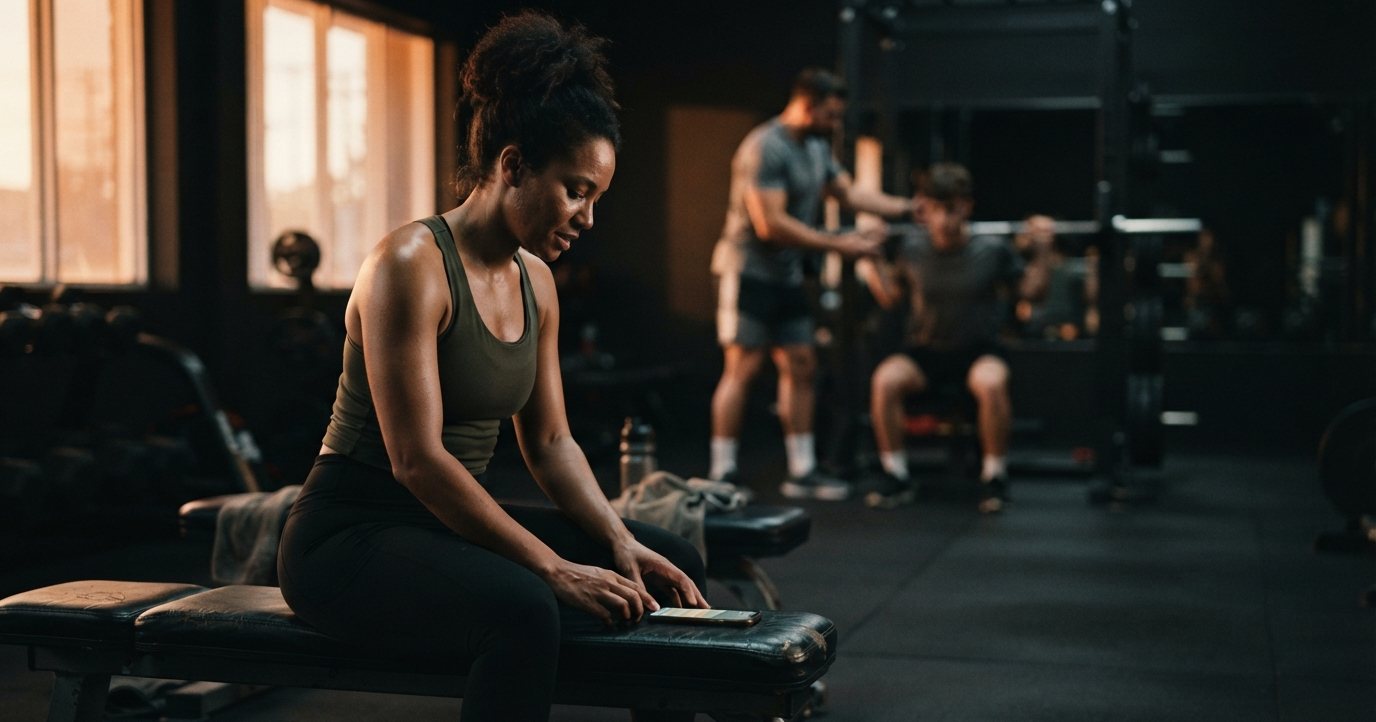
Most people who decide to get serious about training hit the same fork in the road. One path is a personal trainer: a real person who writes your program, watches every rep and expects you to show up. The other is one of the hundreds of fitness plan apps on your phone, most of which cost less per month than a single training session.
Both can get you fitter and stronger. Both can also be a waste of money if they don't match how you train. A trainer you see twice and then cancel doesn't help, and neither does an app you download, open three times and forget. This guide compares fitness plan apps and personal trainers on the things that actually decide results, so you can pick the one you'll stick with.
The short version:
• Choose a personal trainer if you're brand new to lifting, coming back from an injury, or need someone else to hold you accountable.
• Choose fitness plan apps if you're comfortable in the gym, train on your own schedule, or want structure without paying per session.
• The best value for many people is both: a few sessions with a trainer to learn the main lifts, then an app to run the program day to day.
• Whichever you choose, it has to give you a clear plan, a way to progress, and a record of what you did. Without those three, neither works.
What Fitness Plan Apps Actually Do
"Fitness app" covers everything from step counters to meditation timers, so it's worth being specific. Fitness plan apps are the ones that tell you what to do in the gym: which workout to run today, which exercises, and how many sets and reps. They usually work in one of three ways:
- Program libraries. You pick an established program, such as a classic strength routine or a push/pull/legs split, and the app runs it for you, week by week.
- Generated plans. You answer questions about your goal, experience, schedule and equipment, and the app builds a routine for you. Many now use AI for this step.
- Custom builders. You design your own split and the app handles scheduling, targets and tracking.
The better workout plan apps combine all three and add the part most people underestimate: tracking. Every set you log becomes the starting point for your next session, which is how progressive overload happens in practice. If that idea is new to you, our guide to progressive overload explains why it matters more than any single exercise choice.
What a Personal Trainer Gives You
A good personal trainer does four things an app can't fully replace:
Real-time form coaching
A trainer watches you squat, sees your knees cave or your lower back round, and fixes it on the spot. That feedback is hard to get any other way, and it matters most in your first months of lifting.
Accountability
A booked session with a person waiting for you is a strong reason to show up. For some people, that alone is worth the price.
Judgment for special cases
Injuries, joint pain, pregnancy, medical conditions or very specific sport goals all call for a human who can adapt the plan session by session.
In-the-moment adjustments
Slept badly? Shoulder feels off? A trainer can change the workout as you walk in the door, based on how you look and move that day.
The catch is that you only get these benefits during the hours you're paying for. What you do on the other days of the week, which is most of your training, is still up to you.
Fitness Plan Apps vs Personal Trainer: Side by Side
| Fitness plan apps | Personal trainer | |
|---|---|---|
| Typical cost | Free to roughly $15 to $20 a month | Often $40 to $100+ per session, depending on location and experience |
| Form feedback | Videos and written cues; you check yourself | Live, hands-on correction |
| Personalization | Good to very good, based on what you tell it | Excellent, based on what they see |
| Accountability | Reminders and streaks; easy to ignore | High while you're booked |
| Schedule | Any time, any gym | Set appointments |
| Progress tracking | Every set saved automatically, with history and charts | Varies; often a notebook or the trainer's own system |
| Best for | Self-motivated lifters who know the basics | Beginners, injury recovery, people who need accountability |
The Cost Difference Over a Year
Price is where the gap gets hard to ignore. Two sessions a week with a personal trainer at $60 a session works out to around $6,000 over a year. Even one session a week is over $3,000. Most fitness plan apps cost somewhere between nothing and a couple of hundred dollars a year, and some offer a one-time purchase.
That doesn't make a trainer a bad deal. If a few months of coaching means you learn to squat and deadlift safely, avoid an injury and actually build the habit, it pays for itself. The question is what you need from the money: ongoing supervision, or a solid plan you can follow on your own.
When a Personal Trainer Is Worth It
- You've never lifted weights and don't know how the main movements should look or feel.
- You're coming back from an injury or have pain that changes what you can do.
- You've started and stopped several times and know you won't go unless someone is expecting you.
- You're training for something specific, like a powerlifting meet or a physical test, and want expert eyes on your progress.
- You simply enjoy training with a coach and the cost isn't a problem.
When Fitness Plan Apps Are the Better Choice
- You already know the basic lifts and can perform them with decent form.
- You train at odd hours, travel, or switch between gyms and home equipment.
- You want to follow a proven program but don't want to calculate weights and track progress by hand.
- You care about seeing your numbers improve over months and years.
- You'd rather spend the money on equipment, food or a gym membership closer to home.
For many lifters past their first few months, fitness plan apps cover most of what they were paying a trainer for: a structured plan, a target for every set and a clear record of progress.
The Hybrid Approach: Get the Best of Both
You don't have to choose forever. One of the most cost-effective setups looks like this:
- Book a handful of sessions with a trainer. Ask them to teach you the squat, hinge, press and row patterns and to fix your form.
- Move your training into a fitness plan app. Run a program there and log every session.
- Check in with the trainer every month or two. Bring your logged history, so they can see exactly what you've done and adjust the plan.
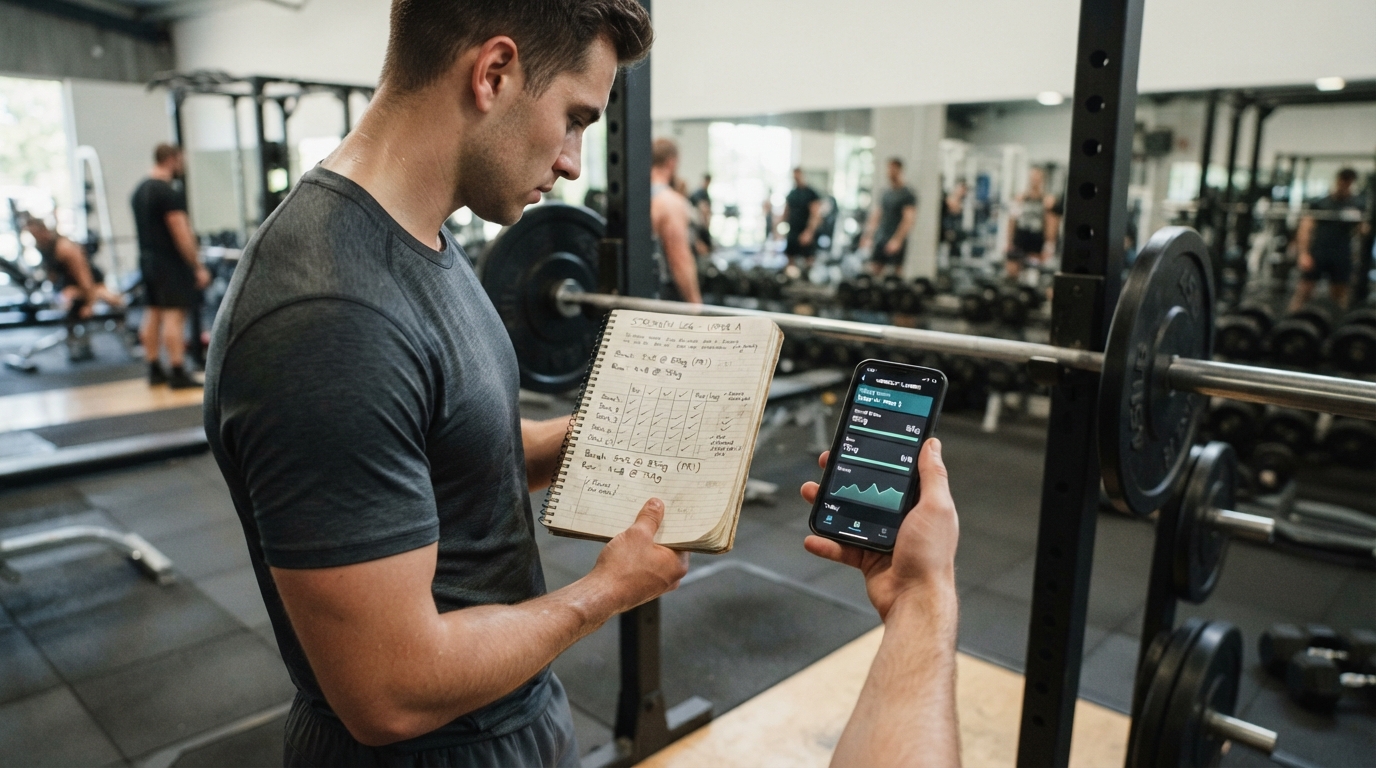
This keeps expert eyes on your technique without paying for every workout, and the app's history makes each check-in far more useful than "I think I've been doing about 135 for sets of eight."
How to Choose a Fitness Plan App
Not all fitness plan apps are equal. Before you commit to one, check that it does these things:
Offers proven programs
Well-known routines have been tested by thousands of lifters. An app that only generates random workouts is easier to build but harder to progress on.
Keeps your routine consistent
You get stronger by repeating the same lifts and beating your last numbers. Be wary of apps that shuffle exercises every session; variety feels good but makes progress hard to measure.
Shows your last session as you train
Seeing what you lifted last time, right when you start a set, is what turns logging into progress.
Fits your equipment and schedule
A plan built around a full commercial gym won't help if you train at home with dumbbells. Look for an app that asks about your equipment and how many days you can train.
Lets you keep your data
Your training history is valuable. Prefer apps that let you export it, and check how they handle your privacy.
If you'd rather start without any app at all, our free weight training log templates work fine on paper, and we compared both approaches in Paper vs Digital: Which Workout Planner Works Best? For setting starting weights, the one-rep max calculator turns any recent set into training percentages, and the exercise library has video demos for checking your form between trainer sessions.
Frequently Asked Questions
Can a fitness app replace a personal trainer?
For planning, scheduling and tracking, yes, for most people who already know the basic lifts. What an app can't fully replace is a trained eye on your form and the accountability of a booked session. Many lifters use a trainer early on and switch to an app once they're confident.
Are fitness plan apps good for beginners?
They can be, especially ones that offer simple, proven beginner programs. The main risk for beginners is form, so pair the app with exercise videos, filming your sets, or a few sessions with a coach.
How much does a personal trainer cost compared to an app?
Personal training commonly runs about $40 to $100 or more per session in the US, depending on the city and the trainer's experience. Most fitness plan apps cost between nothing and $20 a month, so a year of an app often costs less than two or three training sessions.
What about online personal trainers?
Online coaching sits in the middle: a real coach writes your program and reviews your videos and logs, usually for a monthly fee that's less than in-person training. It's a good option if you want human feedback but train on your own schedule.
Are AI workout plans as good as a trainer's?
A good AI planner can build a sensible routine around your goals, schedule and equipment, and adjust it as you progress. It won't see your form or notice that you're limping, so treat it as a strong planner rather than a coach.
The Bottom Line
A personal trainer is worth it when you need hands-on coaching, accountability, or help working around an injury. Fitness plan apps are the better choice once you know the basics and want a structured plan you can follow on your own schedule, at a fraction of the cost. And if you can't decide, combine them: learn the lifts with a coach, then let an app run your week.
If you go the app route, GymGod is one option that covers the approaches above. You can follow well-known, proven routines, let its AI planner build a plan that adapts to your goals and equipment, or set up a custom split if you're experienced and already know what you want. Whichever you pick, the part that works is the same as with a trainer: a clear plan, a target for every set, and a record of what you did.