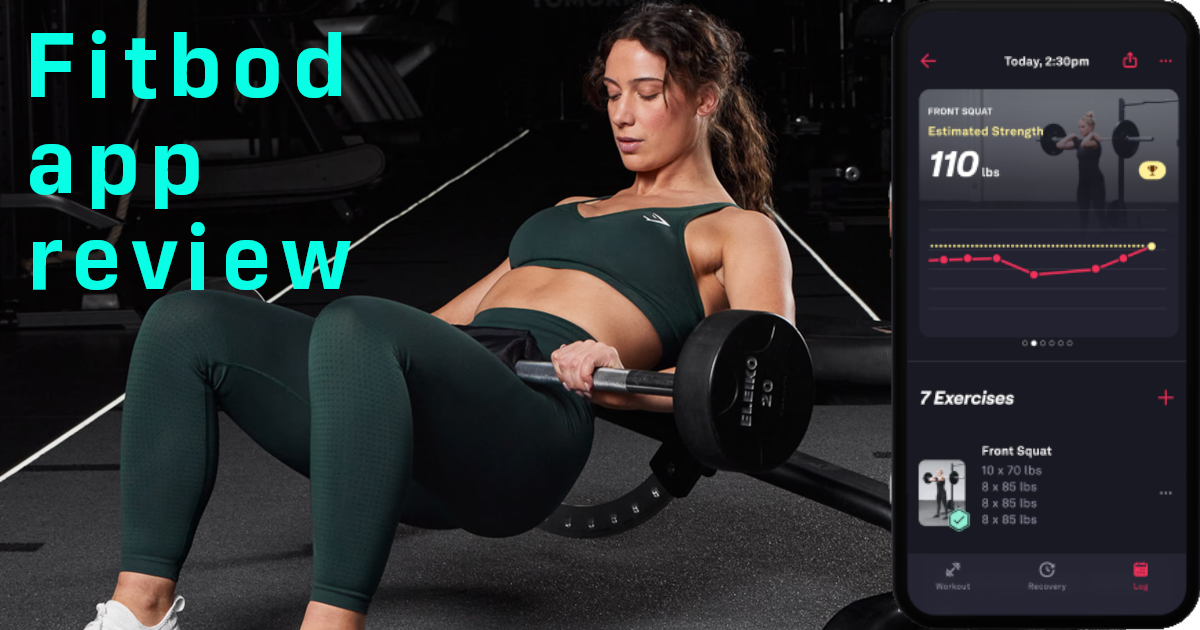
Choosing the right workout tracker app in 2025 isn't easy — especially with top options like Fitbod, Hevy, and GymGod all promising to be the ultimate tool for tracking your strength progress.
Check out our previous comparison of Strong vs Hevy to see how those apps stack up.
Each app takes a different approach to gym logging, from AI-generated workouts and recovery tracking to offline privacy and heart rate monitoring. Below, we compare how these fitness apps for weightlifters actually perform — what they do well, where they fall short, and which one truly fits your training style.
Fitbod App Review (2025)
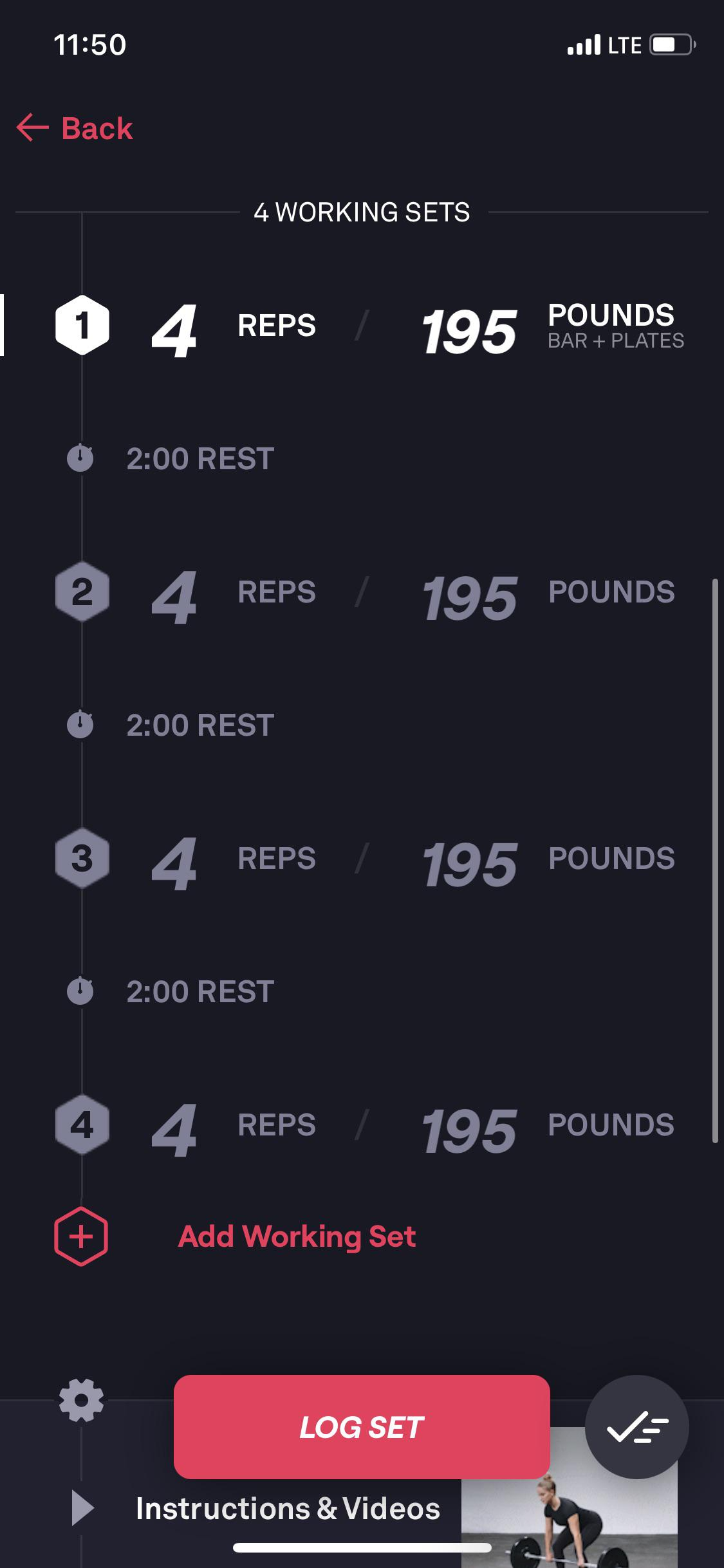
Fitbod is an AI-powered strength training app that creates personalized workout plans based on your goals, available equipment, fitness level, and recovery state. Unlike traditional workout trackers, Fitbod uses machine learning to automatically generate and adapt your workouts, removing the guesswork from program design while tracking your progress over time.
What Fitbod Does Well
- AI-powered workout generation: Automatically creates personalized workouts based on your goals, equipment, and muscle recovery status.
- Adaptive programming: Uses progressive overload principles and adjusts weights, reps, and exercises based on your logged performance.
- Equipment flexibility: Easily switch between gym, home, hotel, or bodyweight-only setups with multiple equipment profiles.
- Recovery tracking: Visual muscle group heat map shows which muscles are fresh or fatigued to optimize training splits.
- Extensive exercise library: Over 1,000 exercises with HD video demonstrations and detailed instructions.
- Apple Watch integration: Sync workouts and track metrics directly from your wrist.
- Clean interface: Intuitive design makes logging workouts quick and straightforward during training sessions.
Potential Limitations
- No free version: Only offers 3 free workouts or a 7-day trial before requiring paid subscription ($15.99/month or $95.99/year).
- AI limitations: Some advanced lifters report the algorithm focuses heavily on fatigue management rather than sophisticated periodization.
- Limited customization: While you can swap exercises, creating fully custom workouts from scratch isn't the primary focus.
- Weight suggestions: AI-recommended weights can sometimes be inaccurate, especially for beginners or when switching exercises.
- Less community focus: No social features, leaderboards, or workout sharing compared to apps like Hevy.
- Export limitations: Data export options are more limited compared to apps focused on long-term data ownership.
Fitbod for powerlifting
Fitbod can work for powerlifters who want structure and progression tracking, but it may not be ideal for those following specific powerlifting programs like Sheiko, Smolov, or Westside Barbell. The AI generates workouts based on fatigue management and progressive overload, but it doesn't offer the precise percentage-based programming that many competitive powerlifters require. Advanced lifters running their own periodized programs may prefer apps that allow more granular control over training variables. That said, Fitbod does support the big three lifts (squat, bench, deadlift) and their variations, making it suitable for recreational powerlifters or those in off-season training blocks.
Fitbod for bodybuilding
Fitbod excels for bodybuilding purposes. The app's hypertrophy-focused training mode emphasizes higher volume, shorter rest periods, and muscle group isolation — all essential for muscle growth. The recovery tracking feature is particularly valuable for bodybuilders, as it helps ensure you're hitting each muscle group with adequate frequency while allowing proper recovery. The exercise variety and ability to target specific muscle groups make it well-suited for traditional bro-splits, push-pull-legs, or upper-lower routines. However, experienced bodybuilders who prefer following specific programs from coaches or established protocols might find the AI-generated approach less appealing than building custom workouts.
Fitbod for beginners
Fitbod is excellent for beginners who feel overwhelmed walking into a gym. The app removes the intimidation factor by telling you exactly what to do, which exercises to perform, how many sets and reps, and even suggests appropriate weights. The video demonstrations with form cues are invaluable for learning proper technique. The guided approach helps beginners establish consistent workout habits without needing to hire a personal trainer. However, the limited free trial (only 3 workouts) means beginners must commit to a paid subscription relatively quickly. Some beginners may also find the AI's weight suggestions too aggressive or conservative initially, requiring manual adjustments as they learn their capabilities.
Who It’s Best For
- Beginners and intermediate lifters who want guided workouts without hiring a personal trainer.
- People who travel frequently or switch between gym and home training environments.
- Lifters who want to focus on training without spending time planning their own programs.
- Those seeking hypertrophy or general strength goals with adaptive progression.
- Users who value exercise variety and don't want to repeat the same workouts constantly.
- Apple Watch users who want seamless wearable integration.
GymGod App
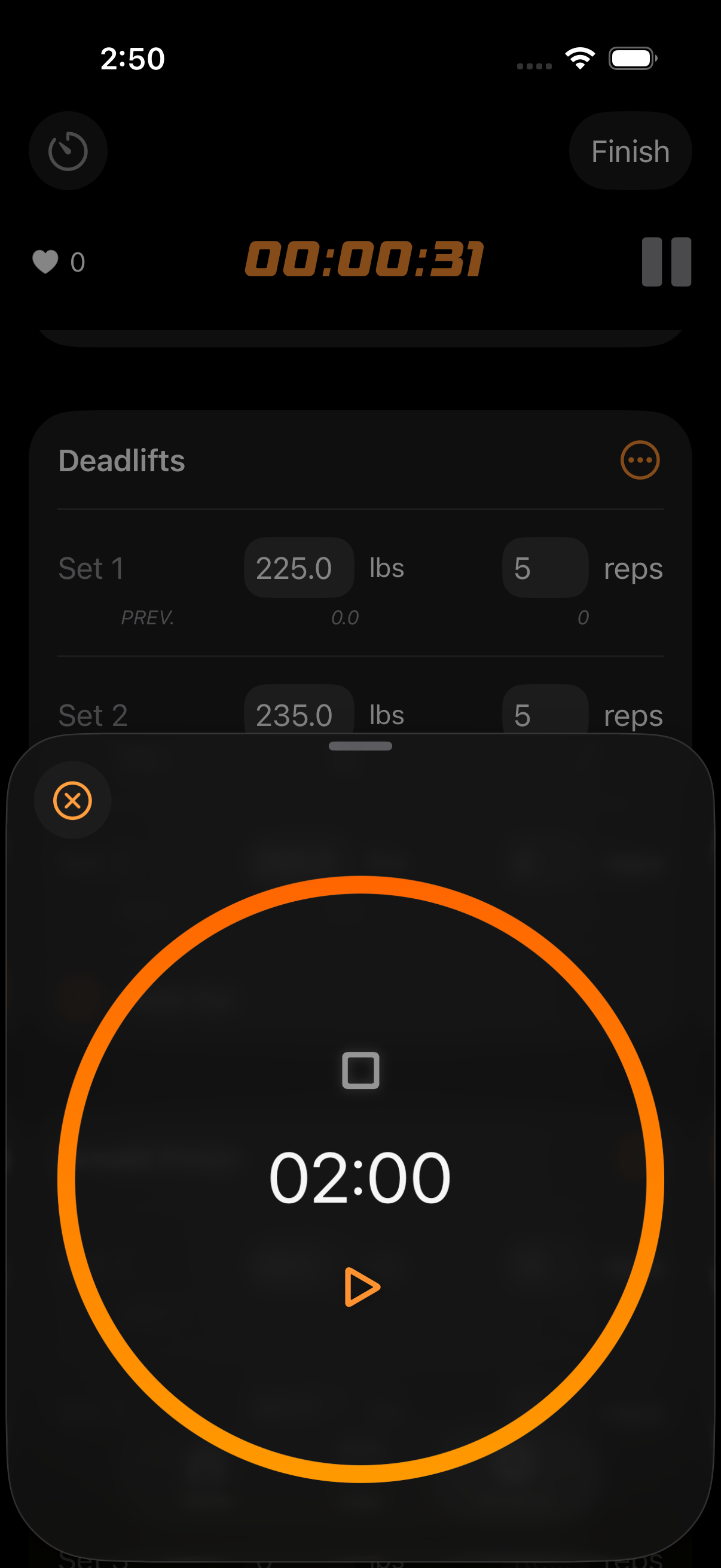
The GymGod app is a next-generation fitness tracker and weightlifting app designed for lifters who want performance tracking without the noise, ads, or cloud dependency found in many other gym logging apps. Unlike Fitbod, GymGod focuses on privacy, offline reliability, and real-world gym usability — no social feed, just pure training focus.
What Makes GymGod Different
- Completely offline: GymGod works without an internet connection — no iCloud, no server logins, and no data tracking. Your progress stays 100% private and stored locally on your device.
- Heart rate tracking: Syncs with your Apple Watch or phone to log real-time heart rate data during workouts — something even the biggest fitness apps overlook.
- Minimal and fast: Designed for speed between sets, not endless scrolling or feature bloat. Every tap and screen is built around gym performance and efficiency.
- Smart data tracking: Automatically analyzes workout intensity, volume, and progress trends so you can see where you're improving and where to push harder.
- Built-in proven routines: 9 evidence-based programs included (5/3/1, nSuns, PPL, and more) with new ones added regularly.
- Full customization: Complete control to build your own programs exactly how you want them, unlike AI apps that generate workouts for you.
Does Fitbod Suck Compared to GymGod?
The fundamental difference comes down to philosophy: Fitbod generates workouts for you using AI, while GymGod lets you follow your own programs with powerful tracking tools.
Fitbod is excellent if you want the app to plan everything and adapt on the fly. You show up, hit "Start Workout," and follow the AI's recommendations. This works great for beginners or people who don't want to think about programming.
GymGod was built for lifters who know what program they want to run — whether that's a proven routine like 5/3/1 or their own custom split. It excels at tracking your self-directed training with features like heart rate monitoring, offline reliability, and zero data collection. No social feed, no cloud syncing headaches, no algorithm second-guessing your choices — just your training, your data, your progress.
If you prefer guidance and AI-generated variety, Fitbod delivers. If you want complete control, privacy, and the fastest workout logging experience possible, GymGod is purpose-built for that.
Who GymGod Is Best For
- Serious lifters who follow proven programs like 5/3/1, nSuns, Starting Strength, or custom routines.
- Users who value privacy and want a gym tracking app that doesn't share or upload their data.
- Athletes who prefer a clean, fast interface without clutter, ads, or AI suggestions.
- People switching from Strong, Hevy, or Fitbod who want a more focused experience without subscriptions.
- Apple Watch users who want to track heart rate during strength training sessions.
- Lifters who train offline and need reliable, local-only data storage.
Competitive comparison
| Feature/Category | GymGod | Fitbod |
|---|---|---|
| Workout Logging | Fast, minimal steps | Polished and detailed |
| Progress Tracking | Charts, graphs, logs | Charts & graphs with recovery heatmap |
| Custom Routines | Unlimited custom routine creation | Limited - primarily AI-generated workouts |
| Built-in Routines | 9 proven programs (5/3/1, nSuns, PPL, etc.) | AI generates workouts based on goals |
| AI Workout Generation | Manual program design | Core feature - adaptive AI programming |
| Heart Rate Tracking | Full Apple Watch integration | Apple Watch support |
| Equipment Profiles | Single setup | |
| App Install Size | 25MB | 105.9MB |
| Privacy | Cloud-based with account sync | |
| Free Version | Trial available | Only 3 workouts or 7-day trial |
| Price | $1/month | $15.99/month or $95.99/year |
Pricing & value
Fitbod requires a paid subscription with no meaningful free tier — you get only 3 workouts or a 7-day trial before paying. At $15.99/month or $95.99/year, it's one of the more expensive workout apps on the market. Occasional lifetime memberships around $359.99 have been offered, though this represents a significant upfront investment. For users who want AI-generated workouts and don't mind the recurring cost, Fitbod provides solid value. However, for cost-conscious lifters, GymGod consistently provides the most features at just $1/month, making it the best value option for serious training without breaking the bank.
User interface & ease of use
Fitbod features a polished, modern interface with smooth navigation and visually appealing design. The exercise selection flows naturally, and the recovery heatmap provides intuitive visual feedback. However, the app is optimized around its AI workflow — you're meant to let it generate workouts rather than build your own. GymGod surpasses both Fitbod and traditional trackers by blending lightning-fast workout logging with a beautiful, minimal design. There's no algorithm to wait for, no generated workout screens to navigate — just open the app, select your program, and start lifting. The result is the most user-friendly experience available for lifters who value speed and simplicity.
Exercise library & customization
Fitbod includes an impressive library of over 1,000 exercises with HD video demonstrations and detailed instructions. You can swap exercises within generated workouts and adjust sets/reps, but the app isn't designed for building complex custom programs from scratch — that would defeat its AI-first philosophy. For users who want to follow proven programs like 5/3/1, nSuns, or their own periodized training, Fitbod's approach can feel restrictive. GymGod outclasses Fitbod for customization, offering an extensive exercise library combined with complete freedom to build any program structure you want. Plus, it includes 9 battle-tested routines ready to use, with the flexibility to modify or create your own from scratch.
Timers, rest, and session flow
Fitbod includes configurable rest timers and tracks your session duration, though the focus is more on exercise selection and progressive overload than granular rest period management. The AI handles session pacing by adjusting workout length based on your time constraints. For lifters who need precise rest intervals (powerlifters timing 3-5 minute rests) or want automatic rest timers between every set, the implementation is functional but not the app's strongest feature. GymGod elevates rest timing with intelligent, programmable timers and seamless session flow that automatically starts after each set, providing the precise rest period control that serious lifters demand without any fuss.
Data, exports, & privacy
Fitbod stores your data in the cloud with account-based syncing across devices. While this enables seamless multi-device access, it means your workout data is stored on Fitbod's servers. Export options are available but more limited compared to apps focused on data ownership. Integration with Apple Health, Strava, and other platforms allows some data portability. For users who prioritize cloud convenience and don't mind their data being stored externally, Fitbod's approach works well. However, GymGod delivers best-in-class privacy with 100% offline operation — your training data never leaves your device, period. While external exports are currently limited, the tight integration with Apple Health provides secure, effortless connection to your health ecosystem, and you maintain complete ownership of your data at all times.
Which should you pick?
- Choose Fitbod if: You want AI to generate workouts for you, prefer guided training without planning your own programs, travel frequently and need adaptive equipment profiles, or don't mind paying $15.99/month for automated programming.
- Choose GymGod if: You want complete control over your training, follow proven programs like 5/3/1 or custom routines, value privacy and offline operation, need heart rate tracking during strength workouts, prefer the fastest logging experience possible, or want the best value at just $1/month.
- If you're unsure: Consider your training style. Do you want the app to tell you what to do (Fitbod's strength) or do you want to follow your own program with powerful tracking tools (GymGod's strength)?
Final Verdict
Fitbod is a polished, sophisticated AI-powered workout app that excels at generating adaptive training plans for users who want guidance without hiring a coach. Its strength lies in removing the planning burden and automatically adjusting your workouts based on recovery and performance. For beginners, travelers, or anyone who wants the app to handle programming, Fitbod delivers real value despite its premium price.
However, for lifters who prefer following established programs, demand complete privacy, or want the fastest possible workout logging experience, GymGod offers a compelling alternative. It combines offline reliability, heart rate tracking, proven built-in routines, unlimited customization, and exceptional speed — all at a fraction of Fitbod's cost.
Whether Fitbod's AI approach or GymGod's user-controlled philosophy fits you better depends on your training style, but both represent top-tier options in the 2025 workout app landscape. The difference is clear: Fitbod thinks for you, GymGod empowers you to think for yourself.