


You've been hitting the gym for months, but can you remember what weight you used for squats two weeks ago? Or how many reps you hit on bench press last session? If you're like most lifters, you're probably guessing—and that guessing is costing you gains. A weight training journal isn't just a notebook; it's the difference between randomly exercising and systematically building strength. In this guide, you'll learn exactly how to use one to track your progress, identify plateaus before they happen, and ensure every workout moves you closer to your goals.
Why You Need a Weight Training Journal (Even If You Think You Don't)
Your memory is terrible at tracking workout details. Research shows that people consistently overestimate their performance when relying on memory alone. A weight training journal solves this by creating an objective record of every set, rep, and weight you lift.
Here's what happens when you start tracking:
Progressive overload becomes automatic. You'll know exactly what you need to beat from your last workout—no more guessing whether to add 5 or 10 pounds.
Plateaus become visible. When your bench press has been stuck at 185 lbs for three weeks, you'll see it in black and white and can adjust your approach.
Program hopping stops. With data showing what's actually working, you won't abandon a good program after two weeks because you "don't feel like it's working."
Motivation compounds. Flipping back through months of progress is incredibly motivating, especially on days when you don't feel like training.
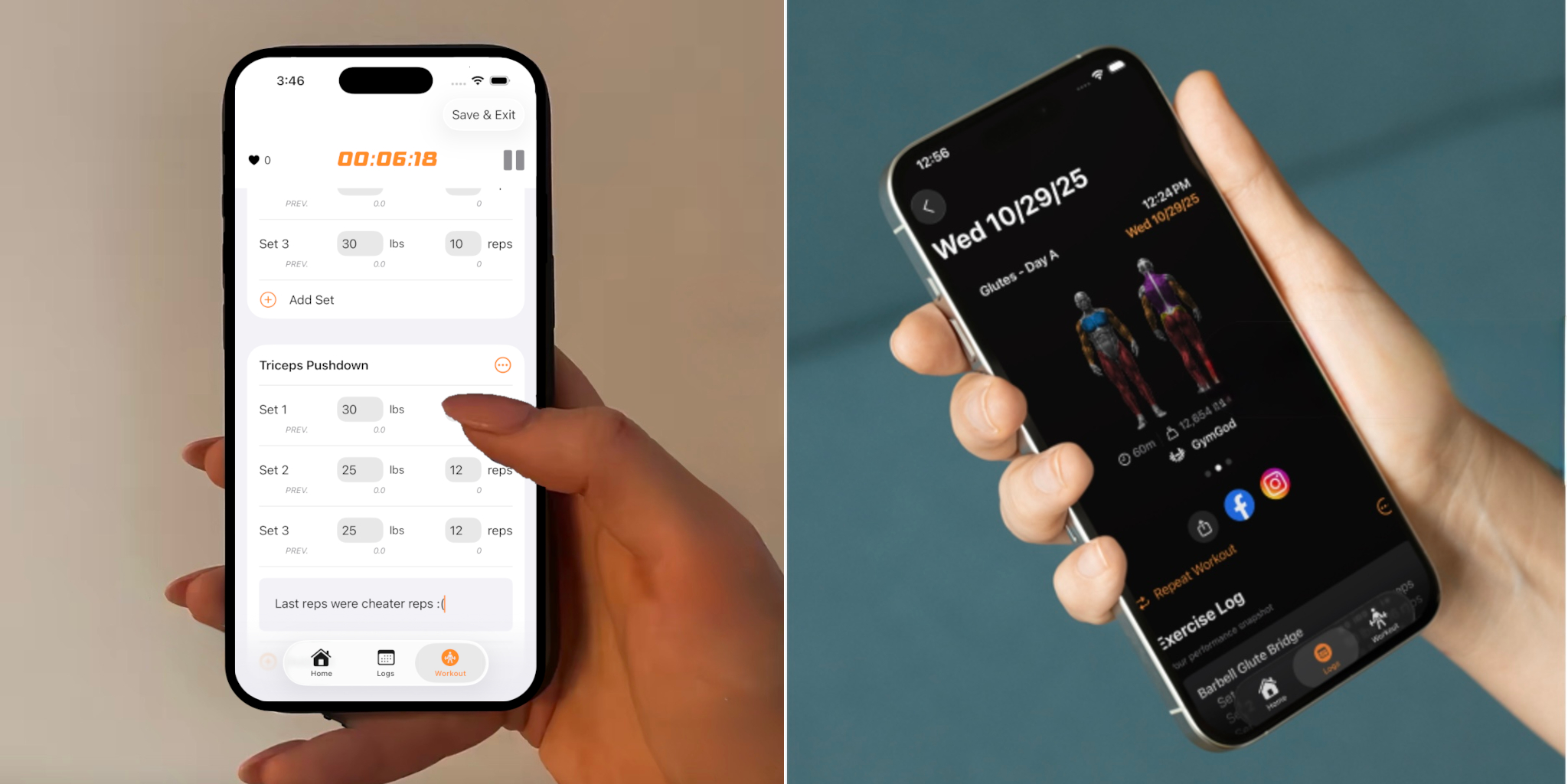
Your phone is now your personal strength coach. Know exactly what you lifted, when you lifted it, and where you're headed next. Digital tracking for next-level results.
What to Track in Your Weight Training Journal
The Essential Four
Every journal entry should include these non-negotiables:
1. Date and Time
Tracking when you train reveals patterns. Maybe your Tuesday morning sessions consistently outperform Friday evenings. That's actionable data.
2. Exercise Name
Be specific. "Bench Press" isn't enough. Write "Barbell Bench Press" or "Dumbbell Bench Press (Flat)" to avoid confusion later.
3. Sets and Reps
Format: Weight x Reps for each set. Example: "185 x 8, 185 x 7, 185 x 6" shows exactly what happened.
4. Weight Used
Always record the actual working weight, not including the bar (unless you note it). Be consistent with your notation.
The Performance Enhancers
Add these once the basics become habit:
Rest periods – Discover if shorter rest is tanking your performance
RPE (Rate of Perceived Exertion) – Scale of 1-10 for how hard each set felt
Tempo – If you're doing controlled eccentrics or paused reps
Exercise order – Did you squat before or after deadlifts?
The Context Trackers
These variables explain why some workouts feel amazing and others feel awful:
Sleep quality (hours and subjective rating)
Meal timing (how long before training you ate)
Stress level (work, relationships, life)
Energy level at start of workout
Any aches, pains, or mobility issues
Bodyweight (weekly weigh-ins minimum)
How to Structure Your Journal Entries
The Simple Template
Date: November 6, 2025
Workout: Push Day A
Bodyweight: 180 lbs
Sleep: 7.5 hours (good)
Energy: 7/10

1. Barbell Bench Press
   Set 1: 135 x 10 (warmup)
   Set 2: 185 x 8 (RPE 7)
   Set 3: 185 x 7 (RPE 8)
   Set 4: 185 x 6 (RPE 9)
   Notes: Felt strong. Right shoulder tight on set 4.

2. Incline Dumbbell Press
   Set 1: 60 x 10
   Set 2: 60 x 9
   Set 3: 60 x 8
   Notes: Kept 2-min rest. Could probably go heavier next time.

[Continue for all exercises...]

Workout Notes: Great session. Added 1 rep to bench from last week.
Focus on shoulder mobility before next push day.
The Advanced Template
For intermediate to advanced lifters tracking periodization:
Week 4 of 12 - Hypertrophy Block
Date: November 6, 2025
Training Max (Bench): 225 lbs
Target: 70% x 12-15 reps x 4 sets

Barbell Bench Press (158 lbs)
Set 1: 158 x 15 (RPE 7, 3 RIR)
Set 2: 158 x 14 (RPE 8, 2 RIR)
Set 3: 158 x 13 (RPE 8, 2 RIR)
Set 4: 158 x 12 (RPE 9, 1 RIR)

Analysis: Hit rep ranges. On track for 5lb TM increase next cycle.
Step-by-Step: Your First Journal Entry
Choose Your Format
Paper notebook (classic, no distractions), spreadsheet (great for data analysis), note-taking app (searchable, always with you), or dedicated fitness app (automated graphs and analytics)
Set Up Your Layout
Create sections for date, exercise, sets/reps/weight, and notes. Leave space for workout reflections.
Record During Rest Periods
Don't wait until after your workout. Write down each set immediately after completing it while the numbers are fresh.
Add Context Notes
After your workout, spend 60 seconds noting how you felt, any technique cues that helped, or what to adjust next time.
Review Before Your Next Session
Five minutes before training, review your last workout. Know exactly what you need to beat.

From journal to insight: review your workouts, spot trends, and spark progress.
How to Use Your Journal to Actually Make Progress
The Weekly Review Ritual
Every Sunday (or whatever day works), spend 15 minutes reviewing your week:
Calculate volume: Sets x Reps x Weight for each muscle group. Are you progressing?
Identify patterns: Which exercises are moving up consistently? Which are stalled?
Plan next week: Based on what you learned, what needs to change?
The Monthly Performance Audit
Once a month, go deeper:
• Compare this month to last month on key lifts
• Calculate your average weekly training volume
• Look for correlation between life factors (sleep, stress) and performance
• Adjust your program if needed
Making Adjustments Based on Data
If lifts are progressing: Keep doing what you're doing. Don't fix what isn't broken.
If lifts are stuck for 2-3 weeks: Try different rep ranges, more volume, or better recovery.
If lifts are regressing: You're probably not recovering. Check sleep, calories, and stress.
If some lifts progress but others don't: The stalled lifts need more frequency or volume.
Common Weight Training Journal Mistakes
Mistake #1: Tracking Too Much
You don't need to log your heart rate, the gym temperature, and what song was playing. Start simple. Add complexity only if it serves a purpose.
Mistake #2: Not Tracking Enough
"Did chest today" isn't useful. You need specifics to create progress.
Mistake #3: Logging After the Fact
Your memory isn't reliable. Record between sets, not after your shower.
Mistake #4: Never Reviewing
A journal you don't review is just a diary. The magic happens when you analyze trends and adjust accordingly.
Mistake #5: Perfect Is the Enemy of Good
Missed a workout note? Forgot to log RPE? That's fine. An imperfect journal you actually use beats a perfect journal you abandon.
Paper vs Digital: Which Should You Choose?
Paper Journals
Pros:
✓ No battery to die mid-workout
✓ No notifications or distractions
✓ Tactile satisfaction of writing
✓ Easy to sketch form cues or diagrams
Cons:
✗ Can't automatically calculate volume or graph progress
✗ Gets bulky over time
✗ Easy to forget at home
Best for: Old-school lifters, those who want zero digital distraction, people who think better while writing by hand.
Digital Solutions
Pros:
✓ Automatic calculations and progress graphs
✓ Always in your pocket (if using phone)
✓ Searchable history
✓ Can share with coaches easily
Cons:
✗ Battery dependency
✗ Potential for distraction
✗ Learning curve for some apps
Best for: Data nerds, people who want visual progress tracking, lifters working with online coaches.
The hybrid approach: Log on paper during workouts, transfer to digital weekly for analysis and long-term tracking.
Free Weight Training Journal Templates
To help you get started immediately, here are three templates you can use:
Template 1: Simple Strength Log
Best for beginners focusing on compound lifts.
Date: ___________
Exercise: ___________
Set 1: ___ lbs x ___ reps
Set 2: ___ lbs x ___ reps
Set 3: ___ lbs x ___ reps
Notes: ___________
Template 2: Bodybuilding Tracker
Best for hypertrophy-focused training.
Date: ___________
Muscle Group: ___________
Exercise 1: ___________
Sets x Reps: ___ | Weight: ___ | RPE: ___
Exercise 2: ___________
Sets x Reps: ___ | Weight: ___ | RPE: ___
[Repeat for 4-6 exercises]
Pump Rating (1-10): ___
Fatigue Rating (1-10): ___
Template 3: Program Tracking Sheet
Best for following structured programs (5/3/1, Starting Strength, etc.).
Program: ___________
Week: ___ of ___
Date: ___________
Current Training Max: ___________

Main Lift: ___________
Warmup Sets: ___________
Working Sets:
Set 1: ___% x ___ = ___ lbs x ___ reps
Set 2: ___% x ___ = ___ lbs x ___ reps
Set 3: ___% x ___ = ___ lbs x ___ reps

Assistance Work: ___________
Notes: ___________
Your Next Steps
Here's how to implement everything you've learned:
Choose your journal format (paper, spreadsheet, or app). Set up your first template.
Log every workout using the essential four data points (date, exercise, sets/reps, weight). Don't worry about anything fancy yet.
Add one contextual factor like sleep quality or energy level. See if you notice patterns.
Do your first weekly review. Look at which lifts progressed and which didn't.
You're now a tracking machine. Consider adding advanced metrics like RPE or tempo if they serve your goals.
The best weight training journal is the one you'll actually use. Start simple, stay consistent, and let the data guide your progress. Your future self—the one setting PRs six months from now—will thank you for starting today.
Frequently Asked Questions
How long should I keep my training journal?
Forever. Serious answer: at least one full training cycle (12-16 weeks) to see meaningful patterns. Many lifters keep years of logs to track long-term progress and reference what worked during peak performance periods.
Do I really need to log every single workout?
Yes, if you want reliable data. That said, missing one workout log won't ruin everything. Aim for 90%+ compliance. The more consistent your logging, the more useful your data becomes.
What if I'm doing the same program as someone else—can I just copy their numbers?
Your journal is about YOUR performance, not replicating someone else's. Even on identical programs, your recovery, technique, and progression will differ. Track your own journey.
Should I log warmup sets?
Optional. Most lifters log working sets only to keep entries cleaner. But if warmup weights help you track progression (like AMRAP warmups), include them.
How do I handle deload weeks or rest days in my journal?
Log them! Write "Deload Week" or "Rest Day - Active Recovery Walk" so you have context when reviewing. Gaps in your journal create confusion later.
Ready to take your training to the next level?
A weight training journal is your first step toward consistent, measurable progress. Start tracking today, and watch your gains compound month after month.