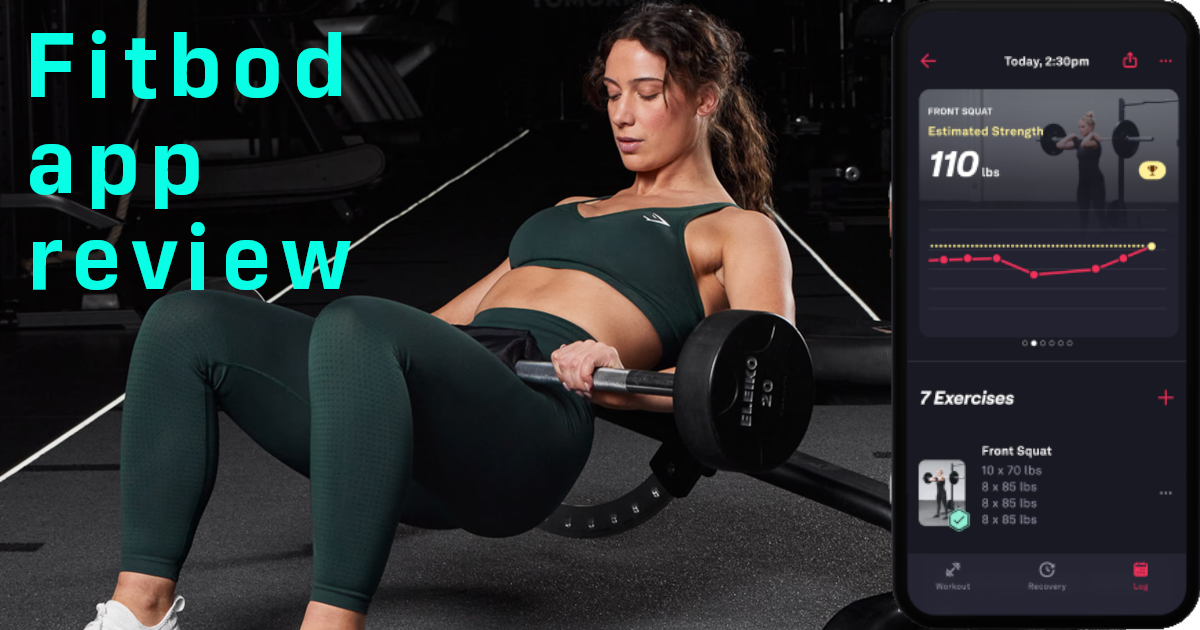
Fitbod is an AI workout app that plans each session for you based on your goals, equipment and which muscles are recovered. In the US App Store it costs $15.99 a month or $95.99 a year. There's no free version, only a free trial. And because it hands you a different workout most days, it works against the one thing that actually makes you stronger: progressive overload, doing the same lifts and beating your last numbers.
Below is our full Fitbod app review: what it does well, where it falls short, exactly what it costs, and and why GymGod, the app we built, is the better choice for lifters who want to get stronger. If you're choosing between the two most popular manual trackers, see our Strong vs Hevy comparison.
Fitbod App Review (2026): How It Works
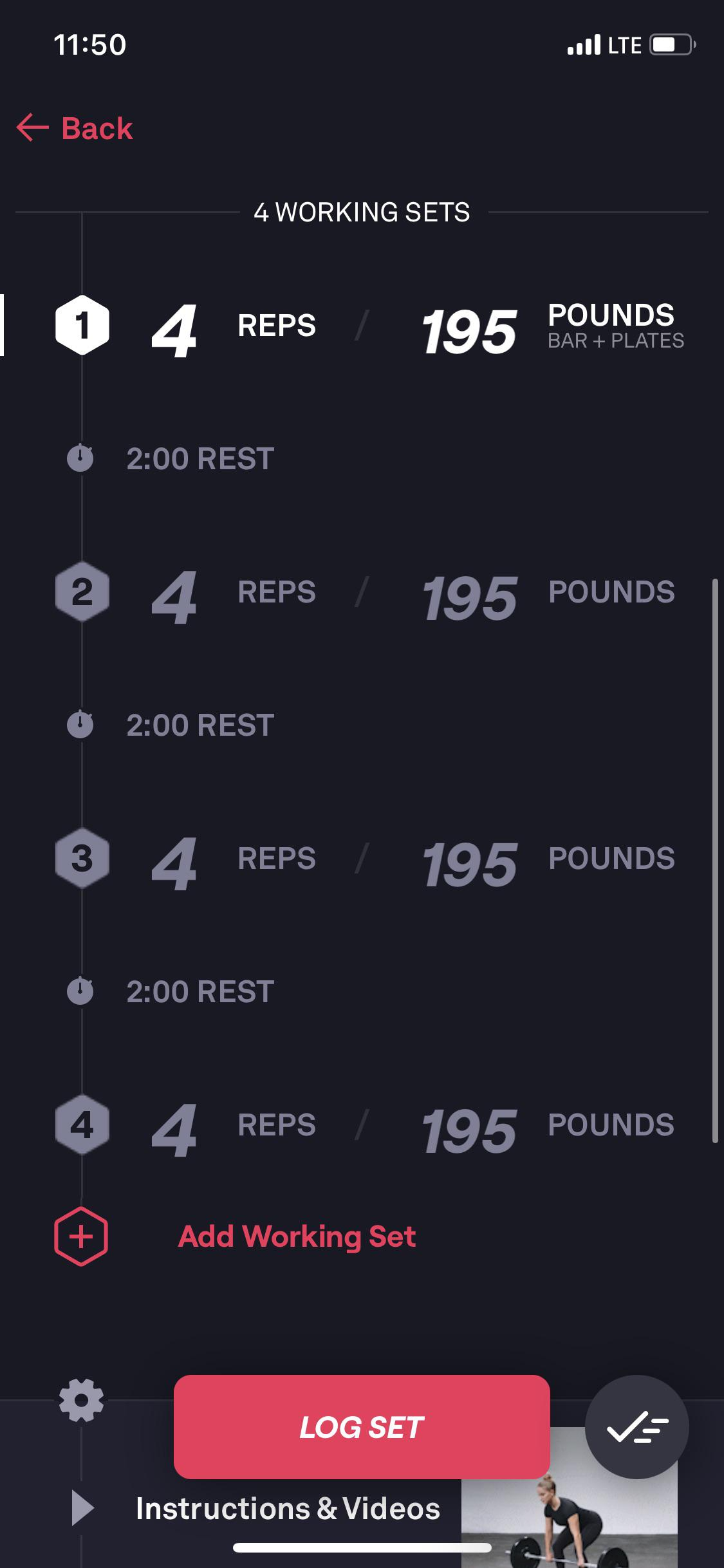
Fitbod is an AI-powered strength training app that creates personalized workout plans based on your goals, available equipment, fitness level, and recovery state. Unlike traditional workout trackers, Fitbod uses machine learning to automatically generate and adapt your workouts, removing the guesswork from program design while tracking your progress over time. You open the app, it shows today's workout, and it adjusts the next one based on what you logged.
What Fitbod Does Well
- AI-powered workout generation: Automatically creates personalized workouts based on your goals, equipment, and muscle recovery status.
- Adaptive programming: Uses progressive overload principles and adjusts weights, reps, and exercises based on your logged performance.
- Equipment flexibility: Easily switch between gym, home, hotel, or bodyweight-only setups with multiple equipment profiles.
- Recovery tracking: Visual muscle group heat map shows which muscles are fresh or fatigued to optimize training splits.
- Extensive exercise library: Over 1,000 exercises with video demonstrations and instructions.
- Apple Watch integration: Sync workouts and track metrics directly from your wrist.
- Well liked: 4.8 out of 5 from about 287,000 ratings in the US App Store.
Where Fitbod Falls Short
- No free version: After the free trial, everything sits behind the subscription.
- One of the priciest trackers: $15.99 a month is roughly four times what most manual workout trackers charge.
- AI limitations: Some advanced lifters report the algorithm focuses heavily on fatigue management rather than sophisticated periodization.
- Limited customization: You can swap exercises, but building fully custom programs from scratch isn't the point of the app.
- Weight suggestions: AI-recommended weights can be off at first, especially for beginners or when switching exercises.
- Less community focus: No social feed, leaderboards, or workout sharing compared to apps like Hevy.
How Much Does Fitbod Cost?
Fitbod costs $15.99 per month or $95.99 per year in the US App Store, which works out to about $8 a month on the yearly plan. These are the current prices for Fitbod Elite, the only paid tier. The App Store also still lists older plans at $12.99 a month and $79.99 a year, so people who subscribed before the price rise may pay less. We checked these prices in October 2026.
| Fitbod plan | Price (US) | Per month |
|---|---|---|
| Monthly | $15.99/month | $15.99 |
| Yearly | $95.99/year | about $8.00 |
| Older (legacy) plans | $12.99/month or $79.99/year | from about $6.67 |
| Lifetime | Not listed in the App Store right now | - |
Prices vary by country, and Fitbod has run discounts and lifetime offers in the past, so check the price in the app before you subscribe. If you subscribe through the App Store, you also cancel there (Settings, your name, Subscriptions), not inside Fitbod.
Is Fitbod Free?
No. Fitbod is free to download, but there is no free version. New users get a free trial of Fitbod Elite; over the years that trial has been described as either three free workouts or seven days, and the App Store listing doesn't state the length. When the trial ends, you need a subscription to keep getting workouts.
If you want something free, Hevy and Strong both have free versions with limits (Strong's free version caps you at three custom routines), and you can keep a paper log for nothing with our free printable workout log templates.
Is Fitbod Worth It?
Fitbod is worth it if you want the app to do all the planning and you value variety. It's less worth it if your goal is to get stronger, because constantly changing workouts make progressive overload hard to track, and at $15.99 a month it costs four times as much as GymGod.
- Worth it for: beginners who don't know what to do in the gym, people who train in different places with different equipment, and anyone who'd otherwise pay a personal trainer just for programming.
- Not worth it for: lifters running a set program like 5/3/1 or a powerlifting peak, people on a budget, and anyone who wants full control of their sets and reps.
Fitbod for beginners
Fitbod is good for beginners who feel overwhelmed walking into a gym. The app tells you exactly what to do, which exercises to perform, how many sets and reps, and suggests appropriate weights. The video demonstrations help you learn proper technique, and the guided approach helps build a consistent habit without hiring a personal trainer. The catch is cost: beginners have to commit to a subscription soon after the trial, and the AI's first weight suggestions may be too heavy or too light until it learns what you can lift.
Fitbod for bodybuilding
Fitbod works well for bodybuilding. Its hypertrophy-focused goals emphasize higher volume, shorter rest periods, and muscle group isolation. The recovery tracking helps you hit each muscle group often enough while allowing it to recover, and the exercise variety suits push-pull-legs or upper-lower routines. Experienced bodybuilders who follow a specific coach's program may find the AI-generated approach gets in the way.
Fitbod for powerlifting
Fitbod can work for recreational powerlifters who want structure and progression tracking, but it isn't built for percentage-based programs like Sheiko, Smolov, or Westside. The AI programs around fatigue and progressive overload rather than the precise percentages competitive lifters need. It does support the squat, bench and deadlift and their variations, so it can fit an off-season block.
The Problem With Fitbod: A New Workout Every Day
Strength comes from progressive overload: doing the same lifts week after week and beating what you did last time, whether that's one more rep or five more pounds. That's how every proven strength program works, from Starting Strength to 5/3/1.
Fitbod builds each session around which muscles are recovered, so the exercises keep changing. Variety feels fresh, but it makes it hard to answer the only question that matters in the gym: did I beat last week? If you squat on Monday, do leg presses next time and lunges after that, you never get a clean comparison, and your numbers drift instead of climbing.
Newer AI apps like Gravl work the same way and charge about the same ($14.99 a month), so switching between them doesn't fix the problem. That's the gap we built GymGod to close.
The Best Fitbod Alternative: GymGod
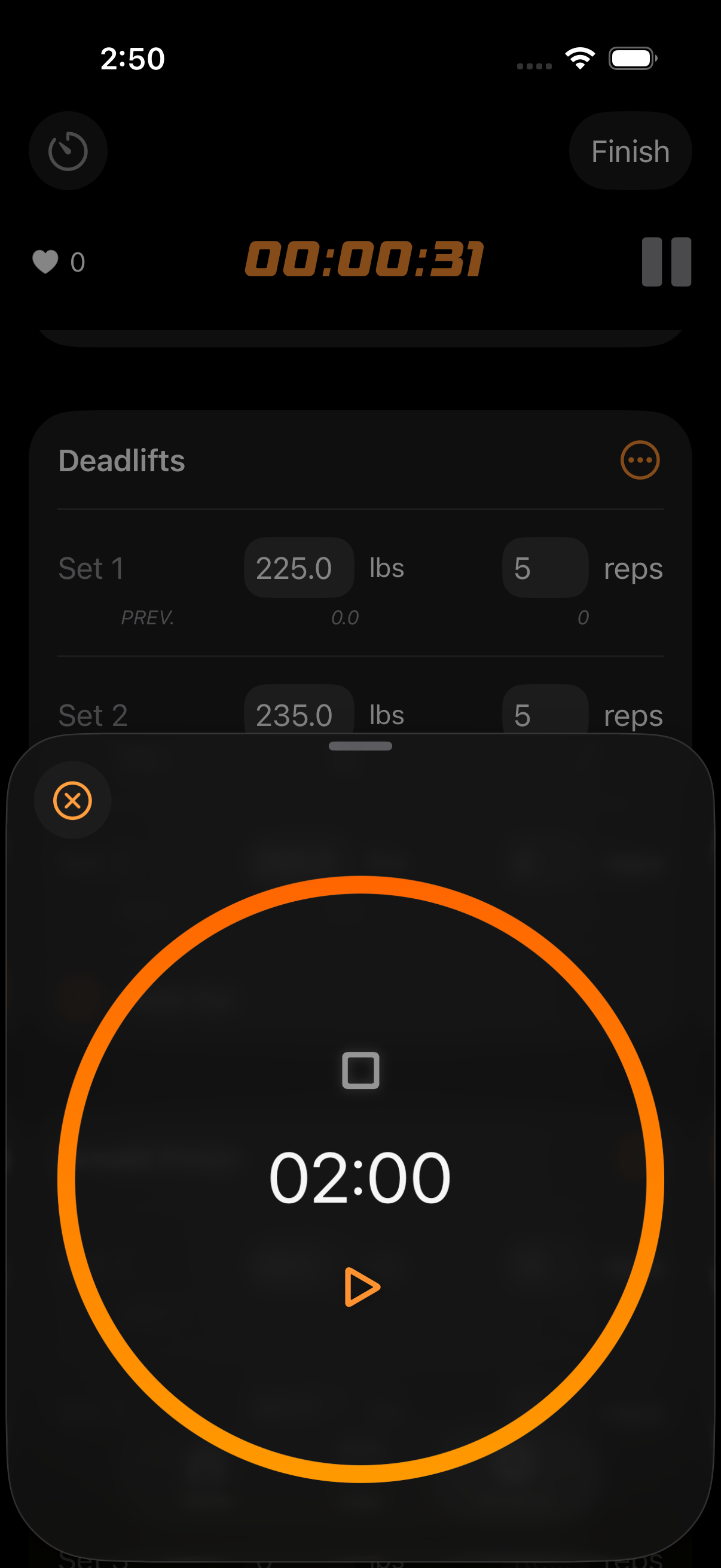
GymGod keeps the part people like most about Fitbod, an AI that tells you what to do, and drops the randomness. Its AI coach builds you a routine that stays consistent, so every session is a chance to beat the last one. It shows you exactly what you lifted last time, calculates your next weight automatically, and celebrates every PR. And it costs a quarter of Fitbod's monthly price.
Why GymGod Beats Fitbod for Getting Stronger
- An AI routine that stays consistent: GymGod's AI coach builds a routine around your goals in a few taps and keeps it steady, so you progressively overload instead of starting over every day.
- Your last workout on screen: the moment you start an exercise, your last weights, reps and goals appear. You always know the number to beat.
- Auto-progression: your next weight is already calculated from what you actually lifted, with recalibration prompts when you need them.
- Coaching from your own history: tips based on what you've actually lifted, and a recap after every workout showing what you did and where you improved.
- PRs caught automatically: new personal records are detected instantly, with full PR history, badges and volume stats.
- 9 proven programs: 5/3/1, nSuns, PPL and more, with progression and rest times built in, or build your own.
- Private AI: the coach runs on your iPhone. No account, no cloud AI, and your data syncs through your own iCloud.
- Apple Watch, Dynamic Island and Siri: log sets from your wrist, glance at your workout on the Lock Screen, and export workouts with your voice.
- Bring your Fitbod history: import your Fitbod workouts and keep every PR you've earned.
Fitbod vs GymGod: The Real Difference
Fitbod generates a new workout for you; GymGod helps you beat your last one. Both have AI. Fitbod's decides what you'll do today. GymGod's builds a plan you can stick with, then puts your last numbers in front of you and raises the target automatically.
If you want variety for its own sake, Fitbod delivers it. If you want your squat, bench and deadlift to go up month after month, GymGod is built for exactly that, and at $3.99 a month (or $59.99 once, less than four months of Fitbod) it's far easier to stick with too.
Fitbod vs GymGod vs Hevy vs Strong: Price
| App | Monthly | Yearly | Lifetime |
|---|---|---|---|
| GymGod | $3.99 | $24.99 | $59.99 |
| Fitbod | $15.99 | $95.99 | Not offered |
| Hevy Pro | $3.99 | $23.99 | $74.99 |
| Strong PRO | $4.99 | $29.99 | $99.99 |
US App Store prices, checked October 2026. Hevy and Strong are manual logs with no AI coach.
Fitbod vs GymGod comparison
| Feature | GymGod | Fitbod |
|---|---|---|
| Who plans workouts | You, a built-in program, or the on-device AI coach | Fitbod's AI, every session |
| Built-in programs | 9 proven programs | AI-generated workouts |
| Custom routines | Build your own | Limited |
| Equipment profiles | No | Gym, home, travel |
| Recovery heat map | No | Yes |
| Apple Watch | Yes | Yes |
| Account required | No | Yes |
| Free version | First 3 workouts free | Free trial only |
| Price | $3.99/month, $24.99/year or $59.99 lifetime | $15.99/month or $95.99/year |
Which should you pick?
- Choose GymGod if: you want to get stronger. Its AI builds a routine you can stick with, shows your last workout so you can beat it, and raises your weights automatically, for a quarter of Fitbod's price.
- Choose Fitbod if: you care more about variety than progress, and $15.99 a month is fine for you.
Final Verdict
Fitbod is a polished app that takes the planning off your plate, but a new workout every day makes it hard to do the thing that builds strength: beat your last session. At $15.99 a month, that's an expensive trade-off.
GymGod gives you the AI guidance without the randomness: a consistent routine, your last numbers on screen, auto-progression and automatic PRs, for $3.99 a month or $59.99 once. You can even import your Fitbod history. For lifters who want to get stronger, GymGod is the better app. Your first 3 workouts are free, so try it against your next Fitbod session.
Frequently Asked Questions
Is Fitbod free?
No. Fitbod is free to download and comes with a free trial, but there is no free version. After the trial you need a Fitbod Elite subscription.
How much is Fitbod a month?
Fitbod costs $15.99 a month in the US App Store, or $95.99 a year, which is about $8 a month. Some older subscribers are still on $12.99 a month or $79.99 a year.
Is Fitbod worth it?
It's worth it if you want an app to plan every workout for you, especially as a beginner or if you train with different equipment. If you already follow a program, a cheaper manual tracker is better value.
Is Fitbod good for beginners?
Yes. It tells you which exercises to do, how many sets and reps, and what weight to use, with video demos. Expect to adjust the first weight suggestions while it learns what you can lift.
What is the best Fitbod alternative?
GymGod. Its AI coach builds a routine that stays consistent so you can progressively overload, shows your last workout on screen, and calculates your next weight automatically, for $3.99 a month or $59.99 once. You can import your Fitbod history.
Can I move my Fitbod workouts to another app?
Yes. GymGod can import your Fitbod history, so you keep your past workouts and PRs when you switch.