Exercise Guide
Pull down for width. Row for thickness. Do both.
The best back exercises, what each one is for, and two ready-to-run back workouts.
A good back workout combines a vertical pull, such as pull-ups or the lat pulldown, for back width with a row, such as the barbell row or a chest-supported row, for thickness. Add a second pull from the other category and one lower back exercise, do 2 to 4 hard sets of each, and you have trained your whole back. Most lifters need 10 to 20 hard back sets a week, split over two sessions.
That is the short answer. The longer one is about choosing well. There are dozens of back exercises, and they are not interchangeable. This guide goes exercise by exercise: what each one does best, how to do it, and when to pick it over the alternatives. Then it puts the best ones together into a gym back workout and a dumbbell-only back workout.
If you want a complete session that also covers biceps and rear delts, our pull day workout has beginner, intermediate and advanced versions. This article stays on the back itself.
How Back Workouts Build Width and Thickness
Gym wisdom splits back workouts into two goals:
- Width is the V-shape you see from the front or back. It comes mostly from your lats (latissimus dorsi), the large fan-shaped muscles that run from your upper arm down to your lower back and pelvis, with help from the teres major. Vertical pulls, where you pull your elbows down from overhead, are the classic width builders.
- Thickness is the depth you see from the side and the detail in the middle of your back. It comes from the mid and upper traps, rhomboids and rear delts, plus the lats and the spinal erectors. Rows, where you pull toward your torso, are the classic thickness builders.
- Lower back work trains the spinal erectors directly. They hold your torso still during heavy rows and deadlifts, and they deserve a little direct work of their own.
Here is the honest caveat: this split is a useful simplification, not strict anatomy. Your lats work hard on rows too, especially when you keep your elbows close to your sides. Pull-ups also hit your mid back and lower traps. No exercise trains only width or only thickness. What the split does well is stop you from building a back program out of five kinds of row, or five kinds of pulldown. If you pick at least one exercise from each group, your whole back gets trained.
Back Workout Chart
Use this chart to build your own back workout: pick one or two width exercises, one or two thickness exercises and one lower back exercise. Sets and reps are a sensible starting point for each.
| Exercise | Target | Equipment | Sets × Reps | Best for |
|---|---|---|---|---|
| Pull-Ups | Width | Bar | 3 × 6-12 | Lats, relative strength |
| Lat Pulldown | Width | Machine | 3 × 8-12 | Lats, any strength level |
| Chin-Ups | Width | Bar | 3 × 6-12 | Lats plus extra biceps |
| Close-Grip Pulldown | Width | Machine | 2-3 × 10-15 | Lower lats, second pulldown |
| Single Arm Lat Pulldown | Width | Machine or cable | 2-3 × 10-15 per arm | Range of motion, imbalances |
| Barbell Row | Thickness | Barbell | 3-4 × 6-8 | Heavy loading, whole back |
| Pendlay Row | Thickness | Barbell | 4 × 5-8 | Strict, explosive rows |
| T-Bar Row | Thickness | Landmine or machine | 3 × 8-10 | Mid back, heavy and stable |
| Chest-Supported Row | Thickness | Dumbbells and bench | 3 × 8-12 | Sparing the lower back |
| Seated Cable Row | Thickness | Cable | 3 × 8-12 | Stretch and squeeze |
| One-Arm Dumbbell Row | Thickness | Dumbbell | 3 × 8-12 per arm | Lats and mid back, one side at a time |
| Inverted Row | Thickness | Bar or rings | 3 × 8-15 | Home and beginners |
| Back Extension | Lower back | Back extension bench | 2-3 × 10-15 | Erectors with low fatigue |
| Romanian Deadlift | Lower back | Barbell or dumbbells | 3 × 6-10 | Erectors plus hamstrings |
| Deadlift | Lower back | Barbell | 3 × 3-5 | Total-body strength |
Best Back Exercises for Width (Vertical Pulls)
Vertical pulls bring your elbows down from overhead toward your hips. That is the lats' main job, which is why these are the go-to width exercises. Every one of them shares the same core cue: start the rep by pulling your shoulder blades down, away from your ears, and only then bend your elbows.
Pull-ups
What it does: Pull-ups train your lats, mid back and biceps through a long range of motion while your whole body moves. They are the best measure of back strength relative to your bodyweight.
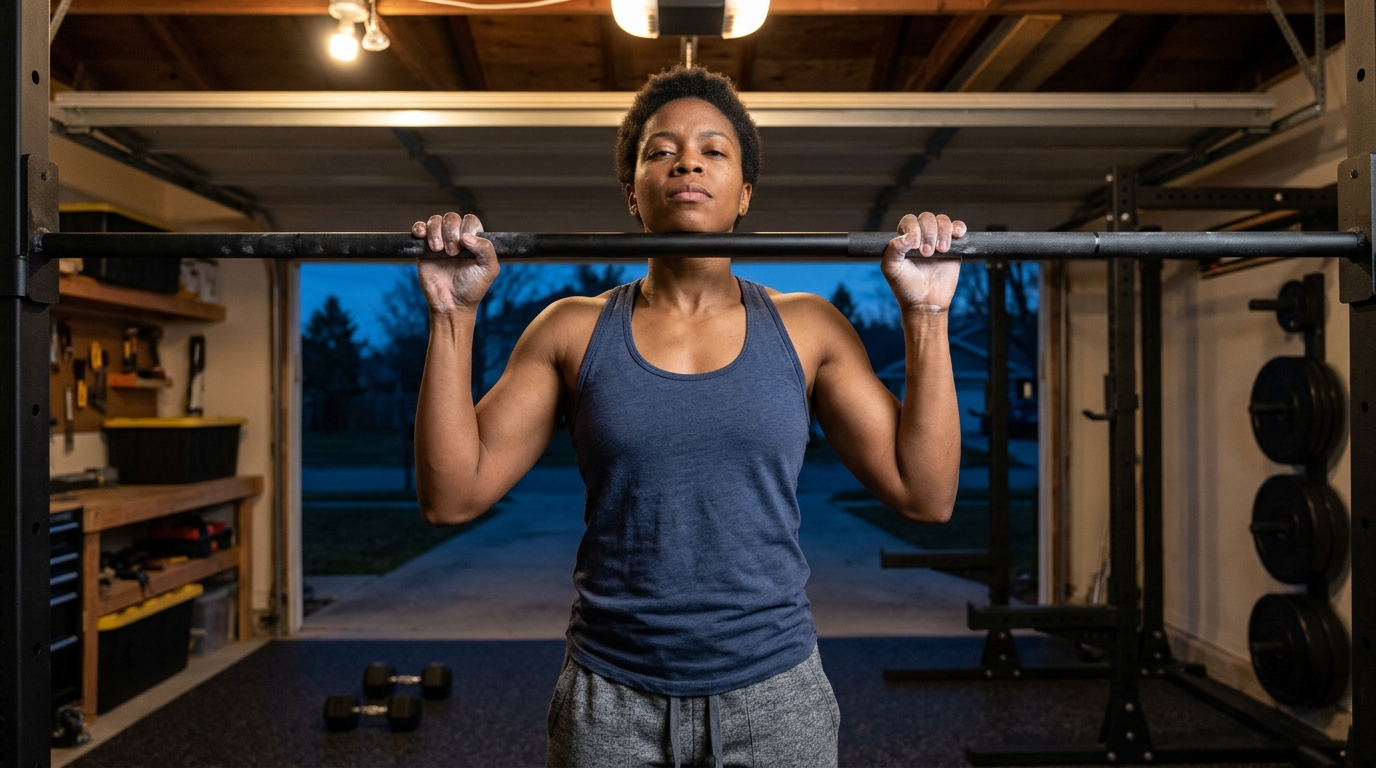
How: Hang with an overhand grip slightly wider than your shoulders. Pull your chin over the bar by driving your elbows down toward your hips, then lower to a full hang every rep.
Choose it when: you can do at least 5 clean reps. Once you can do 3 sets of 12, move to weighted pull-ups. If you cannot do one yet, use the lat pulldown and practice slow negatives. If you cannot feel your shoulder blades move at the start, scapular pull-ups teach it.
Lat pulldown
What it does: the lat pulldown trains the same movement as a pull-up, but you choose the load. That makes it the best width exercise for beginners, and a great high-rep option for everyone else.
How: Lock your thighs under the pad, lean back only slightly, and pull the bar to your upper chest. Let your arms go fully straight at the top. A big lean back turns it into a sloppy row.
Does grip width matter? Less than gym lore says. In a study of 15 men by Andersen and colleagues (2014), narrow, medium and wide overhand grips (1, 1.5 and 2 times shoulder width) produced similar lat activation over the whole rep, while the wide grip was slightly weaker: about 77 kg for 6 reps against about 80 kg for the narrower grips. An earlier study by Lusk, Hale and Russell (2010) found that an overhand grip activated the lats more than an underhand grip, regardless of width. Both were small studies measuring muscle activity, not growth, so read them as "pick a comfortable grip about 1 to 2 times shoulder width" rather than "the wide grip builds a wider back."
Choose it when: you cannot do 6 or more pull-ups, or as a second vertical pull after pull-ups for higher reps.
Chin-ups
Chin-ups use an underhand, shoulder-width grip. Most people can do a few more chin-ups than pull-ups because the biceps are in a stronger position. That makes them a good option for building up to pull-ups, or when you want more arm work in a short back and bicep session. If your only goal is the lats, the overhand grip is the slightly better pick.
Close-grip pulldown
The close-grip pulldown uses a V-handle with your palms facing each other. Your elbows stay close to your body and travel further back at the bottom, which many lifters feel more in the lower lats. It is a good second vertical pull for 10 to 15 reps. Keep the same rules as the regular pulldown: arms fully straight at the top, only a slight lean.
Single Arm Lat Pulldown
The single arm lat pulldown is a vertical pull done one arm at a time with a D-handle. You can do it seated at the pulldown station, which our library calls the single handle lat pull, or half-kneeling at a cable tower, the kneeling single arm pulldown. Both train the same thing. The kneeling version adds a core challenge because your torso has to resist twisting.
Why do it
- More range of motion. With no bar in the way, you can reach higher at the top for a bigger stretch on the lat, and pull your elbow further down and back at the bottom.
- It fixes imbalances. With a bar, your stronger side can quietly do more of the work. One arm at a time, each side has to pull its own weight.
- It makes the lat easier to feel. You can put all your attention on one side, which helps lifters who mostly feel pulldowns in their arms.
How to do it
- Attach a D-handle to a high pulley. Sit at the pulldown station, or kneel on the knee of your working side with the other foot forward, so the cable runs slightly in front of you.
- Grab the handle with your palm facing forward or slightly in. At the top, let your arm go fully straight and let your shoulder rise a little toward your ear to feel the stretch.
- Start the rep by pulling your shoulder down, away from your ear. Then drive your elbow down toward your hip, as if putting it in your back pocket.
- Finish with your hand beside your chest and your elbow tucked by your side. Pause for a second.
- Return slowly, about 2 to 3 seconds, all the way back to the stretch.
Cues and common mistakes
- Keep your torso still. A small lean toward the working side is fine. Twisting to finish the rep means the weight is too heavy.
- Think "elbow down," not "hand down." Your hand is just a hook.
- Start with your weaker side and match those reps on the stronger side.
- Use 2 to 3 sets of 10 to 15 reps per arm. It is an accessory, not a strength lift, so it belongs after your main pulldown or pull-ups.
The downside: it takes twice as long as a regular pulldown, and the weights are light enough that progress shows up mostly as reps. Use it as a second vertical pull, not a replacement for the first.
Best Back Exercises for Thickness (Rows)
Rows pull weight toward your torso, which works your mid and upper traps, rhomboids and rear delts along with your lats. Where your elbows go changes the emphasis: tucked close to your sides biases the lats, flared out to about 45 degrees or wider biases the upper back and rear delts.
Barbell row
The barbell row lets you load the whole back heavier than almost any other row. Hinge until your torso is about 45 degrees or lower, brace hard and pull the bar to your lower ribs or upper belly. If your torso rises a few inches every rep, the weight is too heavy. The catch is your lower back: it holds the hinge for every set. Choose the barbell row as your main heavy row when your lower back is not already tired from deadlifts.
Pendlay row
The Pendlay row is a barbell row where every rep starts from the floor, with your torso close to parallel. You cannot bounce out of the bottom or turn it into a standing shrug, so it keeps you honest. It suits experienced lifters who want strict, explosive heavy rows.
T-bar row
The T-bar row loads one end of a bar (or uses a dedicated machine) with a close, neutral handle. The fixed path makes it more stable than a barbell row, so many people can load it heavy with better form. Machine versions with a chest pad also take the lower back out of it.
Chest-supported row
Lie face down on an incline bench and row two dumbbells: that is the chest-supported row. The bench holds your torso, so your lower back gets a rest and you cannot cheat with momentum. It is the best row for beginners, for anyone with a cranky lower back, and for the day after heavy deadlifts. The trade-off is that you cannot load it as heavy as a barbell row.
Seated cable row
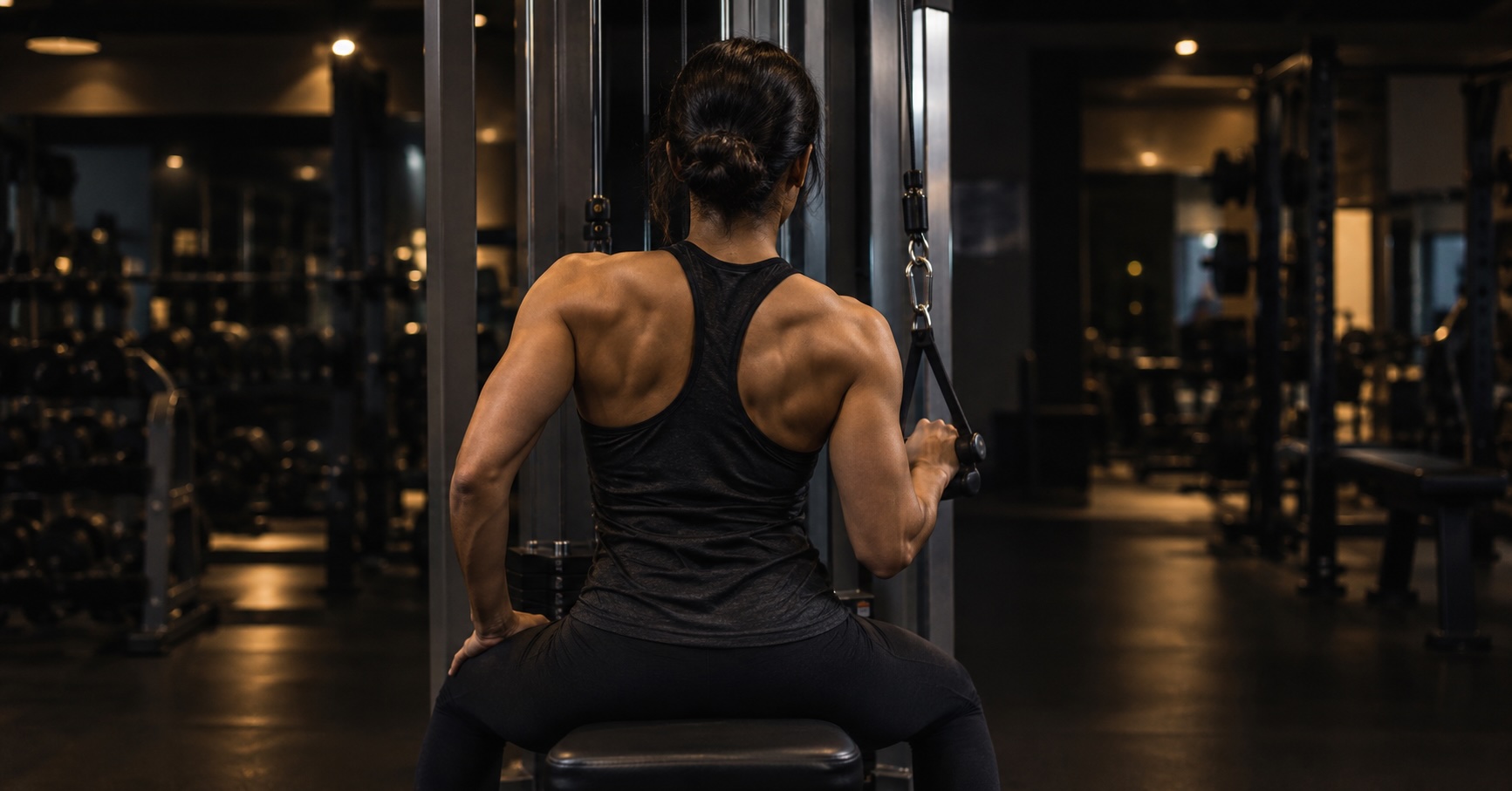
The seated cable row gives you constant tension and a big stretch at the front. Sit tall, let the handle pull your shoulders forward without rounding your lower back, then row to your stomach and squeeze your shoulder blades together for a second. A close handle with tucked elbows biases the lats. A wide bar with flared elbows biases the upper back.
One-arm dumbbell row
The one-arm dumbbell row braces your free hand and knee on a bench, so you can row heavy with your spine supported. Working one side at a time helps with imbalances and lets you pull through a longer range than a barbell allows. It sits right on the line between width and thickness, depending on how you do it (more on that in the dumbbell section below).
Inverted row
The inverted row is a bodyweight row under a bar set at hip height. Walk your feet forward or raise them to make it harder. It is the best row for training at home and an easy way for beginners to learn to squeeze their shoulder blades.
Lower Back Exercises
Your spinal erectors already work hard on every bent-over row, so they need less direct work than you might think. One exercise is plenty, and which one depends on what else you do in the week.
- Back extension: the lowest-fatigue choice. Use a 45-degree or horizontal bench, lower your torso under control and rise until your body is in a straight line. Do not arch hard at the top. Hold a plate or dumbbell to your chest once 15 reps is easy. A good fit at the end of a back workout.
- Romanian deadlift: trains the erectors and the hamstrings together. If it already lives on your leg day, as it does in our leg day workout, skip it on back day.
- Deadlift: the heaviest pull you can do, and a total-body strength lift more than a back builder. It is also very fatiguing. If you deadlift on back day, do it first, keep it to 3 sets of 3 to 5, and swap your barbell row for a chest-supported row.
- Good morning: a barbell-on-the-back hinge. Effective but easy to overdo. Keep it light and controlled if you use it.
The thing to watch is total lower back fatigue. Heavy deadlifts, Romanian deadlifts and barbell rows all load the same muscles. Stack them in one session, or on back-to-back days, and your lower back usually gives out before your lats and upper back get enough work.
Lat Exercises With Dumbbells
First, the honest part: dumbbells cannot truly replace a vertical pull. Gravity pulls a dumbbell straight down, so you cannot pull it down from overhead the way you pull a pulldown bar or your body on a pull-up. Dumbbell rows train the lats well, but from a different angle. If you train at home with dumbbells, a doorway pull-up bar is the cheapest upgrade your back can get.
That said, these are the best lat exercises with dumbbells:
One-arm dumbbell row, lat bias
Small changes to the one-arm dumbbell row shift it toward the lats. Keep your elbow tucked close to your side. Instead of pulling straight up toward your chest, pull the dumbbell back in an arc toward your hip. Let it hang slightly forward of your shoulder at the bottom for a stretch. You will use a bit less weight than on a regular row, and you should feel it lower and wider on your back.
Dumbbell pullover
The dumbbell pullover is the closest thing to a vertical pull you can do with a dumbbell, because your arm moves from overhead down toward your body, which is exactly the lats' job. Lie across or along a bench, hold one dumbbell over your chest with both hands, and lower it behind your head with a slight bend in your elbows until you feel a stretch. Then pull it back over your chest. Your chest works hard here too, and our exercise library lists the pullover as a chest exercise. To bias the lats, keep your elbows from flaring and think about pulling with your armpits. Use moderate weights for 10 to 15 reps. It is not a strength lift.
Bent-over dumbbell row
The bent-over dumbbell row uses two dumbbells and the same hinge as a barbell row. A neutral grip with elbows tucked hits the lats. Elbows flared out wide shifts it to the upper back. Like the barbell row, it tires your lower back, so it pairs best with supported rows elsewhere in the workout.
Chest-supported dumbbell row
With your chest on an incline bench and elbows tucked, the chest-supported row becomes a strict lat row with no lower back involvement. It is a good finisher when your hinge muscles are already tired.
The Gym Back Workout
This back-only session covers width, thickness and lower back in about 50 to 60 minutes. Leave 1 to 3 reps in reserve on most sets. Heavy rows and pull-ups go first while your grip and lower back are fresh.
| Exercise | Target | Sets | Reps | Rest |
|---|---|---|---|---|
| Pull-Ups (or Lat Pulldown) | Width | 3 | 6-12 | 2 min |
| Barbell Row | Thickness | 3 | 6-8 | 2-3 min |
| Single Arm Lat Pulldown | Width | 2-3 | 10-15 per arm | 60-90 sec |
| Chest-Supported Row | Thickness | 3 | 8-12 | 90 sec-2 min |
| Back Extension | Lower back | 2 | 10-15 | 60-90 sec |
That is 13 to 14 hard sets for the back. Swaps that keep the balance: a T-bar row or Pendlay row for the barbell row, a close-grip pulldown for the single arm pulldown, and a seated cable row for the chest-supported row. If you deadlifted heavy in the last day or two, drop the barbell row and the back extension and do an extra set of chest-supported rows.
Want biceps and rear delts in the same session? That is a pull day. Use the pull day workout instead, which shares the same core lifts.
The Dumbbell Back Workout
All you need is a pair of dumbbells and an adjustable bench. It covers thickness well and the lats as well as dumbbells allow.
| Exercise | Target | Sets | Reps | Rest |
|---|---|---|---|---|
| One-Arm Dumbbell Row | Thickness and lats | 3 | 8-12 per arm | 90 sec |
| Dumbbell Pullover | Lats | 3 | 10-15 | 60-90 sec |
| Chest-Supported Row, elbows wide | Upper back | 3 | 10-12 | 90 sec |
| Bent-Over Dumbbell Row, elbows tucked | Lats | 2 | 10-12 | 90 sec |
| Romanian Deadlift (with dumbbells) | Lower back | 2-3 | 8-12 | 90 sec |
Dumbbells top out quickly for strong lifters, especially on the one-arm row. When you can row your heaviest dumbbell for more than 15 reps, slow the lowering to 3 seconds and add a pause at the top before you chase even more reps. If you have a pull-up bar, put pull-ups or chin-ups first and drop the bent-over row. That one change fixes the biggest gap in a dumbbell back workout.
How Often to Train Your Back, and How to Progress
Many lifters grow well on roughly 10 to 20 hard sets per muscle group per week. Either workout above gives your back about 13 sets, so doing one of them twice a week, or one back workout plus a pull day, lands you in that range. The back recovers well enough for two or three sessions a week. How you schedule it depends on your split:
- On a push/pull/legs split, your back gets trained on pull day, so follow the pull day session.
- On an upper lower split, put one vertical pull and one row in each upper day.
- On a full body routine, alternate: pulldowns or pull-ups one session, rows the next.
- On a body-part split, this back workout is your back day as written.
To keep growing, apply progressive overload with double progression: work up to the top of the rep range on every set, then add the smallest weight jump and build back up. Back strength moves slowly, often a rep or a few pounds at a time, so write every set down. The printable weight training log works if you like paper, and the one-rep max calculator estimates your top-end row from any recent set. When several lifts stall together and your elbows or lower back feel beaten up, take a deload week before changing the program.
The Honest Limits of Back Training
- Width vs thickness is a teaching tool. The lats work on rows and the mid back works on pull-ups. Use the categories to stay balanced, not to promise yourself a wider back from one exercise.
- Grip often fails first. On heavy rows your hands may open before your back is done. Use lifting straps on your heaviest sets after your first working set, and do a few sets of dead hangs to build grip.
- The lower back is the bottleneck on heavy days. Deadlifts, Romanian deadlifts and bent-over rows all tire the same muscles. Chest-supported and cable rows let you keep training your upper back when your lower back needs a break.
- Back muscles are hard to feel. It is easy to do a lot of sets that mostly train momentum and biceps. Slower lowering, a pause at the end of each row and full range of motion matter more here than on most muscle groups.
- Width is partly structural. How wide your back looks also depends on your clavicles, shoulders and waist, which training cannot change. Bigger lats help everyone. They will not give everyone the same shape.
Common Back Workout Mistakes
- Only rows, or only pulldowns. You need both a vertical pull and a horizontal pull.
- Half reps. Full hang on pull-ups, arms straight at the top of pulldowns, full stretch on rows.
- Pulling with your hands. Think about your elbows. Your hands just hold on.
- Heaving rows with your hips. If your torso rises every rep, the weight is too heavy.
- Too many heavy hinges. One heavy lower back movement a session is plenty.
Building Your Back Workout in GymGod
If you want to put this into practice without a notebook, GymGod lets you filter its exercise library by muscle group or equipment, so finding a back exercise that works with the equipment you have takes seconds. If your gym has a back machine that is not in the library, you can add it as a custom exercise. Then, when you start an exercise, your last weights and reps appear on screen, so you always know what you need to beat on your single arm pulldown or your row.
Stuck on the same row weight for weeks? Take the quiz on what is blocking your gains.
Back Workout FAQ
What is the best back workout?
The best back workout includes at least one vertical pull, such as pull-ups or lat pulldowns, at least one row, such as a barbell or chest-supported row, and one lower back exercise. Do 2 to 4 hard sets of each, for about 10 to 20 hard sets of back work per week.
Which back exercises build width and which build thickness?
Vertical pulls like pull-ups, lat pulldowns and single arm pulldowns mainly build width through the lats. Rows like barbell, T-bar, cable and dumbbell rows mainly build thickness through the mid back. The split is a simplification: the lats work on rows too, so a balanced workout uses both.
Does a wide grip on lat pulldowns build a wider back?
Probably not much. Studies have found similar lat activation with grip widths between 1 and 2 times shoulder width, and the widest grip was slightly weaker. An overhand grip activated the lats a bit more than an underhand grip. Use a comfortable overhand grip and focus on full range of motion.
Can you train your lats with only dumbbells?
Partly. One-arm dumbbell rows with your elbow tucked and pulled toward your hip, dumbbell pullovers and chest-supported rows all train the lats. Dumbbells cannot replicate a vertical pull, though, so a doorway pull-up bar is the best addition to a dumbbell back workout.
Is the single arm lat pulldown better than the regular lat pulldown?
Not better, just different. The single arm version allows more range of motion and makes each side work on its own, which helps with imbalances. The regular pulldown lets you lift heavier and is faster. Most people do the regular pulldown or pull-ups first and the single arm version as an accessory.
How many times a week should I train back?
Two times a week works well for most people, for a total of roughly 10 to 20 hard sets. Once a week is fine for beginners or anyone short on time.