The RP Hypertrophy app is a muscle-building app from RP Strength, designed by Dr. Mike Israetel, that plans your training in mesocycles and adjusts your sets each week from your pump, soreness and workload feedback. It costs $34.99 a month or $299.99 a year, and we found no free trial. It's built for lifters whose only goal is size and who want a coach-style system to manage their volume. Our verdict: the programming logic is genuinely good, but for most lifters it's a lot of money and a lot of questions to answer, when steady progressive overload in a simpler app gets you most of the way for a fraction of the price.
Full disclosure: we make GymGod, a workout tracker built around progressive overload, so we've stuck to facts we could check. Everything in this RP Hypertrophy app review comes from RP's hypertrophy app page, RP's help center, and the app's US App Store and Google Play listings, all checked in November 2026.
RP Hypertrophy at a Glance
| Made by | RP Strength, LLC (Matthews, North Carolina), designed by Dr. Mike Israetel |
| What it does | Builds mesocycles (training blocks), sets your weekly targets and adjusts volume from your feedback |
| Price | $34.99/month or $299.99/year (US) |
| Free trial | None found. 30-day money-back guarantee on purchases made on RP's website |
| Programs | 45+ premade plans (RP's own page says 100+), plus the Meso Builder and fully custom mesocycles |
| Exercise videos | 250+ technique videos |
| Platforms | iPhone (iOS 17.6+), Android and a web app; no Apple Watch app listed |
| Ratings | 4.4 from 333 ratings (App Store), 4.3 from 181 reviews and 10K+ downloads (Google Play) |
RP's hypertrophy app page, RP help center, US App Store and Google Play listings, checked November 2026.
How the RP Hypertrophy App Works
The app is Dr. Mike Israetel's hypertrophy method in software form. Instead of a fixed routine you repeat forever, you train in mesocycles: blocks of a few weeks where training gets a little harder each week, followed by a lighter week to recover. Here's how a block runs, according to RP's help center:
- Build a mesocycle. Pick a premade template, copy a previous block, build one from scratch, or use the Meso Builder: choose your training days, then mark muscle groups to emphasize, grow or maintain, and the app builds the structure. You choose the exercises or tap to have them recommended for your equipment.
- Choose the length. You set how many weeks the block lasts, and the last week is always a deload. A 5-week mesocycle is 4 training weeks plus the deload. RP's guidance is up to 8 weeks for beginners, 4 to 7 weeks of hard training for intermediates and 3 to 6 for advanced lifters.
- Week 1, you pick the weights. The app doesn't set starting loads. Each set shows a target RIR (reps in reserve), and you choose a weight that leaves you that many reps short of failure. If RPE and RIR are new to you, it's worth learning before you start.
- Answer the feedback prompts. After you train, the app asks how much of a pump you got, how sore you were and how hard the workload felt.
- The app adjusts. Weight goes up by a few percent each week, sets go up or down based on your answers, and you train closer to failure as the block goes on.
- Deload, then repeat. The final week cuts your sets and drops weights to around your week 1 numbers. Then you start a new block, and you can copy the old one so your weights and targets carry over.
It's a well-designed system, and it's built on real science. A 2017 meta-analysis by Schoenfeld, Ogborn and Krieger in the Journal of Sports Sciences found a graded dose-response relationship between weekly sets and muscle growth: more volume, within reason, produced more hypertrophy. RP's whole approach is about finding the most volume you can recover from, one muscle at a time.
How the App Decides Your Sets, Weight and Reps
This is the feature people pay for. RP's help center explains the rules in plain terms:
- Weight: goes up by a few percentage points each week. If the next jump is too big (going from 10 lb to 15 lb dumbbells, for example), the app adds a rep to each set instead.
- Low pumps, barely sore, workouts felt easy: more sets.
- Good pumps, soreness healing on time, workload pushing your limits: no change.
- Huge pumps, too sore to recover on time, too much volume: fewer sets.
You can override anything: add or delete sets, or type in a different weight, and the app builds future sessions from your changes. There's one honest catch, and RP points it out itself. Its "Long Workouts" help article says the app only adds volume when you tell it you can handle more, and that if sessions are dragging on, "chances are, you may be doing too much work." In other words, the algorithm is only as good as your answers.
What the RP Hypertrophy App Does Well
- Real periodization, done for you: volume ramps up across the block, and RIR targets drop as you get closer to the deload. Most lifters never plan training this carefully on their own.
- Volume that responds to you: the pump, soreness and workload questions mean a muscle that's recovering well gets more sets, and one that's beat up gets fewer.
- Built-in deloads: the last week of every block is a planned deload week, so fatigue doesn't pile up forever.
- Specialization made easy: the Meso Builder's emphasize, grow and maintain settings let you bring up lagging muscles without designing a program from scratch.
- A big video library: 250+ technique videos, so you're never guessing how an exercise should look.
- Phone, Android and web: there's an iPhone app, an Android app and a browser version.
- Loyal users: one 2-year subscriber on the App Store says he spends "about 30 minutes a year planning my programming now," and credits the app with keeping him consistent.
Where RP Hypertrophy Falls Short
- It's expensive: $299.99 a year is far above what most workout apps charge, and we found no free trial in the app stores or on RP's page. The 30-day refund only covers purchases made on RP's website.
- It's a lot of input: feedback after workouts, a target RIR on every set and a box to tick for each completed set. A 4-star Google Play review from October 2026 says the only annoying part is that "there are A LOT of boxes to check" every set.
- Strength isn't the main goal: RP's own help center says that if your primary aim is strength, "strength is a secondary outcome and not necessarily a primary outcome" of using the app.
- You're on your own in week 1: the app doesn't pick starting weights, and when you swap in a new exercise it has no data, so it can't suggest a weight until you've logged it.
- Missing gym-floor basics: RP's help center says there's "no specific function for supersets at this time," the App Store lists the app as "Only for iPhone" with no Apple Watch app, and a September 2026 App Store review asks for a rest timer between sets.
- An account is required: you sign in to use the app, including the web version.
RP Hypertrophy App Cost: $34.99 a Month or $299.99 a Year
| Plan | Price (US) | Works out to |
|---|---|---|
| Monthly | $34.99/month | $419.88 a year |
| Annual | $299.99/year | About $25 a month |
| RP Apps Bundle (with RP Diet Coach) | $39.99/month | Training plus diet app |
RP's pricing on its hypertrophy app page and the US App Store in-app purchase list, checked November 2026.
The App Store also lists promotional plans, including an RP Hypertrophy yearly plan at $199.99 and a monthly plan at $24.99 labeled for a New Year 2027 sale, and the store descriptions mention a 6-month option. Sale prices come and go, so check what the app shows you before paying. Even at the sale price, a year of RP costs about eight times GymGod's yearly plan.
Is the RP Hypertrophy App Worth It?
It depends on what's actually holding you back. RP is worth it for a specific lifter: someone whose only goal is size, who already trains hard and consistently, who's happy to rate pumps and soreness honestly after every session, and for whom $300 a year isn't a stretch. For that person, having volume and deloads managed automatically is a real upgrade.
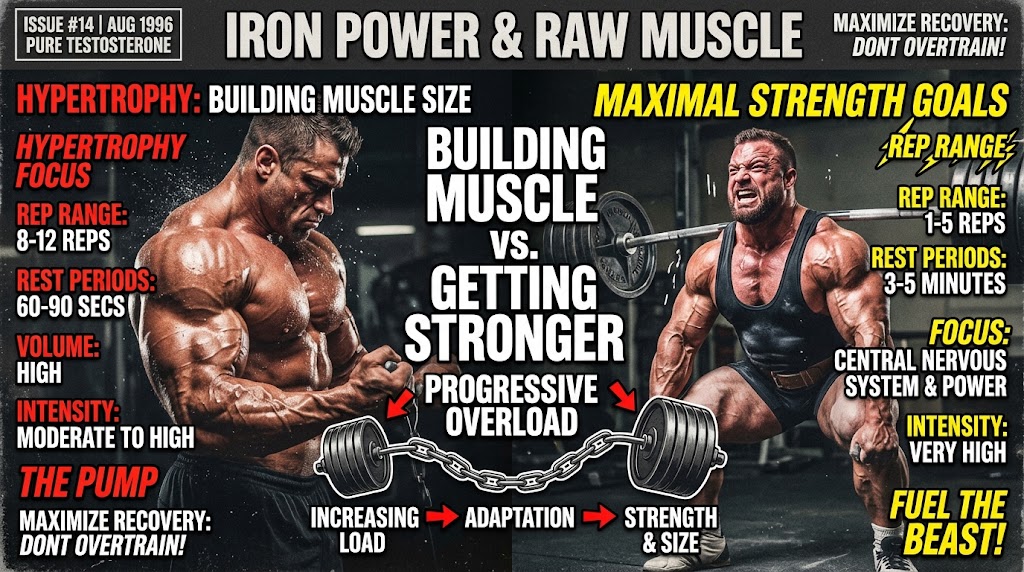
For most lifters, though, the limiting factor isn't whether they did 14 or 16 sets for side delts this week. It's whether they lifted a little more than last time, week after week, without starting over every month. That's progressive overload, and it's what drives both strength and size. Our guide to hypertrophy vs strength training covers how reps, sets and rest change between the two goals, but the engine is the same: more weight or more reps over time on the same exercises.
You don't need a $300 algorithm for that. You need a routine that stays the same long enough to progress, your last numbers in front of you, and a next weight that's already worked out. If you then add a set when a muscle is lagging and take a deload week when you feel beaten up, you've captured most of what RP automates. If your lifts have stalled, our workout plateau guide walks through the usual causes.
Best RP Hypertrophy Alternative: GymGod
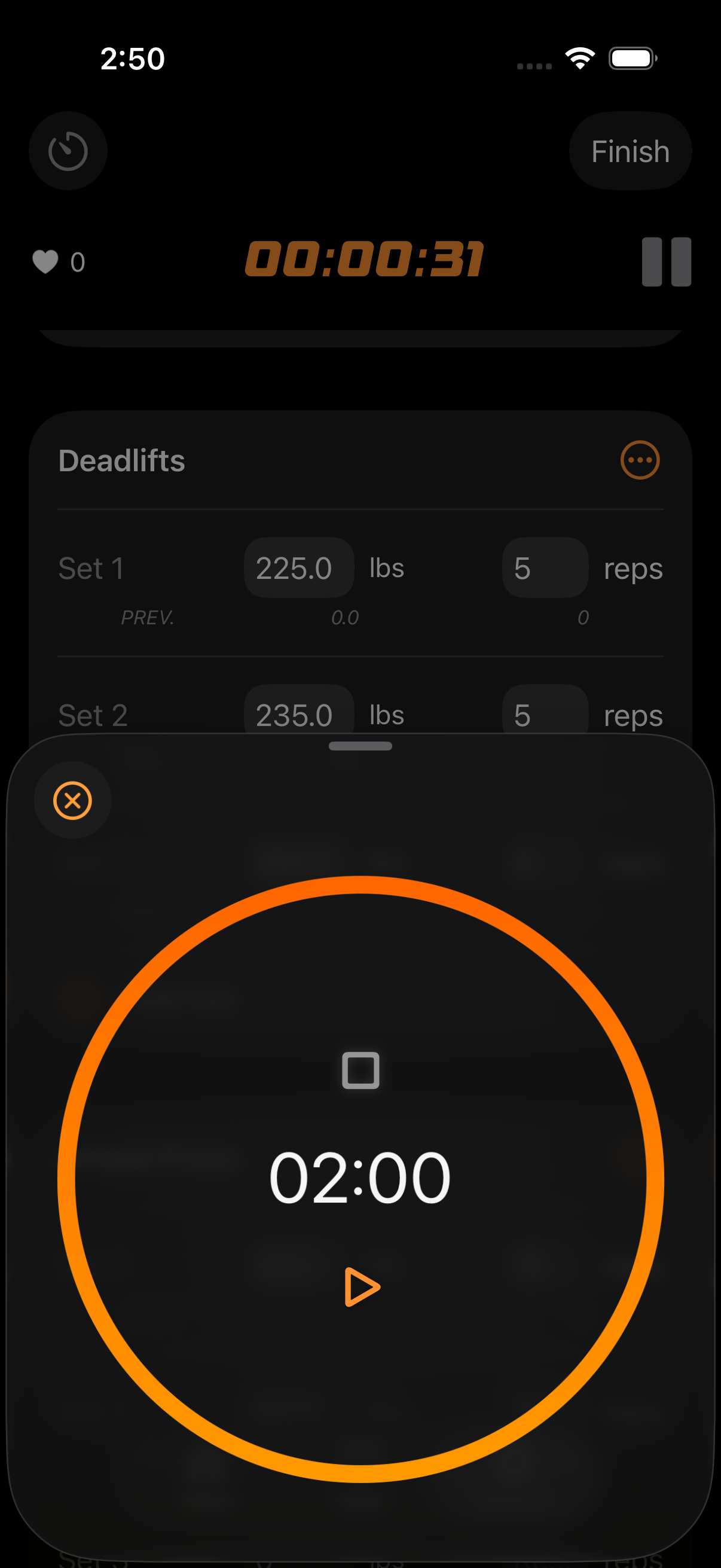
GymGod takes the part of RP that matters most, a plan that tells you what to lift next, and drops the questionnaires and the price. Its AI coach builds you a routine in a few taps that stays consistent, so you can keep progressively overloading instead of starting over. Or run one of 9 proven programs, or build your own split. Your last workout appears on screen the moment you start an exercise, your next weight is already calculated, and every PR is caught automatically. It costs $3.99 a month, $24.99 a year, or $59.99 once, which is less than two months of RP's monthly plan.
Why GymGod Is the Better Pick for Most Lifters
- Auto-progression without the homework: your next weight, already calculated. Targets rise from what you actually lifted, with recalibration prompts when you need them. No pump, soreness or workload ratings to fill in.
- A routine that stays consistent: the AI coach builds a routine you can repeat and beat, or run one of 9 popular strength programs with progression and rest times built in. Prefer a classic bodybuilding split? Build your own push/pull/legs or upper/lower split by dragging and dropping exercises and setting your own sets and rest.
- Your last workout on screen: your last weights, reps and goals appear the moment you start an exercise, so you know exactly what to beat on your lateral raises or incline dumbbell press.
- Strength and size both count: PRs are caught automatically, with full PR history, achievement badges and total volume stats, plus private progress photos you can compare side by side.
- A coach that learns from your training: tips based on what you've actually lifted and a recap after every workout showing where you improved.
- 212 exercises with form guidance: filter by muscle group or equipment, or add custom exercises.
- Built for the gym floor: a rest timer that starts automatically between sets, an Apple Watch app for logging sets with your phone in your pocket, and Dynamic Island and Lock Screen updates.
- No account: no email, no password. The AI coach runs on your iPhone with no cloud AI, and your data syncs through your own iCloud.
What GymGod Doesn't Do
To be straight about it: GymGod doesn't run RP-style mesocycles with week-by-week volume ramps, feedback-driven set changes and an automatic deload week. If that level of volume management is exactly what you want, RP is built for it. GymGod is also iPhone and Apple Watch only, with no Android or web app, and the AI coach requires iOS 26 or later.
What It Costs
RP Hypertrophy is $34.99 a month or $299.99 a year, with no free trial we could find. GymGod is $3.99 a month, $24.99 a year or $59.99 lifetime, with full app access, including the AI coach, on every plan. Your first 3 workouts are free with no payment prompt and no account, then the yearly plan comes with a 1-week free trial. See GymGod pricing.
RP Hypertrophy vs GymGod
| Feature | RP Hypertrophy | GymGod |
|---|---|---|
| Who plans workouts | 45+ templates, Meso Builder, or you | AI coach (consistent routine), 9 proven programs, or you |
| Next weight calculated for you | Yes, after you choose week 1 weights | Yes, auto-progression |
| Sets adjusted from feedback | Yes, pump, soreness and workload | No, you set your sets |
| Automatic deload week | Yes, last week of every mesocycle | Recalibration prompts when you need them |
| Last workout on screen | Weekly targets per set | Last weights, reps and goals, instantly |
| Automatic PR detection | Not advertised | Yes, with PR history and badges |
| Exercise guidance | 250+ technique videos | 212 exercises with form guidance |
| Apple Watch app | Not listed ("Only for iPhone") | Yes |
| Android and web | Yes | No, iPhone and Apple Watch |
| Account required | Yes | No |
| Free to try | No trial found (30-day refund on web purchases) | First 3 workouts free, then a 1-week trial on yearly |
| Price | $34.99/month, $299.99/year | $3.99/month, $24.99/year, $59.99 lifetime |
RP Hypertrophy: RP's hypertrophy app page, RP help center, US App Store and Google Play listings, checked November 2026. GymGod: pricing and features.
Final Verdict
The RP Hypertrophy app is one of the most thoughtful training apps available. Its mesocycles, feedback-driven volume and built-in deloads put Dr. Mike Israetel's approach in your pocket, and if you're a size-only lifter who loves that level of detail and doesn't mind $299.99 a year, you'll get real value from it.
But most people don't need their volume tuned set by set. They need to show up, see what they lifted last time and beat it. For most lifters, GymGod is the better pick: an AI coach that builds a routine that stays consistent, your last workout on screen, auto-progressed weights and PRs caught automatically, with no weekly questionnaires, for $24.99 a year or $59.99 once. Your first 3 workouts are free, so you can try it before your next push day. Comparing more options? See our picks for the best weightlifting app and the best progressive overload apps.
Frequently Asked Questions
How much does the RP Hypertrophy app cost?
$34.99 a month or $299.99 a year in the US, according to RP's pricing page and the App Store (checked November 2026). A bundle with RP Diet Coach is $39.99 a month, and the App Store sometimes lists sale prices, such as $199.99 a year.
Does the RP Hypertrophy app have a free trial?
We found no free trial on RP's page or in the App Store and Google Play listings. RP offers a no-questions-asked refund within 30 days, but only for purchases made directly on its website.
Is the RP Hypertrophy app good for strength?
It's built for muscle growth. RP's own help center says strength is a secondary outcome of using the app, not its primary one. If you want to get stronger and bigger, an app built around progressive overload on a consistent routine is a better fit.
Does the RP Hypertrophy app include deloads?
Yes. The last week of every mesocycle is a deload with fewer sets and weights around your week 1 numbers. You choose the mesocycle length, and the deload is always the final week.
What's the best RP Hypertrophy alternative?
GymGod, if you're on iPhone. Its AI coach builds a routine that stays consistent, shows your last workout on screen, auto-progresses your weights and catches PRs automatically, without weekly feedback questions. It costs $3.99 a month, $24.99 a year or $59.99 lifetime, and your first 3 workouts are free.