Short answer: pick Hevy if you want a free, fast workout log and are happy to plan your own training (or pay $23.99 a year for Hevy Pro and let Hevy Trainer plan it); pick Fitbod if you want an app that writes a fresh workout for you every session and you don't mind paying $95.99 a year for it. Hevy is free with no ads; Fitbod has no free version, only a free trial. Both have Apple Watch support.
The old way to frame this was "log your own plan or let the app decide." That's only half true now. Since February 2026, Hevy Pro includes Hevy Trainer, which builds a program for you and raises the weight when you earn it. So the real comparison is three ways: free Hevy (you plan), Hevy Pro with Trainer (it plans and progresses, and can keep your lifts the same), and Fitbod (it generates and rotates workouts around your recovery).
Hevy vs Fitbod at a Glance
| Hevy | Fitbod | |
|---|---|---|
| Who plans workouts | You (free), or Hevy Trainer (Pro) | The app, every session |
| Auto-progression | Pro only (Hevy Trainer) | AI plans each workout; exercises vary |
| Free version | Yes, no ads: unlimited workouts, 4 routines, 7 custom exercises, 3 months of graphs | No, free trial only |
| Monthly | $2.99 or $3.99 (both listed) | $15.99 ($12.99 also listed) |
| Yearly | $23.99 | $95.99 ($79.99 also listed) |
| Lifetime | $74.99 | None listed |
| Apple Watch | Yes: log sets, rest timers, heart rate | Yes (watchOS 10 or later) |
| Social feed | Yes, and you can opt out | None listed |
| App Store rating | 4.9 (101K ratings) | 4.8 (289K ratings) |
US App Store listings, checked November 2026. Fitbod also lists several older "Legacy Pricing" plans.
Hevy App Review (2026)
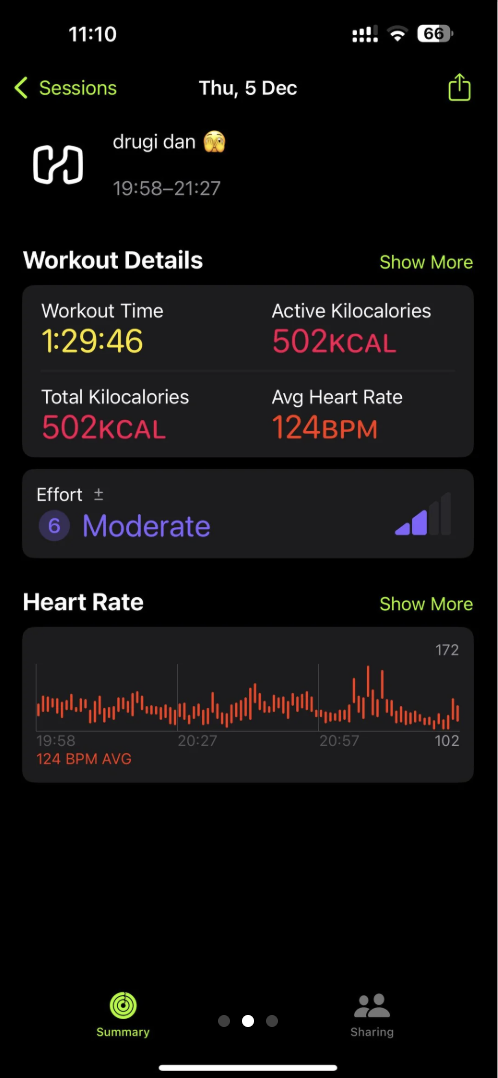
Hevy is a workout log for iPhone, Android and Apple Watch, used by more than 15 million lifters according to its App Store listing. It's free with no ads. You build routines (or copy one from Hevy's free library), log your sets, and track your lifts with graphs and PRs. A social feed lets you follow friends and see their workouts. Hevy Pro removes the free plan's limits and adds Hevy Trainer.
What Hevy Does Well
- Fast logging: weights, reps, duration and RPE in a few taps, plus supersets, drop sets, warm-ups and failure sets.
- Last session on screen: your previous weights and reps show up for every exercise, so you know what to beat.
- A real free version: unlimited workouts with no ads. Many people never need to pay.
- Works offline: log in a basement gym and your data syncs when you reconnect.
- Apple Watch app: log sets, start rest timers, track heart rate and finish a workout without touching your phone.
- Hevy Trainer (Pro): a program built from your experience, goal, equipment, training frequency and session length, with automatic weight increases.
Where Hevy Falls Short
- Free plan caps: Hevy's own site lists the free limits as 4 routines, 7 custom exercises and 3 months of graph history.
- Free Hevy doesn't pick your next weight: it shows what you did last time, but deciding when to add weight is up to you. Trainer, the feature that does it, is Pro-only.
- Built around a social log: the feed is optional, but the app's core is logging and sharing, and coaching was added on top in 2026.
- Account required: your workouts and your Pro subscription live in your Hevy account.
Who It's Best For
Lifters who already follow a program and just want a quick, reliable place to log it, anyone who wants a capable free app, and people who enjoy training alongside friends in a feed. If you want guidance too, Hevy Pro with Trainer is a fair deal at $23.99 a year.
Fitbod App Review (2026)
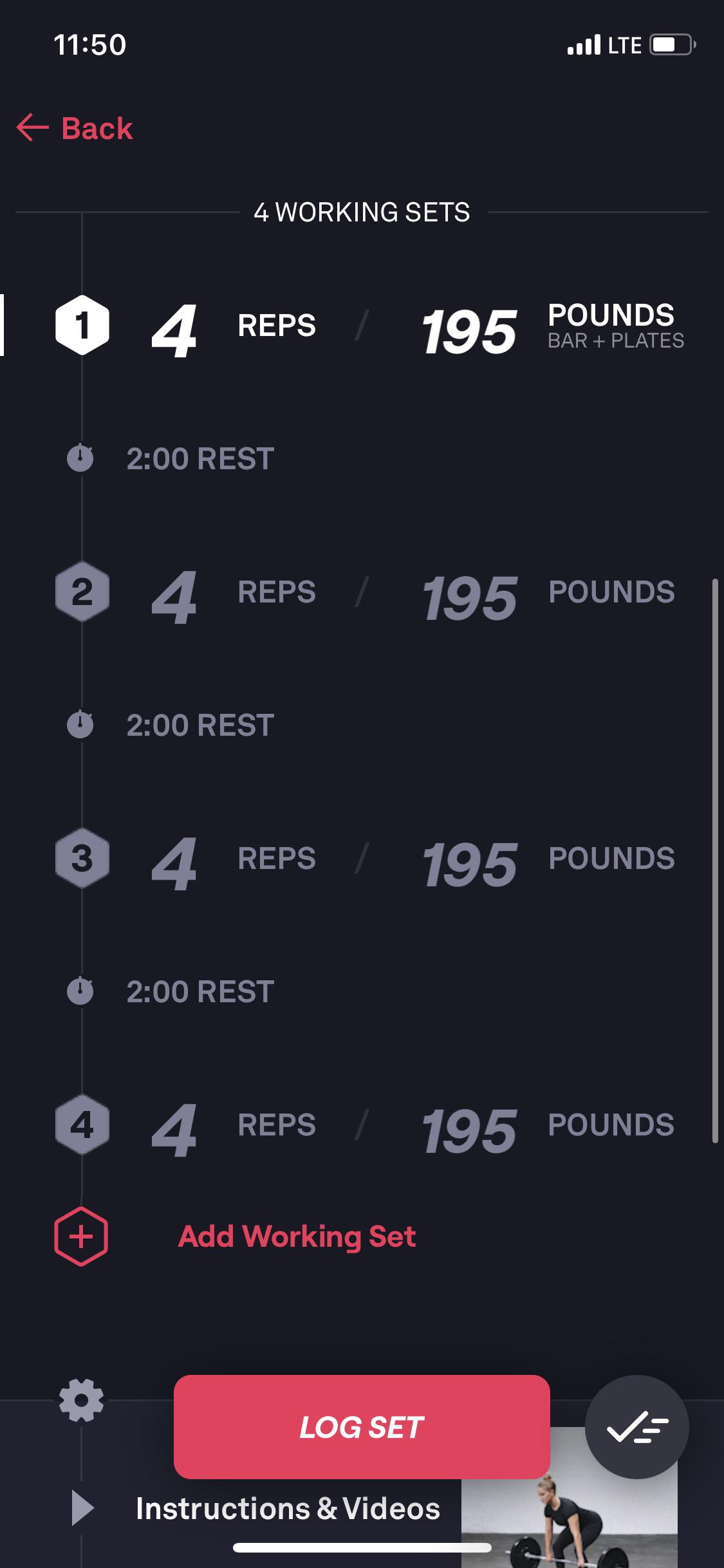
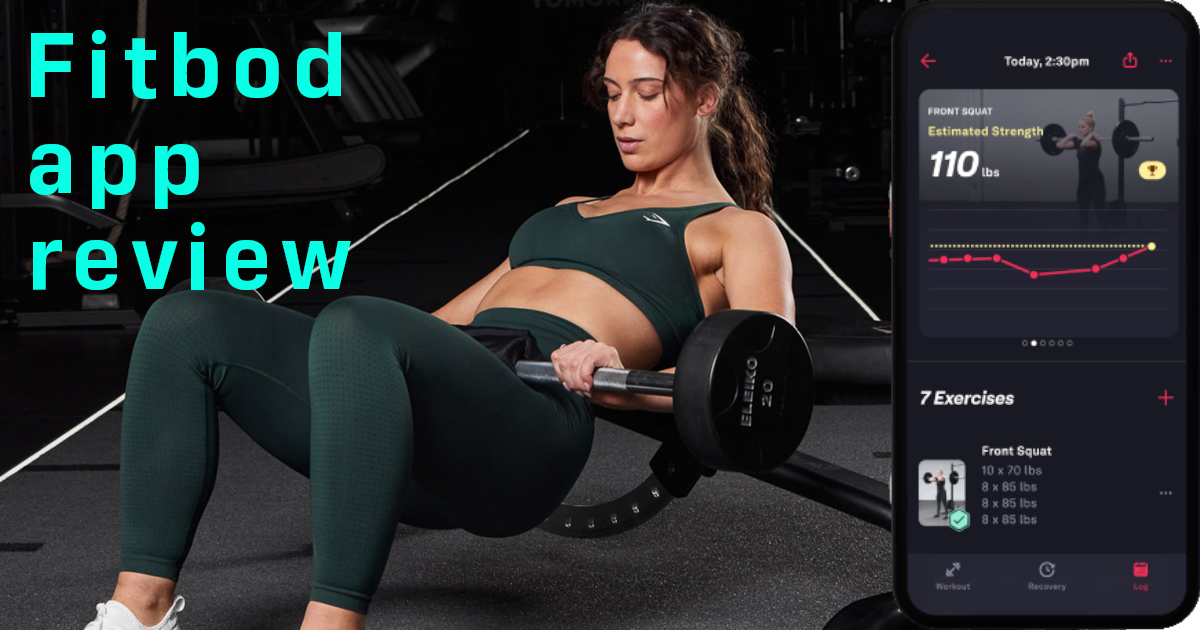
Fitbod is an AI workout planner and an Apple Editors' Choice winner. You tell it your goal, experience level and equipment, and it builds each session for you. Its App Store listing says its AI "maximize[s] fitness gains by varying and balancing exercises," uses non-linear periodization, tracks recovery, and learns from the edits you make to its suggestions. We cover it in depth in our Fitbod review.
What Fitbod Does Well
- Zero planning: open the app and today's workout is ready. Good for people who freeze up deciding what to do.
- Built around your equipment: works for a full gym, a home setup or no equipment at all.
- Recovery-aware: it tracks recovery and balances exercises across your sessions.
- Big exercise library: 1,000+ exercises with multi-angle videos.
- Integrations: Apple Health, Apple Watch, Strava and Fitbit.
Where Fitbod Falls Short
- No free version: after the trial, everything sits behind a subscription. The listing doesn't say how long the trial is.
- Price: $15.99 a month or $95.99 a year, about four times Hevy Pro's yearly price, and there's no lifetime option.
- Variety works against comparison: when the exercises keep changing, it's harder to see whether you beat last week. That's the core of progressive overload.
- You give up control: you can edit and save workouts, but the app is designed to decide for you.
Who It's Best For
Beginners who don't know what to do in the gym, people who get bored running the same routine, and anyone training for general fitness who values variety over chasing numbers on a few key lifts, as long as the price doesn't bother them.
Fitbod vs Hevy: How Each App Handles Progression
This is the real difference, and it's where most comparisons are out of date.
- Free Hevy: you choose the weight. Hevy puts last session's weights and reps in front of you, and the rest is your call. That works well if you follow a program with clear rules.
- Hevy Pro with Trainer: Trainer suggests starting weights once you've logged an exercise at least once, then raises the weight by a simple rule. Hevy's Trainer page puts it this way: "You must hit the upper end of the rep range with a specific weight on all prescribed sets for Trainer to increase it." That's double progression, a proven method. A Program Variety setting lets you choose focused 6-week blocks, the same training continuously, or some exercise changes every week.
- Fitbod: the app plans each workout for you. Its listing says the AI uses non-linear periodization, varies and balances exercises, and learns from the edits you make. Because it varies exercises by design, your lifts don't repeat as cleanly from week to week, which makes progress harder to see.
For getting stronger, consistency wins. You need the same lifts, done often enough, with the weight climbing. Hevy Trainer can do that if you pay for Pro and pick a consistent variety setting. Fitbod makes it harder by design. If you want to check your numbers yourself, our one-rep max calculator turns any set into an estimated max you can compare week to week.
Hevy Free vs Pro, and Is Fitbod Free?
- Hevy free: unlimited workouts, no ads, 4 routines, 7 custom exercises and 3 months of graph history.
- Hevy Pro ($2.99 or $3.99 a month, $23.99 a year, or $74.99 lifetime): unlimited routines and custom exercises, your complete history, and Hevy Trainer.
- Fitbod: free to download with a free trial, then a subscription. The US App Store lists $15.99 a month and $95.99 a year, plus some cheaper plans ($12.99 and $79.99) and older legacy plans.
Over a year, Hevy Pro costs $23.99 and Fitbod costs up to $95.99. Over three years it's $71.97 against $287.97, and Hevy's $74.99 lifetime option caps the cost for good. On price, Hevy wins easily.
Hevy vs Fitbod on Apple Watch
Both list Apple Watch support. Hevy's listing is specific: you can log sets, start rest timers, monitor heart rate and finish a workout without touching your phone, add complications, and workouts save when the watch reconnects. Fitbod's listing says it's "available for iOS and Apple Watch" and requires watchOS 10 or later, but says less about what the watch app does on its own. If wrist-only logging matters to you, Hevy's watch support is the better documented of the two.
Fitbod vs Strong
Some people weigh Fitbod against Strong instead of Hevy. Strong is a plain log like free Hevy, not a planner. Its free version saves unlimited workouts but caps you at 3 custom routines, and Strong PRO costs $4.99 a month, $29.99 a year or $99.99 forever. It has a full Apple Watch app that works with or without your iPhone. We couldn't find a Strong feature that suggests or raises your next weight, so with Strong you plan and progress yourself. We compare it with Hevy in Hevy vs Strong.
The Better Alternative to Hevy and Fitbod: GymGod
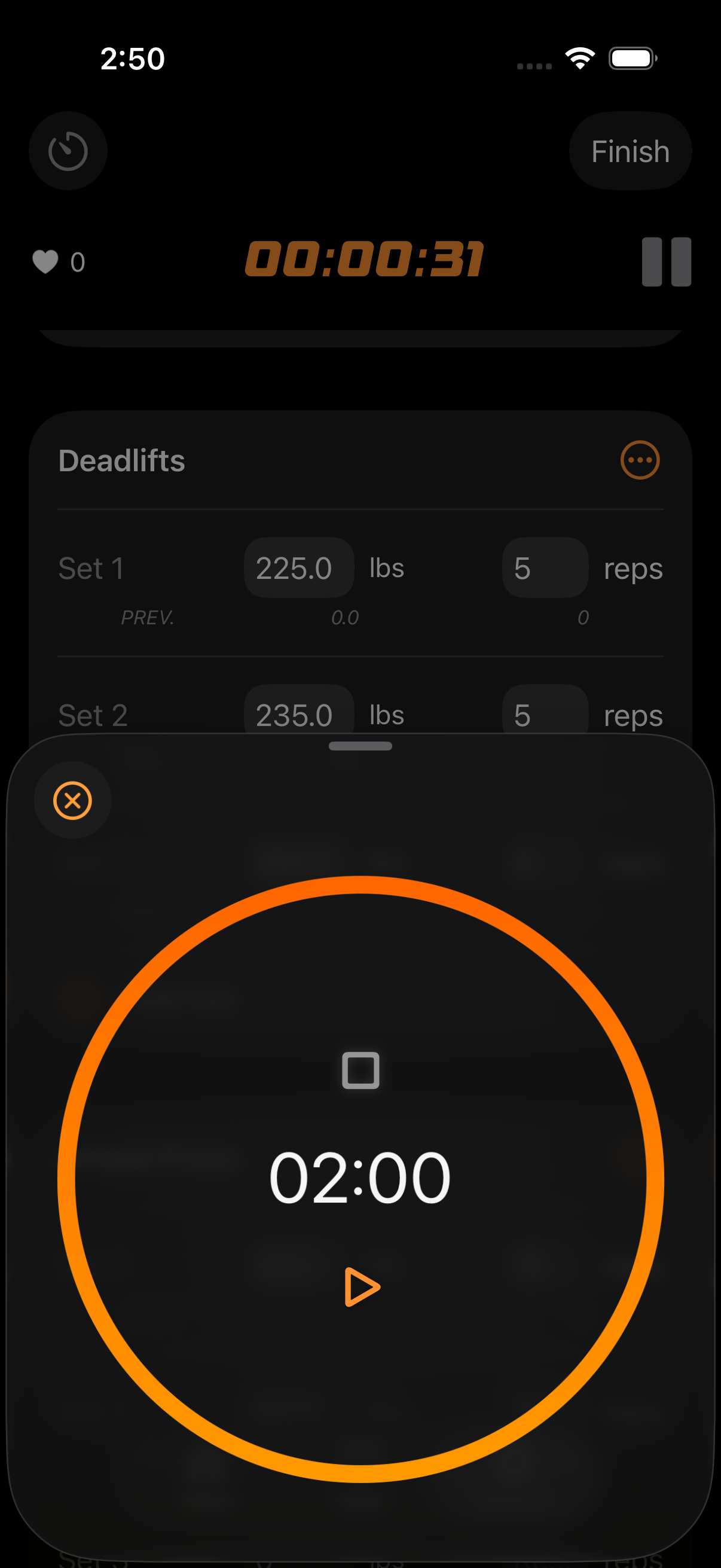
Hevy and Fitbod sit at opposite ends. Hevy is a great log where coaching is a paid mode added in 2026. Fitbod is a planner that keeps changing your workout. We built GymGod for the middle: an AI coach builds your routine, the routine stays consistent, and your weights go up automatically. That isn't a mode you turn on. It's the whole app.
What Makes GymGod Different
- An AI coach that builds a routine that stays consistent: a routine made for you in a few taps, so you progressively overload instead of starting over. The coach runs on your iPhone (iOS 26 or later), with tips based on what you've actually lifted and a recap after every workout.
- Auto-progression on every plan: your next weight is already calculated from what you lifted, with recalibration prompts when you need them. In Hevy that takes Pro and Trainer; in Fitbod the workout itself keeps changing.
- Your last workout on screen: your last weights, reps and goals appear the moment you start an exercise.
- 9 proven programs or build your own: progression and rest times are built into the programs, and you can drag and drop your own plan for the week.
- PRs caught automatically: full PR history, achievement badges and total volume stats.
- Full Apple Watch app: log sets from your wrist with your phone in your pocket, plus Dynamic Island and Lock Screen updates on your iPhone.
- No account: no email, no password. Your data syncs through your own iCloud.
- Bring your history: import your workouts from Hevy, Fitbod or Strong and keep every PR.
Hevy vs Fitbod vs GymGod
| Feature | GymGod | Hevy | Fitbod |
|---|---|---|---|
| Who plans workouts | AI coach, 9 programs, or you | You (free) or Trainer (Pro) | The app, varied each session |
| Consistent routine | Yes, by design | Yes, if you set it up | No, exercises vary by design |
| Auto-progression | Yes, with recalibration prompts | Pro only (Hevy Trainer) | AI-planned, but exercises rotate |
| Apple Watch app | Yes | Yes | Yes |
| Account required | No, syncs through your iCloud | Yes | Not stated |
| Imports Hevy and Fitbod history | Yes (and Strong) | n/a | n/a |
| Free version | First 3 workouts free | Unlimited workouts, 4 routines | Free trial only |
| Price | $3.99/month, $24.99/year, $59.99 lifetime | $2.99–$3.99/month, $23.99/year, $74.99 lifetime | $15.99/month, $95.99/year, no lifetime |
Where Hevy Still Beats GymGod
Two honest points. Hevy's yearly plan is $23.99, a dollar less than GymGod's $24.99. And Hevy's free plan is more generous: you can log unlimited workouts free, while GymGod gives you your first 3 workouts free and then asks you to pick a plan (the yearly plan adds a 1-week free trial). Hevy also runs on Android, and if a social feed is part of what keeps you training, Hevy has one.
Where GymGod wins is the thing most people actually pay for: getting stronger. In Hevy, progression is a Pro feature inside a logging and social app. In GymGod, every plan includes the AI coach and auto-progression, and the lifetime price is $59.99, $15 less than Hevy's $74.99. Against Fitbod, GymGod costs $24.99 a year instead of $95.99 and keeps your lifts consistent so you can see them climb.
See every feature on our features page and the plans on our pricing page.
Which Should You Pick?
- Choose GymGod if: you want an app that plans a consistent routine and raises your weights for you, on iPhone and Apple Watch, for less than Hevy's lifetime price and about a quarter of Fitbod's yearly price.
- Choose Hevy if: you want a free log, you're happy planning your own training, or you're on Android.
- Choose Fitbod if: you want a different workout every session and variety matters more to you than tracking a few lifts over time.
Final Verdict
Hevy vs Fitbod comes down to who writes the plan. Hevy is the better value: free if you plan yourself, $23.99 a year if you want Trainer to plan for you. Fitbod is the better pick only if you want a new workout every time and are willing to pay $95.99 a year for it. But if your goal is getting stronger, you want what neither does by default: a routine built for you that stays the same long enough for the weight to keep going up. That's GymGod, from $3.99 a month or $59.99 once. Your first 3 workouts are free, and you can import your Hevy or Fitbod history and keep every PR.
Weighing an AI planner that does repeat your lifts? Read MacroFactor Workouts vs Hevy or our MacroFactor Workouts review.
Frequently Asked Questions
Is Hevy or Fitbod better?
Hevy is better for most lifters: it's free with no ads, Pro costs $23.99 a year, and Pro includes Hevy Trainer, which plans your program and raises your weights. Fitbod is better if you want the app to generate a different workout every session, but it has no free version and costs $15.99 a month or $95.99 a year.
Is Hevy free?
Yes. Hevy is free with no ads and unlimited workouts, but the free plan is limited to 4 routines, 7 custom exercises and 3 months of graph history. Hevy Pro costs $23.99 a year or $74.99 lifetime; the App Store lists monthly plans at $2.99 and $3.99.
Is Fitbod free?
No. Fitbod is free to download and has a free trial, but there is no free version. After the trial it costs $15.99 a month or $95.99 a year in the US App Store, and there's no lifetime plan.
Does Hevy do workouts for you?
Only with Hevy Pro. Hevy Trainer, added in February 2026, builds a program from your experience, goal, equipment, training frequency and session length, and increases the weight once you hit the top of the rep range on all prescribed sets. On the free plan you build your own routines or copy one from Hevy's library.
Can I move my Fitbod workouts to Hevy or another app?
You can move them to GymGod: it imports your workout history from Fitbod, Hevy or Strong, so you keep every PR when you switch.