
Short answer: Jefit vs Hevy comes down to library versus logger. Jefit gives you a much bigger exercise library (1,400+ exercises with HD videos) and an AI Adaptive Plan, but its free plan only keeps 2 plans and Elite costs $69.99 a year. Hevy is the cleaner, faster log, free with no ads and 4 routines, and Pro (with Hevy Trainer) is $23.99 a year. If you only care about getting stronger, there's a third option at the end that builds the progression in on every plan.
Full disclosure: we make GymGod, a workout tracker that competes with both, so we've stuck to facts we could check. Everything below about Jefit comes from its US App Store and Google Play listings and its own pricing and FAQ pages; everything about Hevy comes from its US App Store listing and Hevy's help center. All checked November 4, 2026.
Jefit vs Hevy at a Glance
| Jefit | Hevy | |
|---|---|---|
| What it is | A huge exercise library and planner with an AI plan on Elite | A fast, clean workout log with a social feed |
| Free version | Yes: full logging, 2 plans, 7 custom exercises, 3 watch sessions, 14 days of stats | Yes, no ads: unlimited workouts, 4 routines, 7 custom exercises, 3 months of graphs |
| Exercise library | 1,400+ with HD videos | About 450 with demo animations |
| Auto-progression | Elite only (Load Progression and Adaptive Plan) | Pro only (Hevy Trainer) |
| Monthly | $12.99 | $3.99 ($2.99 also listed) |
| Yearly | $69.99 | $23.99 |
| Lifetime | None listed | $74.99 |
| Platforms | iPhone, Android, Apple Watch, Wear OS, web | iPhone, iPad, Android, Apple Watch, Wear OS, web |
| Watch without your phone | No, keep the phone nearby | Logs on the watch; saves when it reconnects |
| Community | Discover feed, Q&A, contests (all optional) | Social feed, gym leaderboards (can be turned off) |
| App Store rating | 4.8 (47K ratings) | 4.9 (102K ratings) |
US App Store listings, Jefit's pricing and FAQ pages and Hevy's help center, checked November 4, 2026. Jefit also lists several older and discounted yearly plans ($34.99 to $52.99) in the App Store.
Jefit Review (2026)
Jefit has been around since 2010 and says it has 13M+ users. It started as a planner and exercise database, and it still feels like one: 1,400+ exercises across strength, stretching, Olympic lifting, mobility and yoga, each with an HD demo video, written steps and a breakdown of the muscles it hits. More recently it added an AI layer on top. With Elite, Jefit's Load Progression suggests your next weight and reps from every set you log, and the Adaptive Plan builds a 12-week program in four-week blocks (on-ramp, accumulation, intensification, deload) that updates every Monday from what you lifted.
What Jefit Does Well
- The biggest library here: 1,400+ exercises, every one with an HD video, in every account. If you train at a gym full of odd machines, Jefit probably has them.
- Lots of free plans: 700+ plans built by Jefit and 20,000+ shared by the community, filterable by goal, days, equipment and level.
- Real progression, on Elite: Load Progression works on any plan, including one you built yourself, with typical jumps of 2.5 to 5% when you hit the top of your rep range. Deloads are scheduled automatically.
- Solid free logging: last session pre-filled on every set, supersets, warm-up and drop-set tags, an auto rest timer with a Lock Screen countdown, PR alerts, an estimated 1RM on every set and full exercise history.
- Everywhere: iPhone, Android, Apple Watch, Wear OS and the web, plus Apple Health, Health Connect and two-way Strava sync.
- You can earn Elite: Iron Points from workouts, contests and referrals can be redeemed for Elite membership.
Where Jefit Falls Short
- A tight free plan: 2 saved plans, 7 custom exercises, 10 Instant Workouts, 3 watch sessions and only the last 14 days of stats on the Progress tab. Your logged workouts themselves aren't capped.
- Progression costs the most here: Load Progression and the Adaptive Plan are Elite features, at $12.99 a month or $69.99 a year, nearly three times Hevy Pro's yearly price. No lifetime plan is listed.
- The watch needs your phone: Jefit's FAQ says the watch app works together with the phone app, so keep your phone nearby.
- A busy app: plans, contests, Iron Points, a Discover feed, Q&A and a meal tab. Some people love having it all; if you just want a log, it's a lot of app.
- No pausing: Jefit's FAQ says a session's timer can't be paused, and effort (RPE) is rated once per session, not per set.
Does Jefit Have Ads?
Historically, yes. Jefit's own 2021 blog post on Elite lists "the removal of all previous ads" as an Elite feature. Its current pricing page and FAQ don't mention ads either way, and the Google Play listing doesn't carry a "Contains ads" label. Jefit's App Store privacy label does say device identifiers may be used for third-party advertising. So expect some advertising on the free version and check for yourself before you pay to remove it. Hevy, by contrast, states plainly that it's free with no ads.
Hevy App Review (2026)

Hevy is the opposite design choice: less library, more speed. Its App Store listing says it's trusted by 15M+ lifters, with 112M+ workouts logged in 2025, and it's rated 4.9 from 102,000 ratings. You start a workout, last session's weights and reps sit right next to each set, and you tap through. It's free with no ads. Since February 2026, Hevy Pro also includes Hevy Trainer, which builds a program around your experience, goal and equipment and guides you with progressive overload. We go deeper in our Hevy review.
What Hevy Does Well
- Fast, uncluttered logging: weight, reps, duration and RPE in seconds, plus supersets, drop sets, warm-ups and failure sets.
- Last session on screen: your previous numbers for every exercise, no scrolling back through history.
- A generous free version: unlimited workouts, a free program library, graphs and PRs, with no ads.
- Apple Watch that stands on its own: log sets, run rest timers and finish a workout without touching your phone; it saves when the watch reconnects.
- Cheap Pro: $23.99 a year or $74.99 once, and Pro includes Hevy Trainer's automatic progression.
- Works offline and syncs to Strava and Apple Health.
Where Hevy Falls Short
- Free caps: Hevy's help center lists 4 routines, 7 custom exercises and 3 months of data history on the free plan.
- Progression is Pro-only: free Hevy shows what you did last time, but deciding when to add weight is up to you.
- Smaller library: about 450 exercises, roughly a third of Jefit's.
- Social-first: the feed, likes and new gym leaderboards are central. You can turn the feed off, but it's built in.
- Account required: your workouts live in your Hevy account.
Jefit Free vs Elite, and Hevy Free vs Pro
Looking at Hevy vs Jefit purely on cost, both are free to log forever, and both lock automatic progression behind the paid tier. The difference is how much that tier costs:
- Jefit Elite ($12.99/month or $69.99/year) unlocks the Adaptive Plan, Load Progression, unlimited plans and custom exercises, unlimited watch sessions with heart rate, 400+ coach-built plans and deeper analytics. Jefit says free trials are offered to some users, not everyone.
- Hevy Pro ($2.99 or $3.99/month, $23.99/year, $74.99 lifetime) unlocks Hevy Trainer, unlimited routines and custom exercises, and your full graph history.
Hevy is cheaper at every tier, and it's the only one with a lifetime option. On the free plans, Hevy wins too: 4 routines and 3 months of graphs beat Jefit's 2 plans and 14 days of stats, and Hevy has no ads.
Exercise Library vs Clean Logger: Which Matters More?
Jefit's 1,400 exercises sound like the decisive number, and if you love variety or want a video for every cable attachment in your gym, it is. But strength doesn't come from how many exercises you have access to. It comes from progressive overload: doing the same handful of lifts, like the squat, bench press and deadlift, and beating your last numbers session after session.
That's why the most important feature in either app isn't the library or the feed. It's the one that tells you what to lift next. Both apps have it now, and both charge for it. If you're not sure what's actually holding your progress back, our 2-minute gains quiz will tell you.
Fitbod vs Jefit: A Quick Note
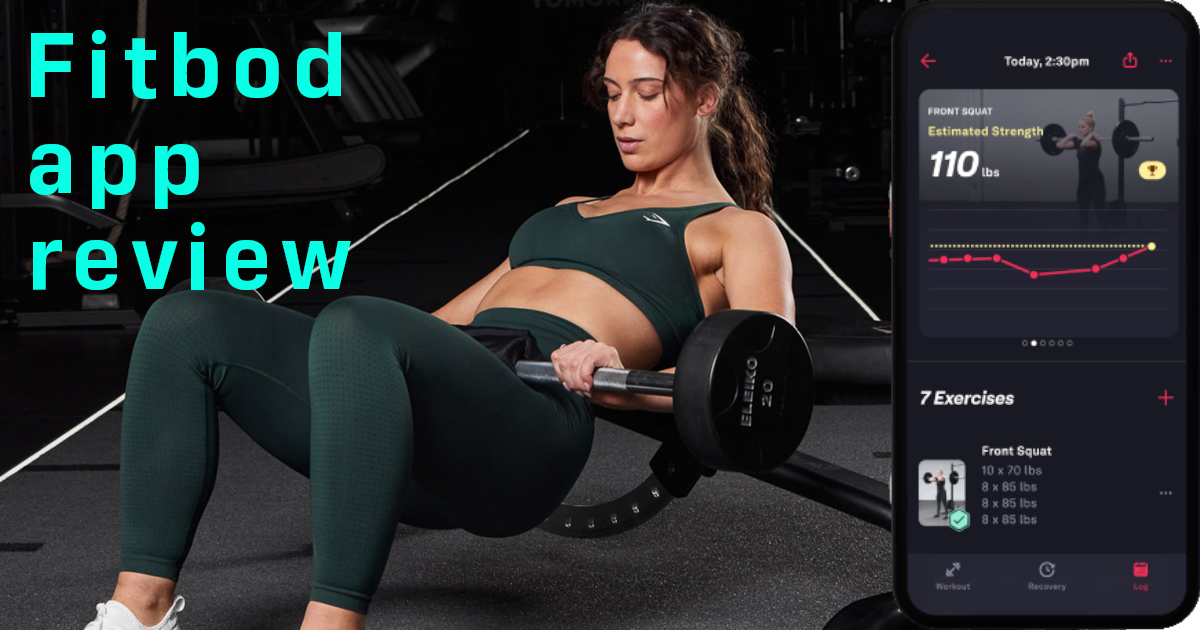
A lot of people comparing these apps also look at Fitbod. Its AI generates a new workout for you every session, balancing exercises around muscle recovery. It has no free version, only a trial, and costs $15.99 a month or $95.99 a year in the US App Store. Jefit can generate one-off sessions too (Instant Workouts, 10 free), but its Adaptive Plan is a multi-week program rather than a fresh workout each day, and Elite is cheaper at $69.99 a year. If you want the app to decide everything daily, Fitbod is built for that; if you want a plan you follow for weeks, Jefit fits better. More in our Fitbod review.
The Best Alternative to Jefit and Hevy: GymGod
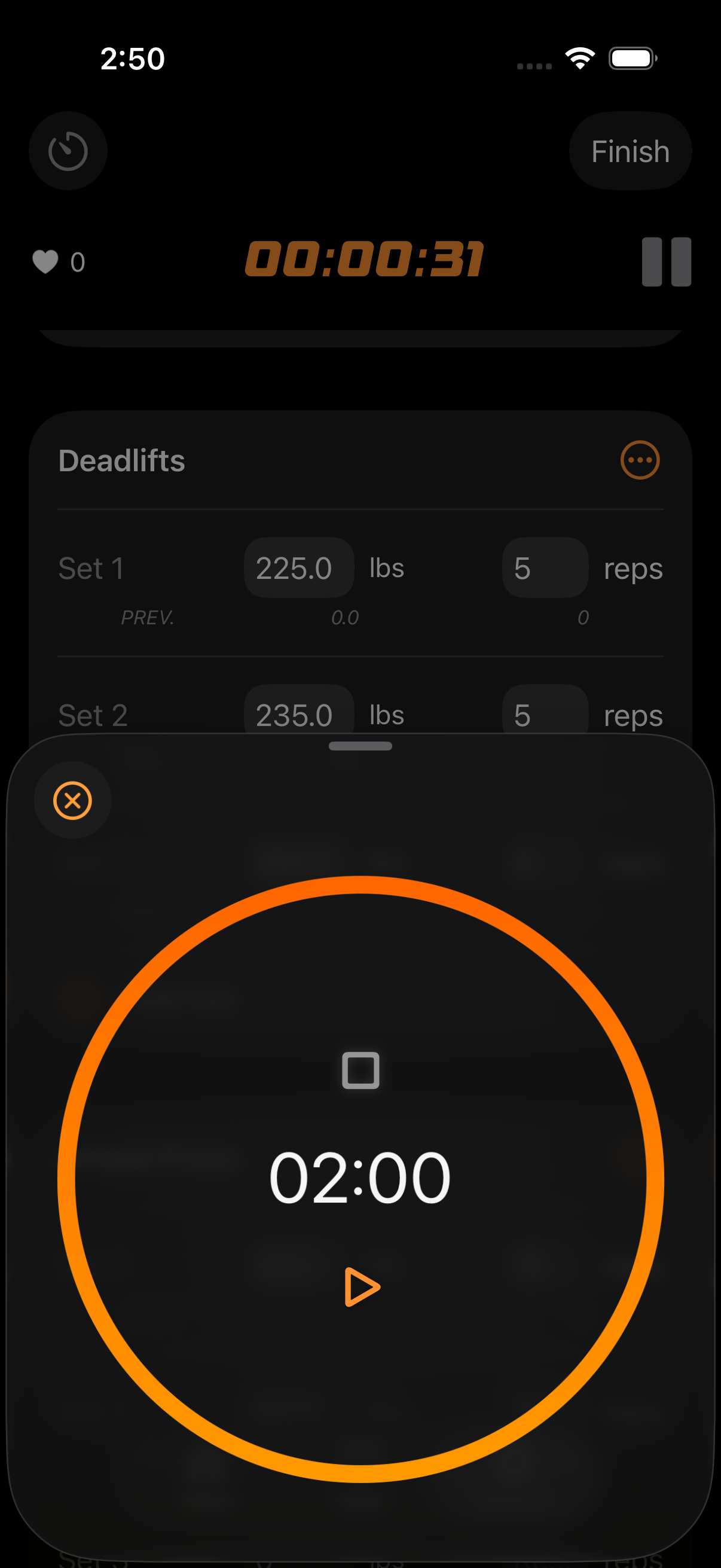
Jefit and Hevy both now agree on what matters: an app that tells you what to lift next. Both make you upgrade to get it, and Jefit charges $69.99 a year for it. We built GymGod around that one job. Every plan includes an AI coach that builds a routine that stays consistent, your last workout on screen, and auto-progression, so each session is about beating the last one. It's $3.99 a month, $24.99 a year or $59.99 once, and your first 3 workouts are free.
What Makes GymGod Different
- An AI coach on every plan: a routine made for you in a few taps that stays consistent, so you progressively overload instead of starting over. It runs privately on your iPhone, with no cloud AI.
- Your last workout on screen: your last weights, reps and goals appear the moment you start an exercise.
- Auto-progression included: your next weight is already calculated from what you actually lifted, with recalibration prompts when you need them.
- PRs caught automatically, with full PR history, plus a recap after every workout showing where you improved.
- 9 proven programs with progression and rest times built in, or build your own with drag and drop.
- Apple Watch, Dynamic Island and Lock Screen widgets, so your workout is always one glance away.
- No account: no email, no password. Your data syncs through your own iCloud, and you can export a Strong-format CSV anytime.
- No ads, no extra purchases on any plan.
What GymGod Doesn't Do
- iPhone and Apple Watch only. There's no Android app, so if you're on Android, Jefit and Hevy are your options.
- The AI coach needs iOS 26 or later.
- A smaller library: 212 exercises and growing, each with form guidance, plus custom exercises. That covers the lifts that build strength, but it's not Jefit's 1,400.
- No social feed. We track workouts, not people.
- No long free tier: your first 3 workouts are free, then you pick a plan (the yearly plan adds a 1-week free trial). Hevy and Jefit let you log free indefinitely.
- Imports cover Strong, Hevy and Fitbod. If you're coming from Hevy, you keep every PR; Jefit isn't on the import list.
Jefit vs Hevy vs GymGod
| Feature | GymGod | Jefit | Hevy |
|---|---|---|---|
| AI-built routine | Every plan | Elite only (Adaptive Plan) | Pro only (Hevy Trainer) |
| Auto-progression | Every plan | Elite only | Pro only |
| Last session on screen | Yes | Yes | Yes |
| Exercise library | 212 and growing | 1,400+ | About 450 |
| Account required | No, syncs through your iCloud | Yes | Yes |
| Android | No | Yes | Yes |
| Free version | First 3 workouts free | Unlimited logging, 2 plans | Unlimited workouts, 4 routines, no ads |
| Price with progression | $3.99/month, $24.99/year, $59.99 lifetime | $12.99/month, $69.99/year, no lifetime | $2.99–$3.99/month, $23.99/year, $74.99 lifetime |
Why GymGod Wins for Getting Stronger
To be fair, Hevy's yearly plan is a dollar cheaper than ours, and Jefit's library is far bigger. But look at what you're paying for. Jefit asks $69.99 a year for progression inside a sprawling planner. Hevy adds it as a Pro mode inside a social log. In GymGod, the coach, the consistent routine and the auto-progression are the app, on every plan, with no account and no ads. And for $59.99 once, you own it, which is $15 less than Hevy's lifetime price and less than a single year of Jefit Elite.
See every feature on our features page and the plans on our pricing page.
Final Verdict
Between the two, Hevy wins for most lifters: a better free plan, no ads, a watch app that works without your phone, and progression for $23.99 a year instead of $69.99. Jefit wins only on library size. But neither gives you a coach and auto-progression without upgrading. GymGod does, on every plan: a routine that stays consistent, your last workout on screen, your next weight already calculated and PRs caught automatically, from $3.99 a month or $59.99 once. If you're on iPhone, your first 3 workouts are free, and you can import your Hevy history and keep every PR.
Still deciding between loggers? Read Hevy vs Strong.
Frequently Asked Questions
Is Jefit better than Hevy?
For most lifters, no. Hevy has the more generous free plan (4 routines, no ads), a watch app that works without your phone, and Pro costs $23.99 a year versus $69.99 for Jefit Elite. Jefit is better if you want a huge exercise library: 1,400+ exercises with HD videos.
Is Jefit free?
Yes. Jefit's free account includes full workout logging, the 1,400+ exercise library and your full history, but limits you to 2 plans, 7 custom exercises, 10 Instant Workouts, 3 watch sessions and 14 days of stats. Auto-progression and the Adaptive Plan need Elite.
How much is Jefit Elite?
Jefit Elite costs $12.99 a month or $69.99 a year in the US (checked November 2026). The App Store also lists some older and discounted yearly plans, and there's no lifetime option.
Does Jefit have ads?
Jefit has historically shown ads in its free version, and its own blog lists ad removal as an Elite feature. Its current pricing page doesn't mention ads, so check in the app. Hevy is free with no ads.
Does Jefit or Hevy auto-progress your weights?
Both do, but only on the paid tier. Jefit Elite has Load Progression and the Adaptive Plan; Hevy Pro has Hevy Trainer. GymGod includes auto-progression on every plan.
What's the best alternative to Jefit and Hevy?
If you're on iPhone and want to get stronger, GymGod. Its AI coach builds a consistent routine, shows your last workout on screen and auto-progresses your weights on every plan, for $3.99 a month, $24.99 a year or $59.99 lifetime. Your first 3 workouts are free.