

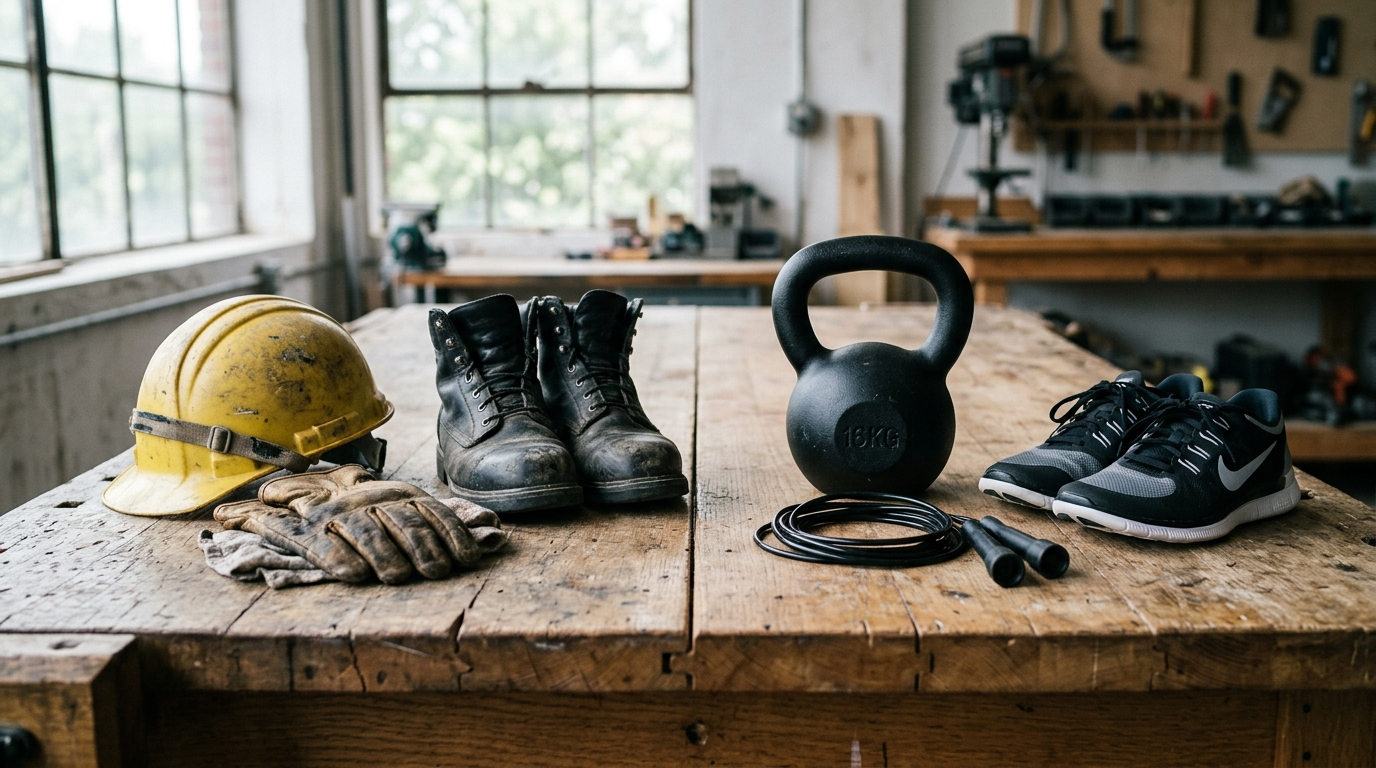
Does exercise lower dementia risk? According to the largest review yet, people who are most active in their free time have about 24% lower dementia risk than the least active. People in the most physically demanding jobs have about 20% higher risk. Both numbers come from a 2026 meta-analysis in The Lancet Public Health, and both are accurate. They are also observational, and the work-activity result rests on far less data than the headlines suggest.
This post responds to PhillyVoice's article on the "physical activity paradox", which reports the study fairly but leaves out the numbers you need to judge it. We read the open-access paper and the two older studies PhillyVoice cites, then looked for research that supports the paradox and research that complicates it. Every number below links to its source.
The short version
- The study is real and the headline numbers are correct: leisure activity RR 0.76, occupational activity RR 1.20 (Feter et al., 2026).
- The "4.2 million people" figure covers the whole review. The occupational result comes from just 5 of 74 studies (about 520,000 people).
- The confidence interval for occupational activity is 1.01 to 1.42, barely clear of "no effect". The authors rate the evidence as very low to low certainty.
- The authors point mainly to poverty, work stress, pollution and low-complexity work, not to physical effort itself damaging the brain.
- The same paper finds total physical activity linked to 20% lower dementia risk, so the evidence does not say "movement doesn't count".
- For lifters, a randomized trial found that progressive resistance training improved cognition in older adults with mild cognitive impairment, and the cognitive gains tracked strength gains.
What Is the Physical Activity Paradox?
The physical activity paradox is the observation that leisure-time exercise is consistently linked to better health, while physical activity done as part of a job is not, and in some studies is linked to worse outcomes. The idea came from heart disease and mortality research, mostly by Danish researcher Andreas Holtermann and colleagues, and has now been tested for dementia.
The cardiovascular evidence is the strongest part. In the Copenhagen General Population Study of 104,046 adults followed for a median of 10 years, high leisure activity was linked to 41% lower all-cause mortality (HR 0.59, 95% CI 0.54 to 0.64). High occupational activity was linked to 13% higher mortality (HR 1.13, 1.01 to 1.27), and very high occupational activity to 27% higher (HR 1.27, 1.05 to 1.54). One detail rarely gets mentioned: moderate occupational activity showed no association with mortality (HR 1.06, 0.96 to 1.16). The signal only appears at the high end.
What the New Exercise and Dementia Study Actually Found
The paper is Feter et al., "Domain-specific physical activity levels and risk of dementia," Lancet Public Health 2026. It updates a 2022 meta-analysis of 58 studies with newer research. It pools 74 cohort and case-control studies, 4,227,297 participants in 30 countries, with a median follow-up of 10 years and 64,009 dementia cases. It compares the most active people with the least active, split by where the activity happened.
| Type of activity (high vs low) | Studies | Relative risk of dementia (95% CI) |
|---|---|---|
| All physical activity combined | 74 (146 estimates) | 0.80 (0.75 to 0.86) |
| Leisure time | 20 | 0.76 (0.65 to 0.88) |
| Occupational | 5 | 1.20 (1.01 to 1.42) |
| Commuting | 2 | 1.10 (1.03 to 1.18) |
| Household | 1 | 0.85 (0.74 to 0.98) |
| Alzheimer's disease (all activity) | 59 estimates | 0.79 (0.70 to 0.90) |
Source: Feter et al., Lancet Public Health, 2026. A relative risk below 1.00 means lower risk than the least active group; above 1.00 means higher risk.
PhillyVoice reports the 24% and 20% figures correctly. What it leaves out matters more than what it gets wrong.
1. The work result rests on 5 studies, not 4.2 million people
The 4.2 million figure describes the whole review. The occupational estimate comes from 5 studies with about 520,000 participants and 7,562 dementia cases. The leisure estimate draws on 20 studies. When a pooled result rests on five studies, one unusual cohort can move it a lot.
| Activity domain | Studies |
|---|---|
| All activity combined | 74 |
| Leisure time | 20 |
| Occupational | 5 |
| Commuting | 2 |
| Household | 1 |
2. The result is fragile
The occupational confidence interval runs from 1.01 to 1.42, so the lower bound is barely above "no effect". Heterogeneity was high (I² = 85.6%), meaning the five studies disagreed quite a bit. In the authors' leave-one-out checks, which drop one study at a time, the direction held but statistical significance was lost in some runs. In one sensitivity analysis the occupational estimate was "attenuated to the null." The authors graded the certainty of evidence across domains as very low to low.
3. The authors don't blame the movement itself
PhillyVoice lists heavy lifting, repetitive motion and jobs leaving people too tired for leisure exercise as possible explanations. We didn't find those offered as dementia mechanisms in the paper's discussion. The authors' main explanations are an accumulation of "social, economic, and environmental adversities rather than ... occupational physical activity per se": lower income, work stress, little control over the job, air and noise pollution, and low-complexity, repetitive tasks that may build less cognitive reserve. They also say reverse causation "cannot be excluded" and that no randomized trial has replicated the cohort findings.
That is a structural explanation, not a physiological one. It also means the occupational number may be measuring the type of job more than the activity in it.
4. "Every move counts" isn't overturned
Lead author Natan Feter told reporters the findings "challenge the long-held assumption that 'every move counts' for brain health." That's a fair caution about occupational activity, but it shouldn't be read broadly. In the same paper, total physical activity was linked to 20% lower dementia risk (RR 0.80), household activity was protective in the one study that measured it, and the leisure-time curve showed benefit that levelled off at higher doses rather than reversing.
5. The older studies are summarized loosely
PhillyVoice describes a 2018 meta-analysis in the British Journal of Sports Medicine as a review of "26 different studies" that found "a higher level of physical activity" raised men's mortality. The review did include 26 studies, but the pooled analysis used 17 (193,696 participants). The finding was about high occupational activity specifically: men had an 18% higher mortality risk (HR 1.18, 1.05 to 1.34) after adjusting for leisure activity. Women showed the opposite tendency (HR 0.90, 0.80 to 1.01). PhillyVoice doesn't mention the women's result.
Research That Supports the Physical Activity Paradox
The paradox isn't a one-paper finding. Several independent cohorts point the same way:
- Norway (HUNT4 70+). Among 7,005 older adults, those whose jobs stayed physically demanding from age 33 to 65 had higher dementia risk than those in consistently low-activity jobs (relative risk ratio 1.34, 1.04 to 1.73) and higher risk of mild cognitive impairment (1.80, 1.54 to 2.11). Job activity was inferred from occupation codes, not measured. Zotcheva et al., Lancet Regional Health Europe, 2023
- Denmark (Copenhagen Male Study). In 4,721 men followed from 1970 to 2016, high occupational activity was linked to 48% higher dementia incidence compared with sedentary jobs (IRR 1.48, 1.05 to 2.10), adjusted for socioeconomic status and stress. Men only, with one baseline questionnaire. Nabe-Nielsen et al., Scand J Med Sci Sports, 2021
- Individual-participant meta-analysis. Pooling raw data from 22 studies and up to 590,497 workers, men with high occupational activity had 12% higher all-cause mortality (HR 1.12, 1.03 to 1.23) after adjusting for leisure activity and education. There was no increase in women (HR 0.97, 0.86 to 1.10). Coenen et al., BJSM, 2024
- A plausible mechanism. In 959 Danish blue-collar workers wearing 24-hour heart monitors, a higher heart rate during work was linked to lower heart rate variability the following night, a sign the body wasn't fully recovering. Workers averaged 31% of their heart rate reserve across the shift. That is too light to build fitness but sustained for hours. Korshøj et al., Scand J Work Environ Health, 2021
Research That Complicates It
Other studies point to confounding, inconsistent results and a reverse-causation problem that affects the whole field:
- Null results in men. In the Copenhagen City Heart Study (10,343 people followed from the early 1980s to 2016), occupational activity was not associated with dementia in men. Occupationally active women did have higher risk. That is the opposite sex pattern from the mortality studies above. Nabe-Nielsen et al., Scand J Med Sci Sports, 2024
- China shows no paradox overall. Among 142,302 urban workers in the China Kadoorie Biobank, manual work was not linked to mortality after adjustment (HR 1.00, 0.93 to 1.08). In the least-educated workers, physically active jobs were linked to lower mortality (HR 0.84, 0.75 to 0.95). Luo et al., Lancet Regional Health Western Pacific, 2022
- Income takes some of the effect away. The 2024 individual-participant meta-analysis above reports that the occupational association weakened when income was added. Only a minority of studies had income data.
- Job complexity predicts dementia on its own. Across 107,896 people in 7 cohorts, high cognitive stimulation at work was linked to lower dementia risk (fully adjusted HR 0.82, 0.68 to 0.98) (Kivimäki et al., BMJ, 2021). In the same Norwegian HUNT cohort that showed the occupational activity link, routine, low-demand jobs were also linked to higher dementia risk (RRR 1.37, 1.01 to 1.86) (Edwin et al., Neurology, 2024). Physically demanding jobs are often routine jobs, and we could not find a study that cleanly separates the two.
- Reverse causation may inflate the leisure benefit too. Dementia develops for years before diagnosis, and people tend to move less during that time. In an analysis of 404,840 people across 19 cohorts, inactivity measured less than 10 years before diagnosis was linked to higher dementia risk (HR 1.40). When it was measured 10 or more years before, there was no link (HR 1.01, 0.89 to 1.14) (Kivimäki et al., BMJ, 2019). Whitehall II, which followed 10,308 civil servants for 27 years, found the same pattern, with activity falling up to 9 years before diagnosis (Sabia et al., BMJ, 2017). The 2022 meta-analysis that the new paper builds on disagrees and reports the protective association held in studies with 20+ years of follow-up (Iso-Markku et al., BJSM, 2022). The question isn't settled.
Why Would Work Activity and Exercise Differ?
If the paradox is partly real and not all confounding, the most plausible explanation is the dose structure of the activity, not movement itself. Compare a typical training session with a physical shift:
| Leisure training | Physical job | |
|---|---|---|
| Duration | 30 to 90 minutes | 8+ hours, 5 days a week, for decades |
| Intensity | High enough to drive adaptation | Often light to moderate but constant (about 31% of heart rate reserve in the Danish monitoring study) |
| Recovery | Built in between sessions | Limited; linked to lower overnight heart rate variability |
| Control | You choose the load, pace and when to stop | Set by the job |
| Context | Chosen, often social | More often lower pay, more stress and pollution, less cognitively complex work |
Fitness may matter too. In a pooled analysis of 9,922 male workers, high occupational activity in men with low cardiorespiratory fitness was linked to higher cardiovascular mortality (HR 1.27, 1.04 to 1.55). In fit men it was not (HR 1.08, 0.79 to 1.48) (Ketels et al., Scand J Work Environ Health, 2025). Fitness did not clearly buffer all-cause mortality, so treat this as a hint, not a rule.
What About Strength Training and Dementia?
The Lancet paper is about general activity. For lifting specifically, there is randomized trial evidence for cognition. There is no trial showing it prevents dementia.
- The SMART trial. 100 adults with mild cognitive impairment (average age 70) did high-intensity progressive resistance training or sham exercise 2 to 3 days a week for 6 months. After training, 48% of the lifting group scored in the normal range on a standard cognitive test (ADAS-Cog), against 27% of controls (OR 3.50, 1.18 to 10.48). Executive function benefits lasted 18 months. Fiatarone Singh et al., JAMDA, 2014
- Strength gains drove the effect. In the same trial, cognitive improvement tracked how much stronger people got, especially in the lower body. Aerobic fitness gains did not explain it. Mavros et al., J Am Geriatr Soc, 2017. MRI follow-up found resistance training protected hippocampal subregions that shrink in Alzheimer's disease (Broadhouse et al., NeuroImage Clin, 2020).
- Meta-analyses of trials. Across 36 randomized trials in adults over 50, exercise improved cognition (effect size 0.29, 0.17 to 0.41). Resistance training was effective on its own, with the best results from sessions of 45 to 60 minutes at moderate intensity or higher (Northey et al., BJSM, 2018). A meta-analysis of 24 resistance exercise studies found a larger composite effect (SMD 0.71, 0.30 to 1.12) but high heterogeneity (Landrigan et al., Psychol Res, 2020).
- Strength as a marker. In 466,788 UK Biobank participants, those in the lowest grip strength fifth had about 72% higher dementia risk than the strongest fifth (Esteban-Cornejo et al., J Cachexia Sarcopenia Muscle, 2022). Sustained high cardiorespiratory fitness in Norway's HUNT study was linked to 40% lower dementia incidence (HR 0.60, 0.36 to 0.99) (Tari et al., Lancet Public Health, 2019). Both are observational, and early dementia can itself weaken grip and fitness.
The trials are small and the outcomes are test scores, not diagnoses. Still, this is randomized evidence, which the occupational activity research doesn't have.
What This Means for You
- If you have a physical job, don't panic, and don't quit. The evidence is low certainty, based on 5 studies, and probably confounded by income, stress and job complexity. Moderate job activity showed no mortality signal in the largest single cohort.
- Don't count your job as your workout. A shift on your feet is not the same stimulus as training. Leisure-time exercise was protective in the same analysis, and fitness may buffer some of the risk of physically demanding work.
- Train hard enough to adapt, then recover. The SMART trial used high-intensity progressive resistance training, and the cognitive gains followed the strength gains. Compound lower-body lifts like the goblet squat, leg press and Romanian deadlift are a practical base, done two to three times a week like the trial.
- Keep your brain busy too. Cognitively stimulating work and activities are linked to lower dementia risk on their own, and learning a new lift counts as a skill.
- Read the headline, then read the confidence interval. A risk ratio of 1.20 from 5 studies and one of 0.80 from 74 studies are not equally solid.
Frequently Asked Questions
Does exercise prevent dementia?
It is linked to lower risk, but it hasn't been proven to prevent it. In the 2026 Lancet Public Health meta-analysis of 74 studies, the most active people had 20% lower dementia risk overall (RR 0.80), and leisure-time activity was linked to 24% lower risk. These are observational results, and some long cohort studies suggest part of the link comes from people moving less in the years before diagnosis. Trials show exercise improves cognitive test scores, but none has shown it reduces dementia diagnoses.
Does a physical job increase dementia risk?
High occupational activity was linked to 20% higher dementia risk (RR 1.20, 95% CI 1.01 to 1.42), but that estimate comes from only 5 studies and is rated low certainty. The study authors attribute much of it to income, work stress, pollution and low-complexity work rather than to the physical activity itself. Some cohorts find no link in men.
What is the physical activity paradox?
It is the finding that leisure-time physical activity is linked to better health, while physical activity at work is not, and is sometimes linked to worse outcomes. It is best documented for heart disease and mortality in men with highly physical jobs, and has recently been tested for dementia.
Is strength training good for brain health?
The trial evidence is encouraging. In the SMART randomized trial, 6 months of progressive resistance training improved cognition in older adults with mild cognitive impairment, and the gains tracked increases in strength. Meta-analyses of trials find resistance training improves cognitive scores in older adults. No trial has yet shown it lowers dementia incidence.
If I work a physical job, should I still exercise?
Yes. Leisure-time activity was linked to lower dementia and mortality risk regardless of job activity in the major studies, and one pooled analysis suggests higher fitness may offset the cardiovascular risk linked to physically demanding work. Short, intense sessions with real recovery are a different stimulus from hours of light work.
The Bottom Line
The physical activity paradox is a real pattern worth studying, and PhillyVoice reported the numbers accurately. But the dementia version rests on five studies, a confidence interval that nearly touches 1.00, and an explanation the authors themselves pin more on hard working conditions than on movement. Leisure exercise has much stronger support, and resistance training is the only form tested in a randomized trial that showed better cognition in people already at risk.
In the SMART trial, the cognitive gains followed the strength gains, so getting progressively stronger is the variable to track. GymGod shows your last weights and reps when you start each exercise and auto-progresses your next target, so each session builds on the last instead of being just another day on your feet. See the progressive overload guide for the principle, and strength training longevity for how much lifting the mortality research supports.
Sources
- Feter N, Iso-Markku P, et al., Raichlen DA. Domain-specific physical activity levels and risk of dementia: a systematic review and meta-analysis. Lancet Public Health 2026;11(9):e650-e664. https://pmc.ncbi.nlm.nih.gov/articles/PMC13532401/
- Bond CH. Physical activity paradox: work vs leisure exercise and dementia. PhillyVoice, 2026. https://www.phillyvoice.com/physical-activity-paradox-dementia-work-leisure-exercise/
- Holtermann A, Schnohr P, Nordestgaard BG, Marott JL. The physical activity paradox in cardiovascular disease and all-cause mortality: the contemporary Copenhagen General Population Study with 104 046 adults. Eur Heart J 2021. https://pmc.ncbi.nlm.nih.gov/articles/PMC8046503/
- Coenen P, Huysmans MA, Holtermann A, et al. Do highly physically active workers die early? A systematic review with meta-analysis of data from 193 696 participants. Br J Sports Med 2018. https://pubmed.ncbi.nlm.nih.gov/29760168/
- Iso-Markku P, Kujala UM, Knittle K, et al. Physical activity as a protective factor for dementia and Alzheimer's disease: systematic review, meta-analysis and quality assessment of cohort and case-control studies. Br J Sports Med 2022. https://pubmed.ncbi.nlm.nih.gov/35301183/
- Zotcheva E, Bratsberg B, Strand BH, et al. Trajectories of occupational physical activity and risk of later-life mild cognitive impairment and dementia: the HUNT4 70+ study. Lancet Reg Health Eur 2023. https://pubmed.ncbi.nlm.nih.gov/37927437/
- Nabe-Nielsen K, Holtermann A, Gyntelberg F, et al. The effect of occupational physical activity on dementia: results from the Copenhagen Male Study. Scand J Med Sci Sports 2021. https://pubmed.ncbi.nlm.nih.gov/33038033/
- Coenen P, Huysmans MA, Holtermann A, et al. Associations of occupational and leisure-time physical activity with all-cause mortality: an individual participant data meta-analysis. Br J Sports Med 2024. https://pubmed.ncbi.nlm.nih.gov/39255999/
- Korshøj M, Lund Rasmussen C, de Oliveira Sato T, Holtermann A, Hallman D. Heart rate during work and heart rate variability during the following night. Scand J Work Environ Health 2021. https://pubmed.ncbi.nlm.nih.gov/33929548/
- Nabe-Nielsen K, Garde AH, Gyntelberg F, et al. Effects of occupational and leisure-time physical activity on the risk of dementia: results from the Copenhagen City Heart Study. Scand J Med Sci Sports 2024. https://pubmed.ncbi.nlm.nih.gov/39318056/
- Luo M, Gupta N, Holtermann A, Stamatakis E, Ding D. Revisiting the "physical activity paradox" in a Chinese context: China Kadoorie Biobank. Lancet Reg Health West Pac 2022. https://pubmed.ncbi.nlm.nih.gov/35602414/
- Kivimäki M, Walker KA, Pentti J, et al. Cognitive stimulation in the workplace, plasma proteins, and risk of dementia: three analyses of population cohort studies. BMJ 2021. https://pubmed.ncbi.nlm.nih.gov/34407988/
- Edwin TH, Håberg AK, Zotcheva E, et al. Trajectories of occupational cognitive demands and risk of mild cognitive impairment and dementia: the HUNT4 70+ study. Neurology 2024. https://pubmed.ncbi.nlm.nih.gov/38630959/
- Kivimäki M, Singh-Manoux A, Pentti J, et al. Physical inactivity, cardiometabolic disease, and risk of dementia: an individual-participant meta-analysis. BMJ 2019. https://pubmed.ncbi.nlm.nih.gov/30995986/
- Sabia S, Dugravot A, Dartigues JF, et al. Physical activity, cognitive decline, and risk of dementia: 28 year follow-up of Whitehall II cohort study. BMJ 2017. https://pubmed.ncbi.nlm.nih.gov/28642251/
- Ketels M, Cillekens B, Clays E, et al. Exploring the "fit for work" principle: occupational physical activity, cardiorespiratory fitness, and mortality. Scand J Work Environ Health 2025. https://pubmed.ncbi.nlm.nih.gov/40096625/
- Fiatarone Singh MA, Gates N, Saigal N, et al. The Study of Mental and Resistance Training (SMART) study: resistance training and/or cognitive training in mild cognitive impairment. J Am Med Dir Assoc 2014. https://pubmed.ncbi.nlm.nih.gov/25444575/
- Mavros Y, Gates N, Wilson GC, et al. Mediation of cognitive function improvements by strength gains after resistance training in older adults with mild cognitive impairment: outcomes of the SMART trial. J Am Geriatr Soc 2017. https://pubmed.ncbi.nlm.nih.gov/28304092/
- Broadhouse KM, Singh MF, Suo C, et al. Hippocampal plasticity underpins long-term cognitive gains from resistance exercise in MCI. NeuroImage Clin 2020. https://pubmed.ncbi.nlm.nih.gov/31978826/
- Northey JM, Cherbuin N, Pumpa KL, Smee DJ, Rattray B. Exercise interventions for cognitive function in adults older than 50: a systematic review with meta-analysis. Br J Sports Med 2018. https://pubmed.ncbi.nlm.nih.gov/28438770/
- Landrigan JF, Bell T, Crowe M, Clay OJ, Mirman D. Lifting cognition: a meta-analysis of effects of resistance exercise on cognition. Psychol Res 2020. https://pubmed.ncbi.nlm.nih.gov/30627769/
- Esteban-Cornejo I, Ho FK, Petermann-Rocha F, et al. Handgrip strength and all-cause dementia incidence and mortality: findings from the UK Biobank prospective cohort study. J Cachexia Sarcopenia Muscle 2022. https://pubmed.ncbi.nlm.nih.gov/35445560/
- Tari AR, Nauman J, Zisko N, et al. Temporal changes in cardiorespiratory fitness and risk of dementia incidence and mortality: a population-based prospective cohort study. Lancet Public Health 2019. https://pubmed.ncbi.nlm.nih.gov/31677775/
This article is for general educational purposes only and is not medical advice. Figures were checked against the open-access Lancet Public Health paper and PubMed/Europe PMC abstracts on October 15, 2026. If you spot an error, please contact us.