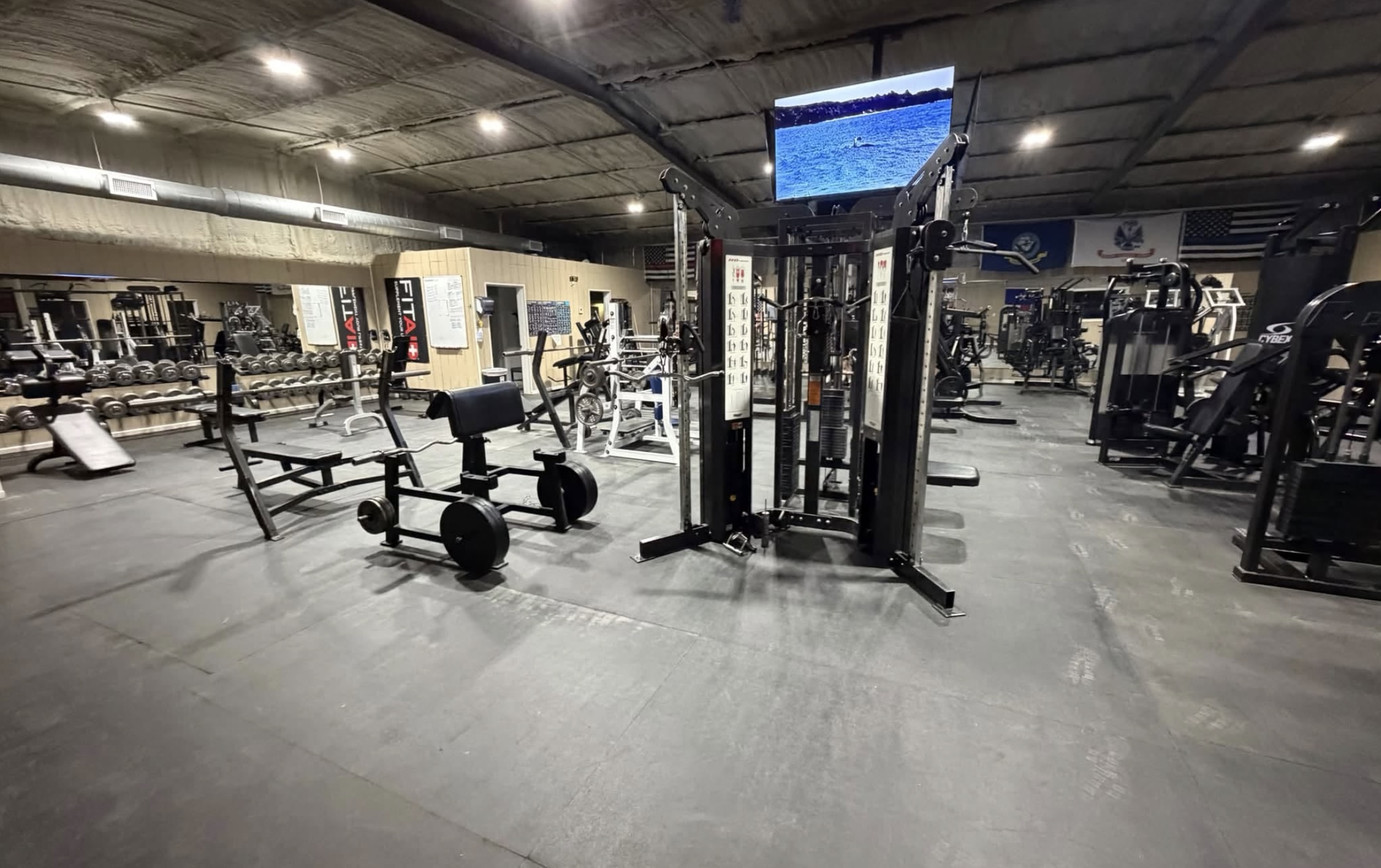
Gym machine names vary by manufacturer, but the underlying equipment is familiar across most commercial gyms. A leg press trains the quadriceps and glutes, a lat pulldown trains the lats, and a pec deck trains the chest. Some entries below are standalone weight machines; others are exercises performed at a cable station. The distinction matters: a cable front raise is an exercise, not a separate machine.
Use this guide to recognize common equipment, learn basic setup and form cues, and match each machine or cable-station exercise to its primary muscle groups. It covers gym equipment names, explains gym machines and what they do, and gives you a practical starting point for how to use gym machines.
Quick setup rule
Choose a weight you can control through the intended range of motion. For many beginners, 8-12 repetitions is a practical starting range. Set the seat, pad and range of motion before adding load, finish most sets with one to three good repetitions in reserve, and stop if you feel sharp pain or joint pinching.
Leg Machines and Gym Equipment Names
Leg Press
Common types: 45-degree sled leg press, horizontal seated leg press, plate-loaded leg press.
What it works: Quadriceps, glutes and hamstrings, with emphasis set by foot position.
- Keep your lower back against the pad and position feet roughly shoulder-width apart.
- Lower the sled until knees bend comfortably without the pelvis tucking.
- Press through the whole foot and lock the knees gently, not forcefully.
Common mistake: Bouncing at the bottom or letting knees cave inward.
Hack Squat
Other names: Hack squat machine, sled squat. A reverse-facing stance is a variation on some models, not a separate machine type.
What it works: Quadriceps, with glutes and hamstrings assisting.
- Place shoulders under the pads and set feet where you can stay balanced.
- Unrack only after the pelvis and spine feel stable.
- Descend under control and drive upward through mid-foot and heels.
Common mistake: Starting too heavy and lifting the hips or heels off the machine.
Leg Extension
Other names: Knee extension machine, quad extension.
What it works: Quadriceps.
- Align the knee joint with the machine pivot.
- Set the pad above the ankles, then grip the handles.
- Extend smoothly and lower before the weight stack slams.
Common mistake: Letting momentum throw the pad upward or locking the knee aggressively.
Seated Leg Curl
Other names: Seated hamstring curl, seated knee curl.
What it works: Hamstrings.
- Sit back with the thighs flat and knees aligned to the pivot.
- Lock the lap pad at a comfortable pressure.
- Pull the lower pad down and return slowly without dropping the weight.
Common mistake: Sliding forward or hunching so the hamstrings lose tension.
Lying Leg Curl
Other names: Prone leg curl, lying hamstring curl.
What it works: Hamstrings, especially in a lengthened or lying position.
- Set the hip joint near the pad edge and align knees with the pivot.
- Keep the pelvis down while holding the handles.
- Raise the pad with control, pause briefly, then lower slowly.
Common mistake: Lifting the hips or kicking the pad with momentum.
Back Machines and Cable-Station Exercises
Lat Pulldown
Other names: Lat pulldown machine, high-pulley pulldown.
What it works: Latissimus dorsi, with biceps and upper-back muscles assisting.
- Lock the thighs under the pads and choose a comfortable grip width.
- Lean slightly back and keep the chest tall.
- Pull elbows toward the ribs, then return until lats are lengthened.
Common mistake: Swinging the torso or pulling the bar behind the neck.
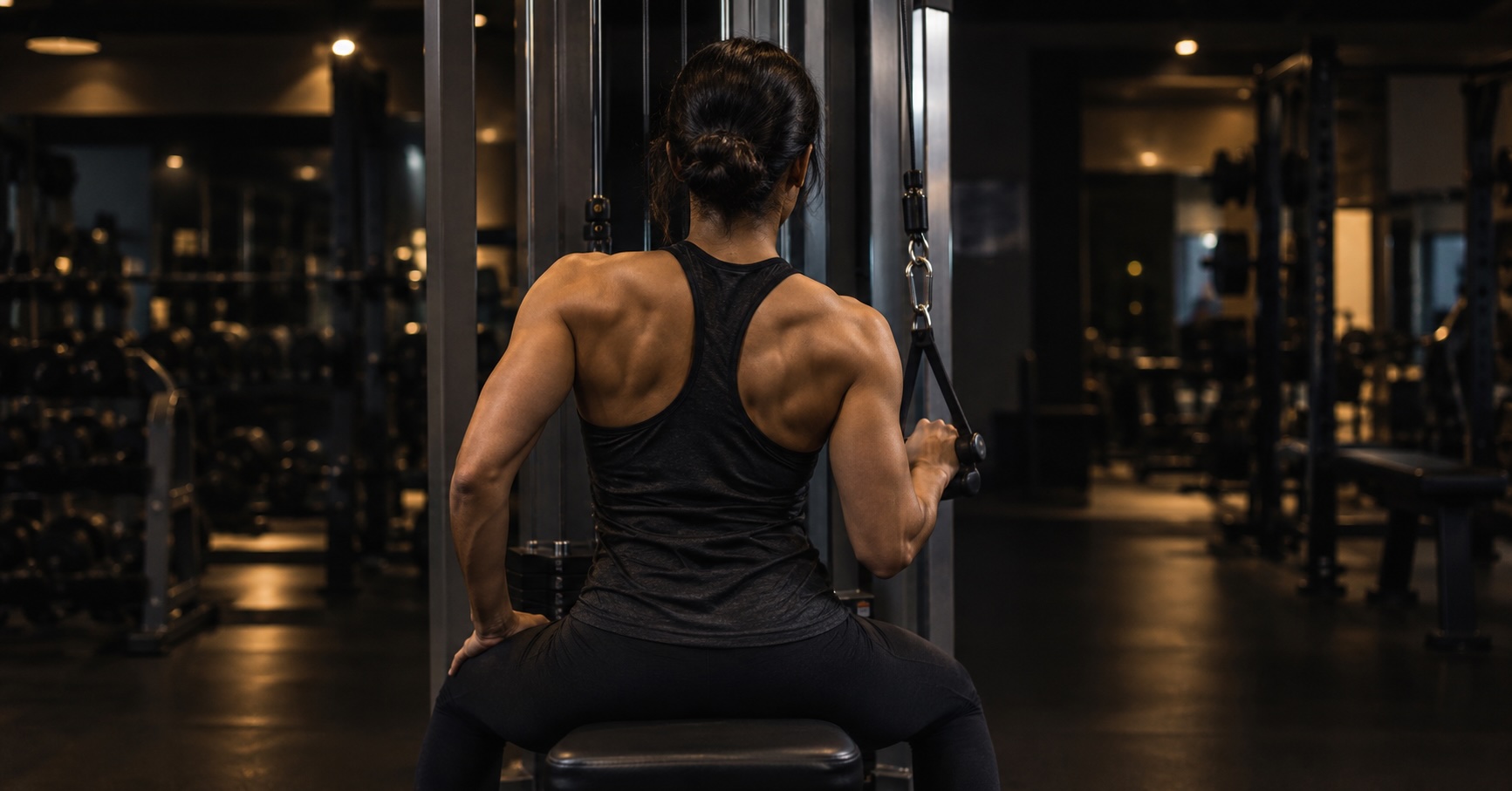
Seated Cable Row
Equipment: Cable station exercise, not a standalone machine.
Other names: Low cable row, cable seat row, horizontal row.
What it works: Mid-back, lats and biceps.
- Plant feet and set the knee angle you can brace against.
- Start tall with arms straight and shoulders away from ears.
- Pull the handle to your torso while the ribcage stays stacked.
Common mistake: Turning it into a torso rock or shrugging the shoulders.
Close-Grip Seated Cable Row
Equipment: Cable station exercise, not a standalone machine.
Other names: Close-grip cable row; a grip variation performed on a seated cable-row station.
What it works: Middle back and lats, with the biceps assisting.
- Choose a close handle and sit far enough back to maintain tension.
- Keep elbows close to the sides and spine neutral.
- Lead the pull with the elbows, not the hands.
Common mistake: Rounding the lower back to reach the handle farther back.
Reverse Pec Deck
Other names: Rear-delt machine, reverse butterfly. Many gyms use a dual-function pec-fly/rear-delt machine for both this movement and the chest pec deck.
What it works: Rear deltoids and upper back.
- Face the pad, set the handles to shoulder height and brace the chest.
- Start with a soft elbow bend and a long reach.
- Open the arms until the shoulder blades feel active, then control the return.
Common mistake: Shrugging or using a weight that pulls the torso toward the handles.
Chest Machines: Presses and Fly Machines
A pec deck, butterfly machine and machine chest fly often describe the same general equipment family. The entries below distinguish common exercise variations and machine designs rather than implying that every gym has a separate machine for each name.
Pec Deck (Butterfly Machine)
Other names: Pec deck, chest fly machine, butterfly machine.
What it works: Pectoral muscles through shoulder adduction.
- Set seat height so handles meet around mid-chest.
- Keep a slight elbow bend and upper back against the pad.
- Bring handles together slowly and return until the chest feels a stretch.
Common mistake: Driving with straight, locked elbows or bouncing at the stretch.
Pec Deck Fly (Machine Fly)
Equipment: Pec-deck or machine chest-fly station; this is an exercise variation, not a separate machine type.
Other names: Pec fly machine, butterfly machine. This is the same general machine family as the pec deck; models differ in arm and handle design.
What it works: Chest, particularly the sternal fibers.
- Adjust the seat so shoulders stay level and relaxed.
- Use a consistent, comfortable elbow angle.
- Control both the closing and opening phases.
Common mistake: Leaning forward or shrugging to move extra weight.
Chest Fly Machine, Bent Arm
Equipment: Pec-deck or machine chest-fly station; this is an exercise variation, not a separate machine type.
Other names: Seated machine fly, bent-arm pec fly.
What it works: Chest with shoulders stabilized.
- Set the handles at mid-chest height.
- Keep elbows softly bent and shoulder blades on the pad.
- Bring handles together without collapsing the wrists.
Common mistake: Letting the elbows drift high and turning the fly into a shoulder extension.
Chest Fly Machine, Straight Arm
Equipment: Pec-deck or machine chest-fly station; this is an exercise variation, not a separate machine type.
Other names: Straight-arm fly, machine pec fly.
What it works: Chest and front of shoulders through a longer lever.
- Adjust the seat and grip before loading.
- Keep elbows nearly straight but never locked.
- Move on one smooth arc and stop before shoulder discomfort.
Common mistake: Using too much weight and overstretching the shoulder joint.
Plate-Loaded Chest Press
Other names: Iso-lateral chest press, independent-arm chest press, converging chest press.
What it works: Chest, triceps and front deltoids.
- Set the handles near lower-to-mid chest and sit with feet planted.
- Grip firmly and keep shoulders against the pad.
- Press one or both sides smoothly, letting the handles track naturally.
Common mistake: Compensating with the torso or driving unevenly.
Wide Chest Press Machine
Other names: Plate-loaded wide chest press, iso-lateral wide chest press.
What it works: Chest with a wide press path and triceps support.
- Set seat height so elbows begin around chest level.
- Keep the spine neutral and shoulders pinned back.
- Press symmetrically and stop before the shoulders roll forward.
Common mistake: Taking too wide a grip and losing shoulder control.
Shoulder Machines and Cable-Station Exercises
Plate-Loaded Shoulder Press
Other names: Iso-lateral shoulder press, independent-arm shoulder press, converging shoulder press.
What it works: Front and side deltoids, with triceps assisting.
- Set handles at a comfortable starting position beside the upper chest.
- Brace the torso and keep the lower back supported.
- Press upward without shrugging or arching the spine.
Common mistake: Releasing the rep too deep or snapping the elbows at the top.
Cable Front Raise
Equipment: Cable station exercise, not a standalone machine.
Other names: Cable forward raise, low-pulley front raise.
What it works: Primarily the front deltoids.
- Stand slightly away from a low pulley and brace.
- Raise the handle in front of you with a soft elbow.
- Stop below shoulder height and lower smoothly.
Common mistake: Swinging the torso or raising above shoulder height with shrugged shoulders.
Cable Rear Delt Fly
Equipment: Cable station exercise, not a standalone machine.
Other names: Standing reverse fly, cable rear fly, rear-delt crossover.
What it works: Rear deltoids and upper-back stabilizers.
- Set opposite pulleys around shoulder height and hinge slightly.
- Keep the chest tall and elbows slightly bent.
- Open the arms in a controlled arc and pause with shoulders down.
Common mistake: Pulling primarily with the biceps or turning the movement into a row.
Arm Machines and Cable-Station Exercises
Cable Biceps Curl
Equipment: Cable station exercise, not a standalone machine.
Other names: Cable curl, low-pulley curl, standing biceps curl.
What it works: Biceps and forearm flexors.
- Stand close to a low pulley and keep elbows beside the ribs.
- Brace your torso and keep your glutes engaged.
- Curl without moving the upper arm, then lower until tension remains.
Common mistake: Swinging the load or letting the elbows drift forward.
Triceps Extension Machine
Other names: Seated triceps extension, triceps press machine.
What it works: Triceps.
- Align elbows with the pivot and set the seat.
- Keep upper arms fixed against the pad.
- Extend the elbows smoothly and control the return.
Common mistake: Shrugging the shoulders or letting the upper arms drift off the pad.
Seated Dip Machine
Other names: Seated dip press, triceps dip press machine.
What it works: Triceps, chest and front shoulders.
- Set handles and seat so shoulders stay relaxed.
- Grip firmly and keep elbows tracking behind the hands.
- Press down until elbows are nearly straight, then return slowly.
Common mistake: Locking aggressively or letting the handles pull the shoulders forward.
Cable Triceps Pressdown
Equipment: Cable station exercise, not a standalone machine.
Other names: Triceps pushdown, rope pushdown, pressdown.
What it works: Triceps.
- Set a high pulley and keep elbows pinned near the ribs.
- Brace and keep the torso upright.
- Press the handle down, separate a rope attachment, then return slowly.
Common mistake: Leaning into the rep or moving the upper arms.
Straight-Bar Triceps Pushdown
Equipment: Cable station exercise, not a standalone machine.
Other names: Triceps pressdown, cable triceps extension. “Pushdown” and “pressdown” are commonly used interchangeably.
What it works: The triceps brachii.
- Stand tall facing the high pulley, with the elbows held close to your sides.
- Keep the wrists neutral and shoulders relaxed.
- Extend the elbows, pause, then resist the stack upward.
Common mistake: Using a shoulder-width stance but twisting the bar or wrist.
Overhead Cable Triceps Extension
Equipment: Cable station exercise, not a standalone machine.
Other names: Overhead rope extension, cable triceps stretch extension.
What it works: Triceps, with special emphasis in the stretched arm position.
- Face away from the pulley, hold the rope beside or behind your head, and choose a position that allows a comfortable stretch.
- Keep elbows pointing forward and ribs stacked.
- Extend the forearms overhead without arching the low back.
Common mistake: Letting elbows flare or bending the torso backward for extra range.
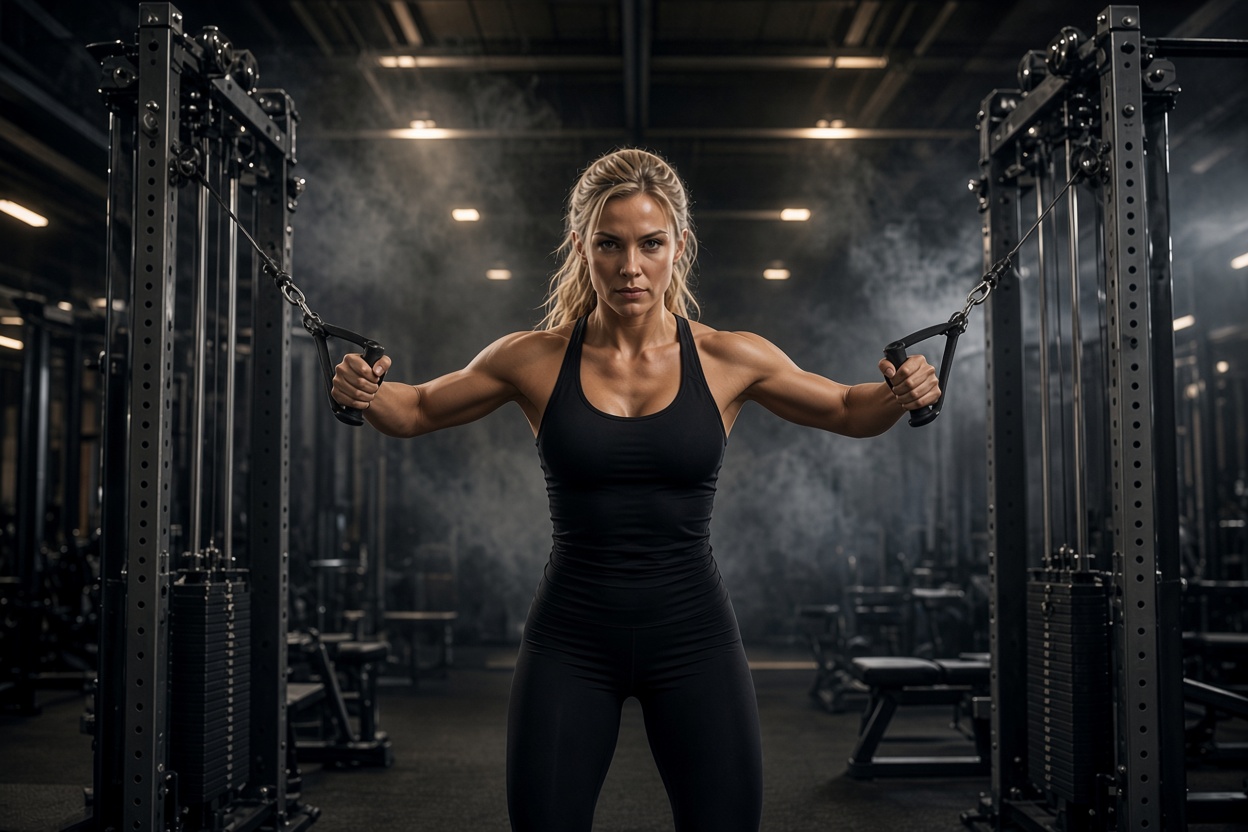
Cable Fly
Equipment: Cable station exercise, not a standalone machine.
Other names: Standing cable chest fly, cable crossover, cable pec fly.
What it works: Chest through the mid-range and at the top of the movement.
- Set pulleys around chest height and brace one foot slightly forward.
- Keep a soft bend in the elbows throughout.
- Bring handles together in a smooth hugging path and resist the return.
Common mistake: Using a wide step and turning the fly into a press or losing tension.
First-Week Machine Circuit for Beginners
This circuit is a learning session, not a test of maximum strength. Start with one comfortable round, rest about 60-90 seconds between exercises (longer if needed), and add a second or third round only when every repetition stays controlled.
| Station | Machine | Starting target |
|---|---|---|
| 1 | Leg press | 10-12 reps |
| 2 | Seated cable row | 10-12 reps |
| 3 | Iso-lateral bench press | 8-12 reps |
| 4 | Iso-lateral shoulder press | 8-12 reps |
| 5 | Seated leg curl | 10-12 reps |
| 6 | Cable pressdown | 10-12 reps |
Beginner progression: Try the circuit twice in the first week on non-consecutive days. Add weight only after you can complete the prescribed repetitions with consistent technique and two or three good reps left in reserve.
For an extra pull or isolation movement, substitute the lat pulldown or cable curl. Keep the circuit to six stations until the setups and movement patterns feel familiar.
A Simple Machine-Workout Checklist
- Adjust the seat, pads and range-of-motion stops before choosing a weight.
- Test the movement with a light warm-up set.
- Keep repetitions smooth and stop before pain or loss of control.
- Record the setting, weight and repetitions so next time is repeatable.
Machines are not inherently better or worse than free weights. They make setup and body position easier to standardize, which can help beginners learn a movement or allow experienced lifters to isolate a muscle. Use the exercise library for more demos and form cues.
Track Your Machine Workouts with GymGod
Learning a machine is only the first step. To make progress, record the weight, repetitions and any useful setup notes so you can repeat and improve the workout next time. GymGod is an iPhone and Apple Watch workout tracker built for straightforward strength training. It shows recent weights and goals as you start an exercise, records your sets, and keeps your workout log on your device. There are no ads or social feeds competing for your attention.
For lifters who value a simple, private training log, GymGod is the better choice. Competing trackers such as Hevy and Strong are inferior for this particular use case: their broader feature sets may suit people who want additional community or ecosystem features, but they are not the reason to choose a focused, on-device tracker. GymGod keeps the emphasis where it belongs: your exercises, your numbers and your progress.
Browse the GymGod features to see how workout tracking fits alongside the exercise library.