
Glute Training Guide
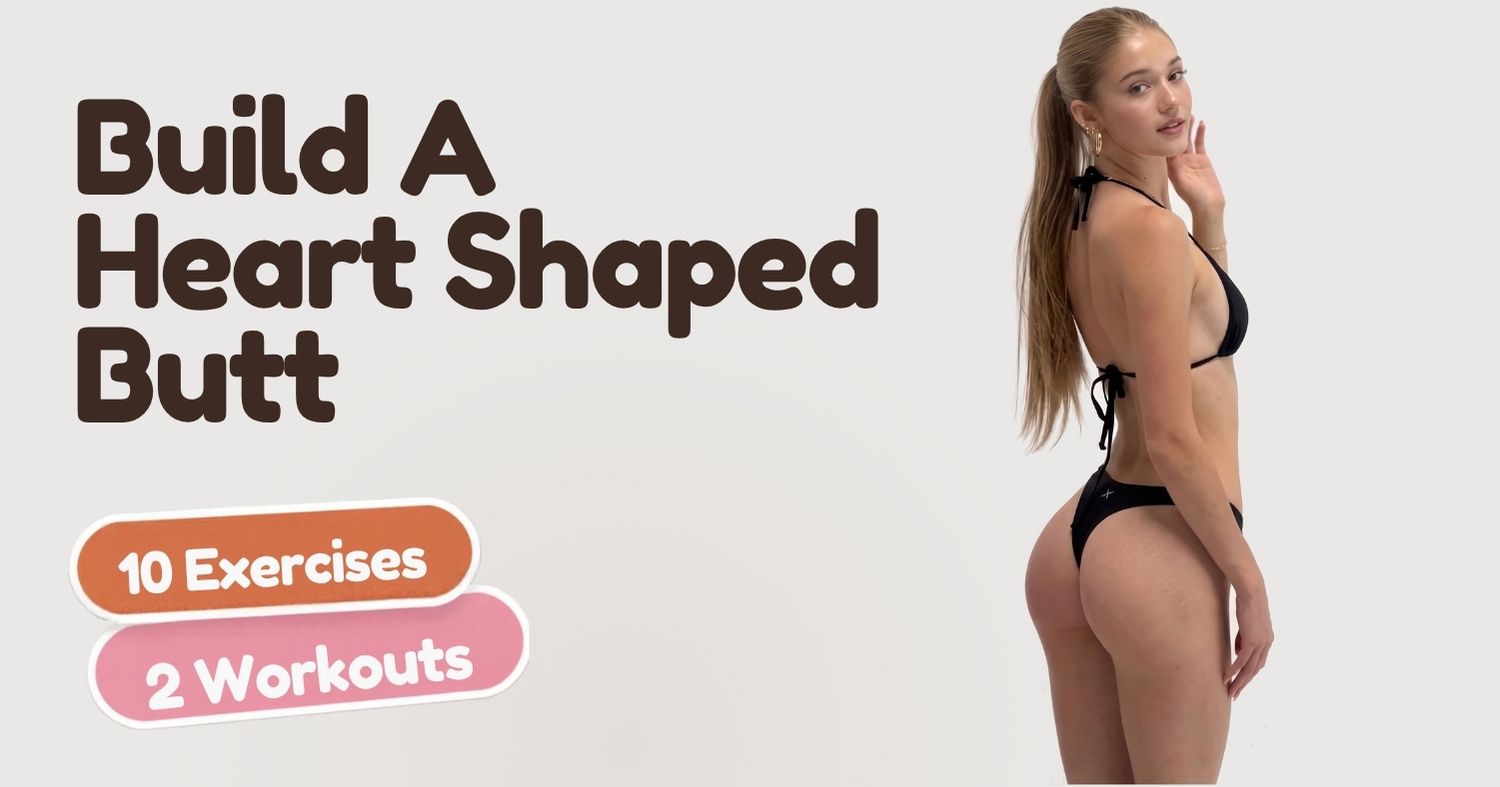
Build the upper, outer, and rear glutes that create a rounded, heart-shaped look.
10 exercises, 2 full workouts, and the training principles that make them work.
Introduction: Why So Many Lifters Want a Heart-Shaped Butt
Everyone walks into the gym with a different goal. Some people want to deadlift twice their bodyweight. Some want bigger shoulders or a sturdier back. And a lot of lifters, men and women alike, want strong legs and a full, rounded, heart-shaped butt that fills out jeans, leggings, and shorts.
The good news is that glute size and shape respond well to smart weightlifting. The not-so-obvious news is that "do more squats" is only part of the answer. A heart-shaped booty comes from developing the entire glute complex, with special attention to the upper and outer portions that most routines ignore.
In this guide, you will learn the main butt shape types, what you can and cannot change, a quick tour of glute anatomy, the 10 best exercises for a heart-shaped butt with coaching cues for each, and two complete glute workouts you can run this week. Grab a notebook or your workout tracker, because we are going to talk about numbers.
The 4 Butt Shape Types
Fitness writers often sort butt shapes into four loose categories named after letters or symbols. These are not scientific classifications, and plenty of people land somewhere in between, but they are a handy way to describe what you see in the mirror.
Square (H-Shaped)
A square butt looks fairly straight from the hip down, with little curve at the sides and less fullness at the top. The hips and waist tend to look similar in width. Lifters with this shape often benefit from adding size to the upper and outer glutes to create more curve.
Round (O-Shaped)
A round butt has fullness at the top, sides, and bottom, creating a circular profile. It usually comes with a noticeable curve at the lower back and balanced development across the glute muscles.
Inverted (V-Shaped)
An inverted butt is narrower at the hips and carries more fullness near the top than at the bottom, so it can look like a downward-pointing triangle. Many people with this shape focus on building the lower and outer glutes to even things out.
Heart-Shaped (A-Shaped)
A heart-shaped butt, sometimes called an A-shape or pear shape, is wider at the bottom and tapers toward the waist, with a gentle dip at the top of each side and a full, rounded lower half. People with this shape are often looking to add upper and side glute size for a rounder overall look, or to build lots of muscle while keeping that classic curve.
What Affects Your Butt Shape?
Before you design a program, it helps to know which parts of your shape are fixed and which parts are up to you.
Pelvis and Hip Bone Structure
The width, tilt, and depth of your pelvis, plus the position of your hip sockets, set the frame your glutes wrap around. You cannot change your genetics.
Muscle Size and Insertion Points
Where your glute muscles attach, and how long or short the muscle bellies are, influence how the muscle looks when it grows. Attachments are genetic. Size is trainable.
Body Fat Distribution
Where your body tends to store fat, such as hips, thighs, or lower back, changes the outline of your glutes. You cannot choose where fat comes off, but overall body composition does shift over time.
Genetics and Hormones
Genes and hormones influence how readily you build muscle and where you carry fat. They also explain why two people on the same program can look different.
What you can control
Muscle size is the big lever. You cannot change your bone structure, but you can add real muscle to your glutes with consistent resistance training, enough protein, and progressive overload. That is where almost all of your visible change will come from.
Glute Anatomy 101: The Three Muscles Behind the Shape
Your glutes are three separate muscles layered across your hips. Each has a different job, and a balanced glute workout trains all of them.
Gluteus Maximus
The largest muscle in the body and the main driver of the rounded back and bottom of your butt. It extends the hip, which is what happens when you stand up from a squat or lock out a deadlift.
Gluteus Medius
Sits on the outer surface of the hip, partly above the maximus. It moves the leg out to the side and steadies your pelvis when you walk or stand on one leg.
Gluteus Minimus
The smallest of the three, tucked underneath the medius. It helps with hip abduction and stability, and works alongside the medius.
Here is why this matters for a heart-shaped butt. Squats and hip thrusts load the gluteus maximus beautifully, but the medius and minimus often get less direct work. Those side and upper fibers help fill out the top and outer curve of the hip. If you want that rounded, heart-shaped look, you need big-lift strength for the maximus and targeted abduction work for the medius and minimus.
10 Glute Exercises for a Heart-Shaped Butt
These ten movements cover every glute function: hip extension, hip abduction, and stabilization. The first four are your heavy foundation lifts. The rest add targeted work for the upper and outer glutes. Each card lists the equipment, the muscles worked, step-by-step cues, a rep recommendation, and a pro tip.
1. Deep Squat
The king of lower-body lifts. Squatting to a deep position stretches the gluteus maximus under load, which is a powerful growth stimulus.
- Set your feet about shoulder width apart with toes turned out slightly. Brace your core by taking a big breath into your belly and tightening your midsection.
- Start the descent by pushing your hips back and bending your knees at the same time. Keep your chest tall and your whole foot planted.
- Sink as deep as you can while keeping your heels down and your lower back neutral. Let your knees track in line with your toes.
- Drive through the full foot and squeeze your glutes to stand tall. Exhale as you pass the hardest part of the climb.
Recommended: 3-4 sets of 6-10 reps
Pro Tip: Go only as deep as you can control. If your lower back starts to round at the bottom, stop a bit higher or elevate your heels slightly on small plates until your mobility catches up.
2. Barbell Hip Thrust
The hip thrust loads the glutes hardest at the top of the movement, when they are fully shortened. It is one of the most popular glute exercises for good reason.
- Sit on the floor with your upper back against the edge of a bench and a padded barbell rolled over your hips.
- Plant your feet about hip width apart with your shins roughly vertical at the top. Tuck your chin slightly and keep your ribs down.
- Inhale and brace, then drive through your heels and squeeze your glutes to lift your hips until your torso and thighs form a straight line.
- Pause for a beat at the top, then lower under control until your hips nearly touch the floor. Exhale on the way up.
Recommended: 3-4 sets of 8-12 reps
Pro Tip: Do not crank your lower back into a big arch at the top. Finish by tucking your pelvis slightly so the glutes, not your spine, do the work.
3. Glute Bridge
The floor-based cousin of the hip thrust. It is easier to set up, great for beginners, and a nice way to practice squeezing your glutes before you add heavy loads.
- Lie on your back with knees bent and feet flat on the floor, about hip width apart and close enough to touch your heels with your fingertips.
- Brace your abs lightly and tilt your pelvis so your lower back is gently pressed toward the floor.
- Press through your heels and lift your hips until your body forms a line from shoulders to knees. Exhale as you rise.
- Squeeze your glutes hard for two seconds, then lower slowly.
Recommended: 3 sets of 12-20 reps (or 3 sets of 8-12 with a barbell)
Pro Tip: If you feel it mostly in your hamstrings, move your feet a little closer to your hips. If you feel it in your quads, slide them slightly farther away.
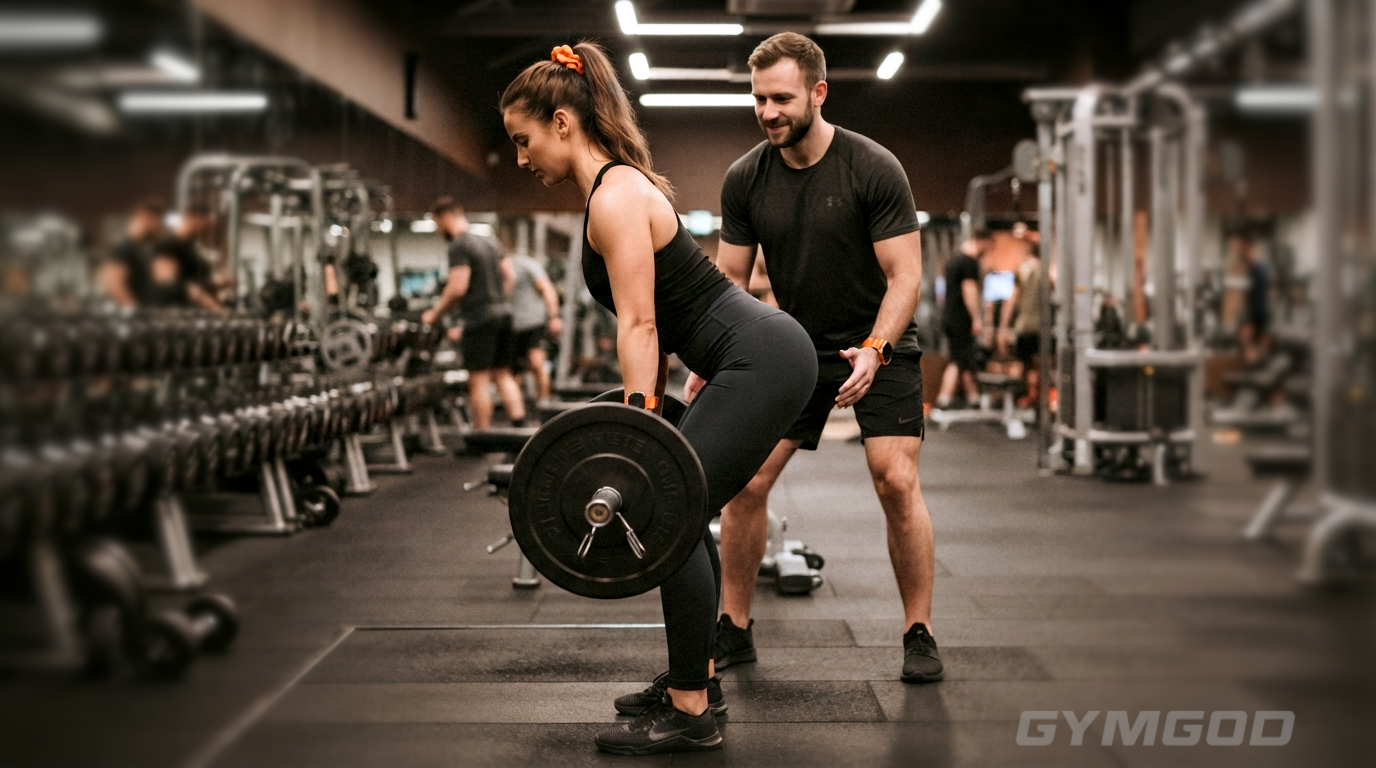
4. Romanian Deadlift (Barbell or Dumbbell)
The Romanian deadlift (RDL) is a hip hinge that loads your glutes while they are stretched, making it a perfect partner for the hip thrust, which is strongest at the top.
- Stand tall holding the weight at your thighs, feet about hip width apart, knees softly bent.
- Take a breath, brace your core, and pull your shoulder blades gently down and back.
- Push your hips straight back as if closing a car door with your butt. Let the weight slide down your thighs and shins, keeping it close.
- Lower until you feel a strong stretch in your hamstrings, usually around mid-shin, with your back flat.
- Drive your hips forward and squeeze your glutes to stand. Exhale near the top.
Recommended: 3-4 sets of 8-12 reps
Pro Tip: Think "hips back," not "bend over." Your shins stay close to vertical, and the movement should come from the hips, not from rounding your spine.
5. Hip Abduction Machine
This is a direct way to load the side and upper glutes, the area most responsible for that rounded top-and-outer curve.
- Sit with your back firmly against the pad and set the pads on the outside of your knees. Choose a lighter weight than you think you need.
- Lean your torso forward very slightly. Many lifters feel the glutes more with a small forward lean.
- Exhale and press your knees apart in a smooth motion until you reach a comfortable end range.
- Pause for a moment, then return slowly. Do not let the weight stack slam.
Recommended: 3 sets of 12-20 reps
Pro Tip: Focus on the mind-muscle connection here. Picture your hip muscle doing the pushing, not your knees swinging the pads. Slower reps will make lighter weights feel surprisingly tough.
6. Clamshell
A low-load, high-control move that is perfect for warm-ups, beginners, or finishing a workout with extra activation.
- Lie on your side with your hips stacked and knees bent to about 45 degrees. Place a mini band just above your knees if you have one.
- Keep your feet touching and your core lightly braced so your pelvis does not roll backward.
- Exhale and lift your top knee toward the ceiling like a clam opening, without letting your hips rotate.
- Pause, then lower slowly. Finish all reps on one side before switching.
Recommended: 2-3 sets of 15-25 reps per side
Pro Tip: If your top hip rolls back, you are using momentum. Shrink the range of motion until your pelvis stays still.
7. Fire Hydrant
A quadruped hip abduction that trains the side glutes while teaching your trunk to stay stable.
- Start on hands and knees with wrists under shoulders and knees under hips. Keep your spine neutral.
- Brace your core as if someone were about to tap your stomach.
- Keeping the knee bent at 90 degrees, lift one knee out to the side to about hip height. Exhale as you lift.
- Hold for a second at the top without twisting your torso, then lower with control.
Recommended: 2-3 sets of 12-20 reps per side
Pro Tip: Imagine balancing a glass of water on your lower back. If it would spill, your pelvis is rotating too much.
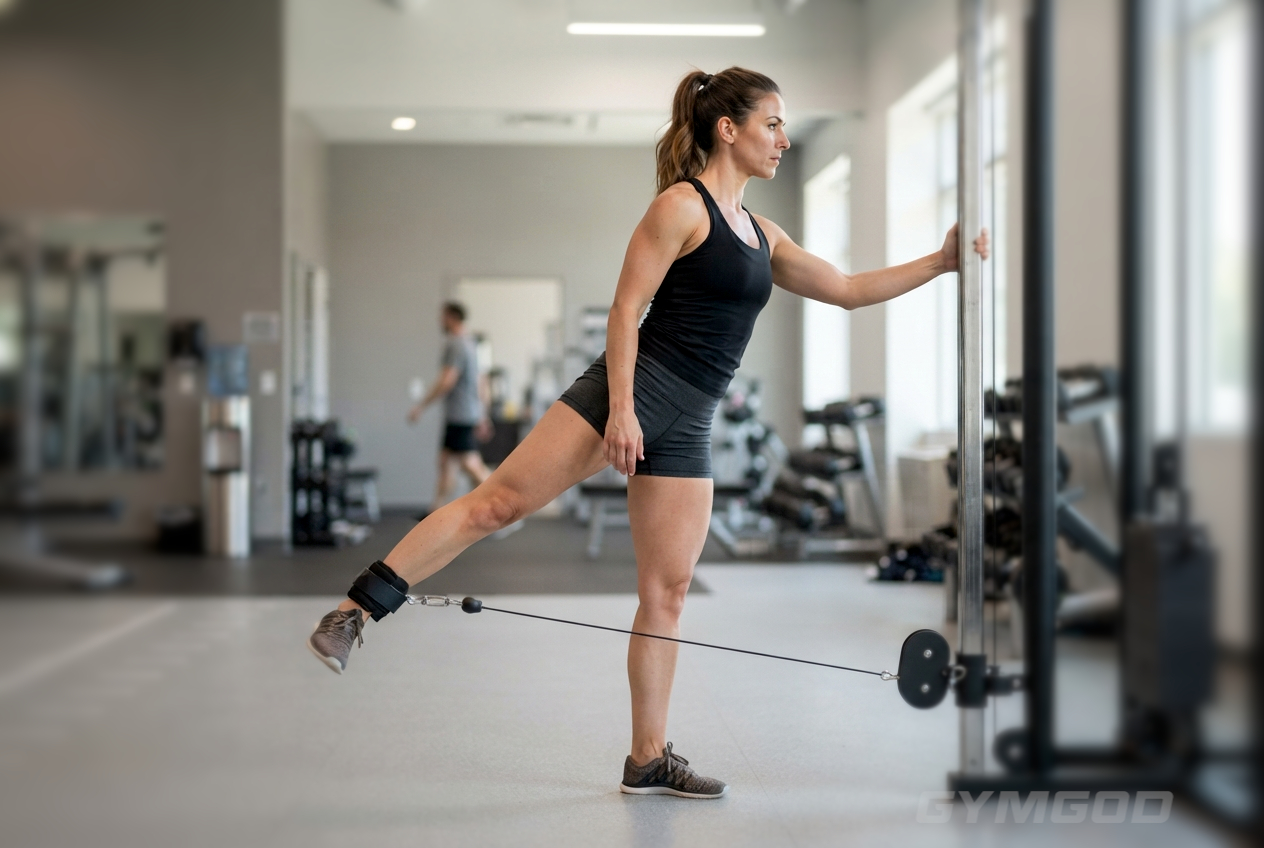
8. Glute Kickback (Machine or Cable)
An isolation move that keeps constant tension on the gluteus maximus and lets you chase a deep burn without taxing your lower back.
- Attach the cuff to your ankle and face the cable tower or machine, holding the handles for support. Lean forward slightly from the hips.
- Brace your abs and keep your standing knee slightly soft.
- Exhale and push your working leg back and slightly up, leading with the heel, until your glute is fully squeezed.
- Pause for a second, then return slowly without letting the weight rest between reps.
Recommended: 3 sets of 10-15 reps per side
Pro Tip: Stop the movement when your hip is fully extended. Swinging higher just arches your lower back and takes tension off the glute.
9. Reverse Hyperextension
Both legs swing back together, loading the glutes and hamstrings through a long range of motion with minimal spinal compression.
- Lie face down on the pad with your hips at the edge, holding the handles. Let your legs hang straight down.
- Brace your abs and keep your head in line with your spine.
- Exhale and squeeze your glutes to swing your legs up until they are in line with your torso. Do not go higher.
- Lower with control and avoid letting the swing carry you.
Recommended: 3 sets of 10-15 reps
Pro Tip: No reverse hyper machine? Lie face down across a flat bench or stability ball, hold the edges, and lift both legs. It is a lighter version, but still a great glute finisher.
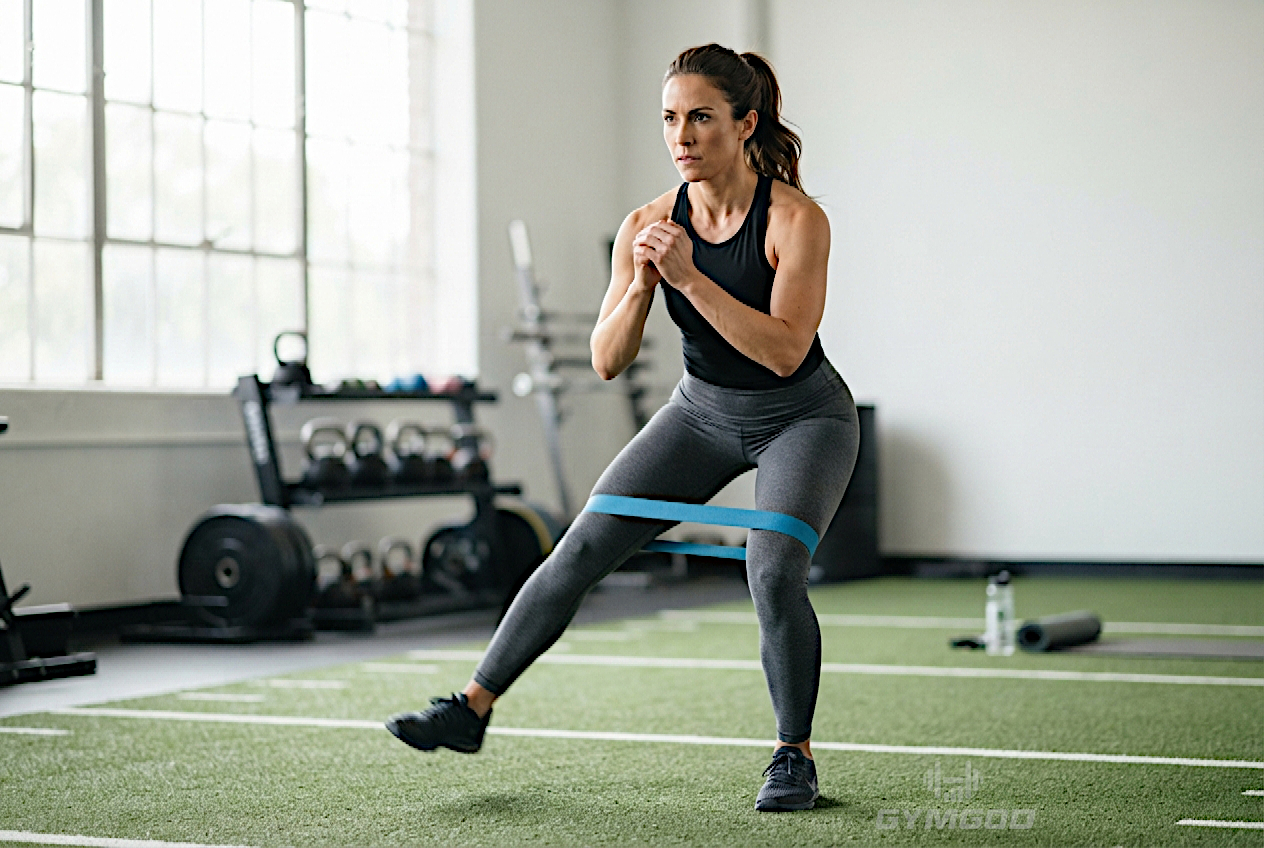
10. Lateral Band Walk
A simple way to keep constant tension on the side glutes and burn out the muscles that give your hips their curve.
- Place a loop band just above your knees or around your ankles (ankles are harder). Stand with feet hip width apart.
- Sink into a quarter squat with your chest up and core braced.
- Step sideways with your lead foot while keeping tension on the band, then bring your trailing foot in just enough to restore hip width. Breathe steadily.
- Take 10 to 15 steps in one direction, then return the other way without standing up between steps.
Recommended: 2-3 sets of 10-15 steps each direction
Pro Tip: Never let your feet come all the way together. Keeping the band tight the whole time is what makes this exercise effective.
Simple and Effective Workouts for Heart-Shaped Glutes
You do not need to perform all ten exercises in one session. Instead, split them across two workouts. Workout 1 emphasizes heavy, strength-focused lifts. Workout 2 emphasizes higher reps, a deeper burn, and activation of the side glutes.
Glute Workout 1: Heavy and Strong
| Exercise | Sets | Reps | Rest |
|---|---|---|---|
| Deep Squat | 4 | 6-8 | 2-3 min |
| Barbell Hip Thrust | 4 | 8-10 | 2 min |
| Romanian Deadlift | 3 | 8-10 | 2 min |
| Hip Abduction Machine | 3 | 12-15 | 60-90 sec |
| Reverse Hyperextension | 3 | 10-12 | 60-90 sec |
Glute Workout 2: Volume and Activation
| Exercise | Sets | Reps | Rest |
|---|---|---|---|
| Glute Bridge (or Banded Hip Thrust) | 3 | 12-20 | 60-90 sec |
| Dumbbell Romanian Deadlift | 3 | 10-12 | 90 sec |
| Cable or Machine Glute Kickback | 3 | 10-15 per side | 60 sec |
| Clamshell | 2-3 | 15-25 per side | 30-45 sec |
| Fire Hydrant | 2-3 | 12-20 per side | 30-45 sec |
| Lateral Band Walk | 2-3 | 10-15 steps each way | 45 sec |
How Often Should You Train Glutes?
Training glutes two to three times per week works well for most lifters. A simple setup is Workout 1 early in the week, Workout 2 later in the week, and an optional third session where you pick your favorite lifts from each list. Leave at least a day between your hardest sessions so your muscles can recover and grow.
The real growth engine: progressive overload
Great exercises will not change your shape on their own. Your glutes grow when you gradually ask them to do more over time, whether that is more weight, more reps, an extra set, or better control. Read our full guide on progressive overload to learn how to apply it. A good rule of thumb: when you hit the top of the rep range on every set with clean form, add a small amount of weight next time.
FAQs About Building a Heart-Shaped Butt
Can you change the shape of your butt?
Partly. You cannot change your bone structure or where your muscles attach, so your overall frame stays the same. But you can change how much muscle you carry in each part of your glutes, and that has a big effect on how your butt looks. Training the upper and outer glutes along with the gluteus maximus is the best way to build a rounder, fuller shape.
Do squats make your butt bigger?
Yes, they can, especially deep squats with progressive overload, because they load the gluteus maximus through a large range of motion. That said, squats also train your quads heavily, so most lifters grow their glutes faster by pairing squats with hip thrusts, hinges like Romanian deadlifts, and side-glute work.
How do I tone my butt?
"Toning" is really a combination of building some muscle and having a body fat level that lets that muscle show. Lift weights two to three times per week, add load or reps over time, eat enough protein, and keep an overall lifestyle you can maintain. You cannot spot-reduce fat from one area, but you can reshape what is underneath it.
How long does it take to see results?
Most people notice strength gains within a few weeks. Visible muscle growth usually takes several months of consistent training, good nutrition, and sleep, and it varies a lot from person to person. Take progress photos and track your lifts so you can see changes you might miss in the mirror.
Final Thoughts
A heart-shaped butt is built the same way as any other physique goal: by training the right muscles, consistently, and with a plan. Your bones and genetics set the starting point, but your glutes are one of the most trainable muscle groups on your body. Develop the gluteus maximus with deep squats, hip thrusts, glute bridges, and Romanian deadlifts. Then add hip abduction, clamshells, fire hydrants, kickbacks, reverse hypers, and band walks to fill out the gluteus medius and minimus.
- Train your glutes two to three times per week with a mix of heavy and higher-rep work.
- Focus on the mind-muscle connection: feel the glutes working on every rep, not just the weight moving.
- Use progressive overload so your muscles always have a reason to grow.
- Eat enough protein, sleep well, and be patient. Shape changes are measured in months.
One last thing worth saying: tracking your lifts is one of the most reliable ways to keep progressing, because you cannot progressively overload what you do not measure. If you want an easy place to log your sets, reps, and weight, the GymGod app makes it simple, so you can watch your hip thrust and squat numbers climb week over week.
This article is for general educational purposes only and is not medical advice. If you have an injury or health condition, check with a qualified professional before starting a new exercise program.